
Sagging face after weight loss: can harmonization fix it?

 BeforeSimulation
Quick facts
- Question
- Does harmonization fix a sagging face after weight loss
- Central cause
- Volume loss versus excess skin
- Usually helps
- Volume replacement and collagen stimulation
- Limit
- Significant excess skin may call for surgery
The short answer: harmonization can improve a sagging face after weight loss when the cause is volume loss and less firm skin, with volume replacement and collagen stimulation. When the problem is significant excess skin, injectables have a limit and another approach may be more honest. This page helps you separate those two situations and choose the timing.
What happens to the face when you lose weight
Facial fat is part of the face's support. When weight drops, the fat pads shrink, and the skin that covered them may not keep up. The result is hollow-looking cheeks, deeper folds, a less defined contour, and sometimes an "aged look" that the patient did not expect.
This varies a lot. Age, genetics, skin quality, how long the weight loss took, and how quickly it happened all play a part. Fast, large losses tend to show more in the face, as in face after bariatric surgery and gaunt face after weight loss.
Volume loss or excess skin
The distinction is the heart of the assessment:
| Situation | What you see | What can help |
|---|---|---|
| Volume loss with skin still elastic | Hollow cheeks, shadows | Volume replacement and collagen stimulation |
| Volume loss and less firm skin | Moderate sagging | Combination of volume and biostimulator |
| Significant excess skin | Hanging skin, folds | Limit of injectables; consider other approaches |
| Sagging in the neck and double chin | Lost contour | Specific plan, with realistic expectations |
The practical test is to look at the patient from the front and the side and ask what they want to change. Often what looks like "extra skin" is actually a lack of volume underneath, and replacing it restores support. The distinction between the two scenarios also appears in ptosis or volume loss.
Which tools usually come into play
Hyaluronic acid restores volume and contour in areas such as the cheekbone and the jaw. The collagen biostimulator works on tissue quality, gradually. Thread lifts come up in discussions of support in some cases. Each tool has its indication, risks, and limits.
Anyone who wants to understand how volume and stimulation fit together can read biostimulator and weight loss and biostimulator or filler.
The role of time
The timing of harmonization matters. In general, waiting for the weight to stabilize gives a more faithful target. But not every patient wants to wait, and a conservative intervention midway can be discussed. What matters is to agree with the patient that the plan will be reviewed as the weight settles. The complementary topic is in facial volume loss after weight loss.
For those taking weight-loss medications, the context is discussed in Mounjaro and a sagging face and Ozempic and facial filler.
Simulating with the patient
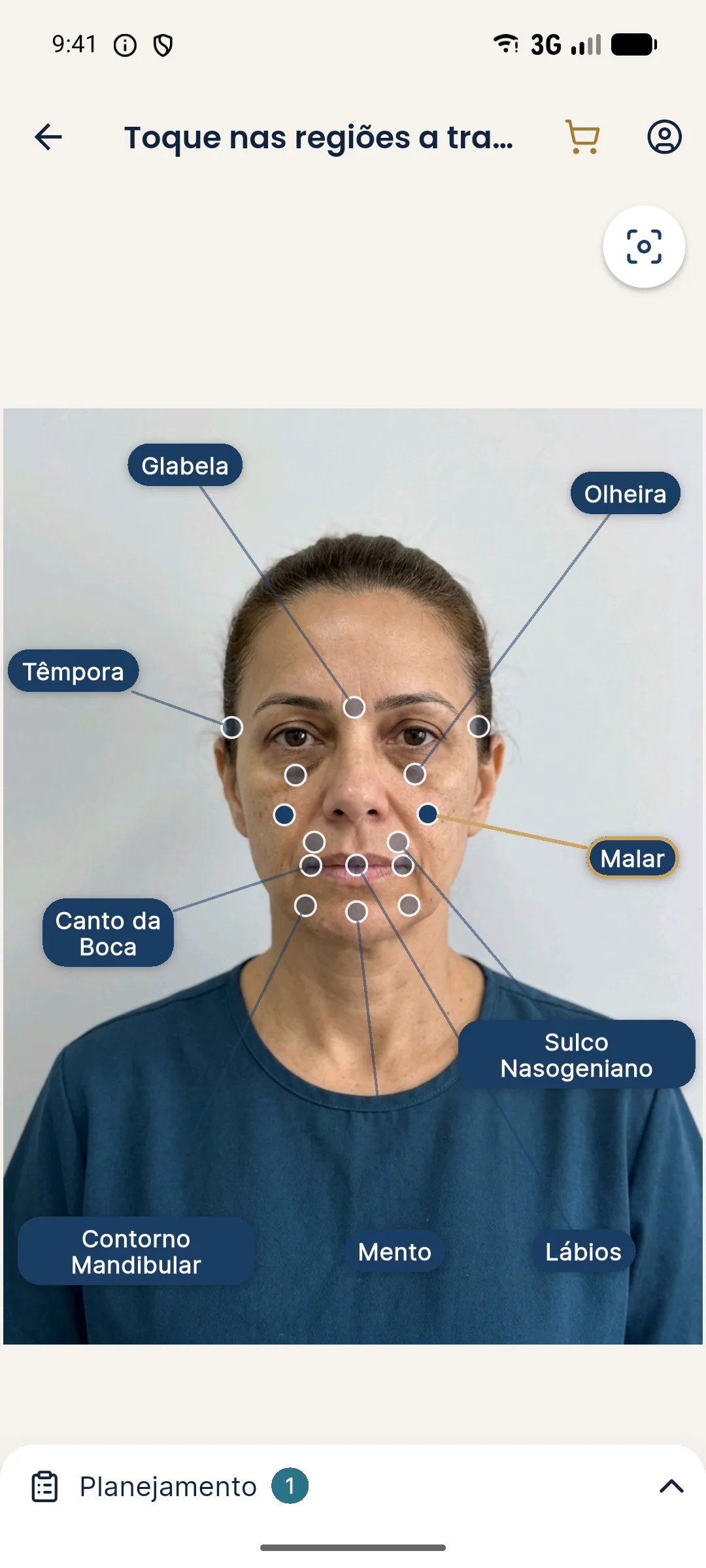
In Harmy, the Cheekbone point and the Jawline can be marked with ml (from 0.5 to 5 ml) and intensity (Subtle, Moderate, or Pronounced). In "Full harmonization" the cheekbone goes in at 2 ml and the jaw at 2 ml, both at Moderate, as starting points. For the patient who lost weight, the simulation illustrates the idea of volume replacement seen from the front, but it does not show excess skin or the effect of collagen over the months.
Warning signs and care
Patients who lost weight quickly may have nutritional deficiencies that affect healing, and some have a history of eating disorders. Ask about diet, health, and motivation with respect. If there are signs of distress about body image, referral is better than a procedure.
Timeline of a plan
Testing your reasoning
Risks
The same as harmonization in general: bruising, swelling, asymmetry, nodules, and, rarely, vascular occlusion. Hyaluronidase must be available at every hyaluronic acid treatment.
Summary
- Separate volume loss from excess skin.
- Wait for the weight to stabilize when possible.
- Volume and a biostimulator can complement each other in stages.
- Significant excess skin has a limit with injectables.
- Management is at the discretion of the qualified professional, following the rules of their professional council (in Brazil, CFM, CFO, CFBM, COFEN, depending on the profession).
Frequently asked questions
Does harmonization fix a sagging face after weight loss?
It can improve it when the cause is volume loss and skin quality, with volume replacement and biostimulators. Significant excess skin has a limit and may call for a different approach.
Why does the face sag when you lose weight?
Because facial fat shrinks along with body weight, and the skin may not keep up with the new volume. Factors such as age, genetics, and how fast the weight came off all play a part.
Biostimulator or filler after weight loss?
It depends on the concern. Filler restores volume and contour; a biostimulator improves tissue quality. Many plans combine the two, in stages.
Can I do it right after losing weight?
It is generally better to wait for the weight to stabilize, because the face keeps changing. Planning while weight is still dropping may require adjustments later.
Harmy images are illustrative simulations generated by AI from the patient's photo to support the conversation between practitioner and patient. They are not a promise of results. Indication, technique, product and volume are solely the decision of the licensed practitioner. This content is for information only and does not replace a clinical assessment.