
Deviated facial midline: how to assess it
- Nerve
- Highlighted area
Quick facts
- Concern
- Nose, mouth or chin look off the axis of the face
- Method
- Draw the midline on the standardized frontal photo and compare it with the nose, philtrum and chin
- Structures
- Nasal bone, maxilla, mandible, teeth and soft tissue
- Caution
- Head tilt and shadows simulate a deviation that does not exist
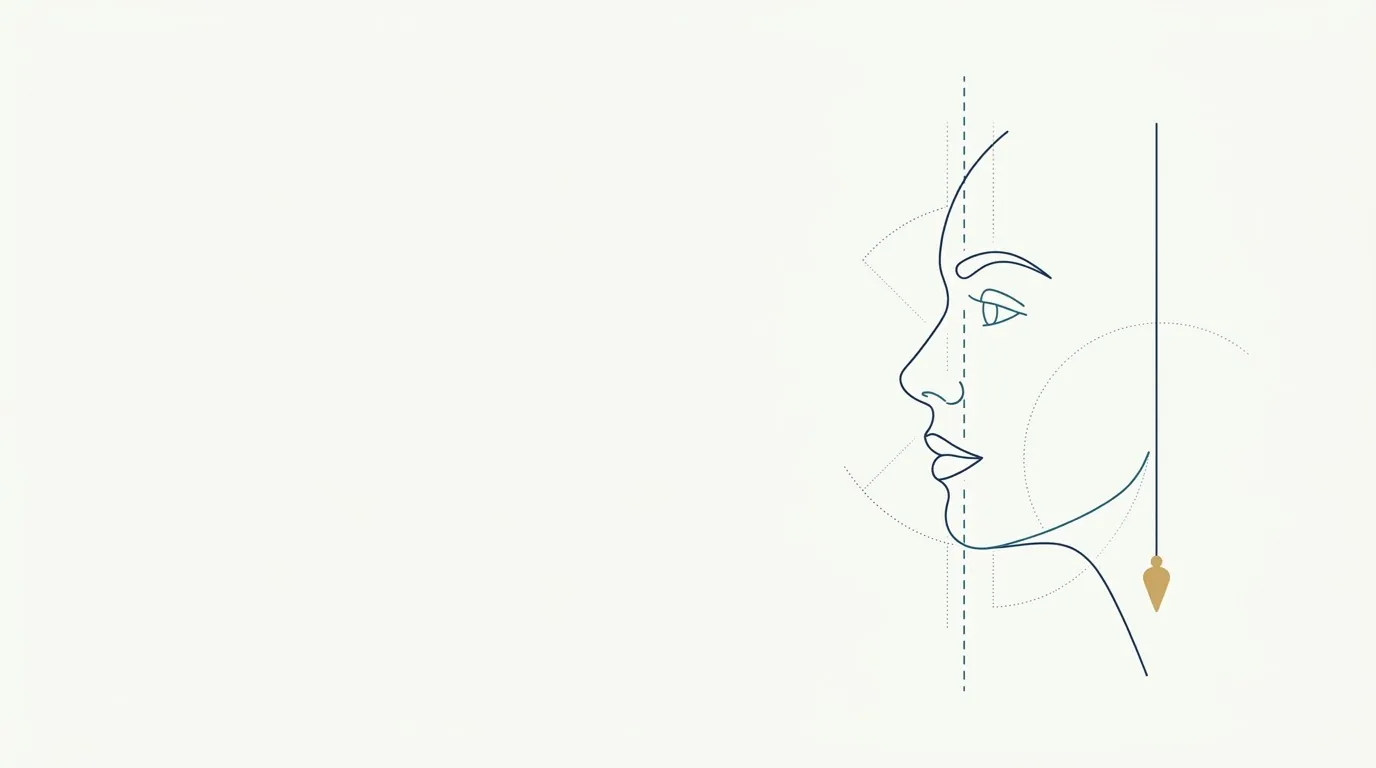
The facial midline is an imaginary vertical reference that runs through the glabella, the tip of the nose, the philtrum and the chin. When one of those points drifts away, the patient (or the mirror) perceives a "twist." Before any plan, the question is whether the deviation truly exists or is an effect of the photo, posture or expression.
This page shows how to measure and how to decide. It complements mouth off the midline, chin off the midline and nose off the midline.
What is the facial midline?
The facial midline is usually drawn between the nasion and the pogonion, or between the glabella and the chin. On a symmetrical face, it cuts through the nose, the philtrum and the tip of the chin. On a real face, there are small deviations that cause no concern, because perfect symmetry does not exist.
The clinical question is to know where the deviation appears and what causes it:
| Location of the deviation | Possible causes | Who usually takes part in management |
|---|---|---|
| Nose | Nasal bone, cartilage, prior trauma | Surgery, harmonization in mild cases |
| Philtrum and mouth | Maxilla, teeth, muscle habit | Orthodontics, harmonization |
| Chin | Mandible, bite, posture | Orthodontics, surgery, harmonization |
| Whole face | Head posture, cervical scoliosis | Physical therapy, other specialties |
Telling posture deviation, soft tissue deviation and bone deviation apart is the foundation. Bone deviation changes little with injectables, and soft tissue deviation can be compensated in part.
How to measure without being fooled
The photo is the instrument. The most common errors are head tilt, short lens distance and the patient's expression.
The facial asymmetry assessment should accompany the midline deviation, to know whether there is a broader asymmetry.
What harmonization can compensate
In mild soft tissue deviations, at the discretion of the licensed professional, the plan can use volume to balance perception: reinforcing the less projected side of the chin, jawline or lip. In more marked deviations, the focus shifts to aligning expectations and referring.
- Deviated chin: asymmetric volume in the chin can improve the reading, with caution not to create a new asymmetry.
- Mouth deviated by habit: talk about muscle dynamics, which can be considered.
- Crooked nose: harmonization acts in mild, selected cases, and structural correction belongs to another specialty.
- Dental deviation: refer to the orthodontist, because incisor position influences the lip and chin.
Risks and limits
The risks depend on the area treated (swelling, bruising, asymmetry, nodules, rare vascular complications). Compensating asymmetry requires different volumes on each side, and that raises the chance of measurement error. Hyaluronidase must be available when hyaluronic acid is used. For deviations caused by the bite, a purely aesthetic solution does not replace treatment of the underlying cause.
How to show it in Harmy
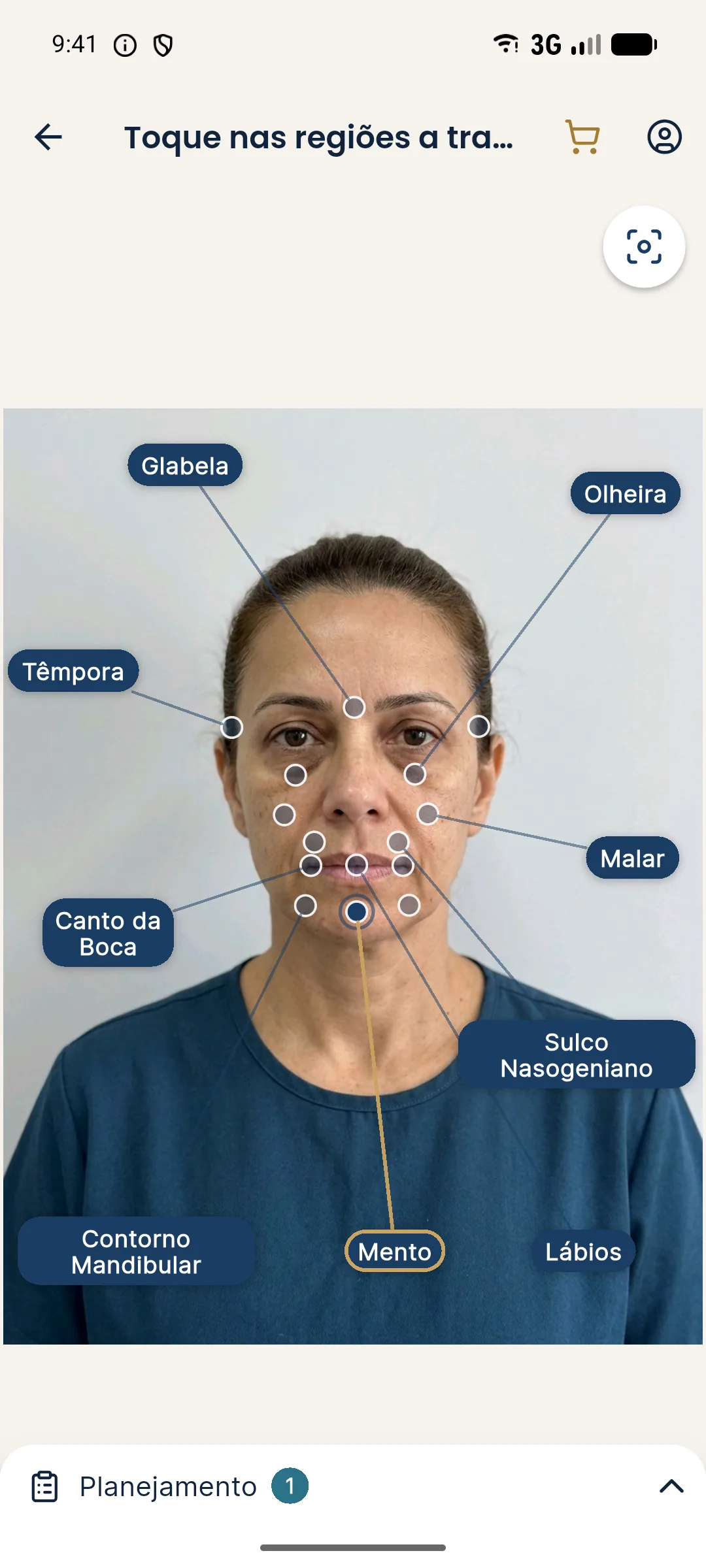
Harmy projects from a frontal photo, the same one on which the midline is drawn. The Chin point and the Jawline simulate volume, and the projection changes only what was marked. Since in a bilateral area the ml is the total divided between both sides, the app does not independently simulate different volumes per side: use it to illustrate the overall effect and talk about asymmetric compensation outside the tool.
Common mistakes in reading the midline
The first mistake is accepting a single photo. Any tilt, shadow or asymmetric smile shifts the line, and the plan is born from a false measurement. The second is choosing the reference points poorly: drawing the line through the tip of the nose, which may be crooked, rather than through the glabella and the center of the philtrum, leads to wrong conclusions.
It is also a mistake to ignore the teeth. The midline of the incisors is an independent reference, and when it disagrees with the facial line, the dentist needs to take part. Another frequent mistake is compensating the whole deviation with volume. When the cause is bone or dental, filler only masks it in part and creates a heavier side.
Finally, avoid pointing out the asymmetry to the patient bluntly. Many people have never noticed the deviation, and the consultation can create a concern that did not exist. Show the measurement only when the patient has already brought up the concern.
Management and records
Record two photos at different times, the line drawn, the point where the deviation appears and the probable cause. Define with the patient what will be compensated and what will only be observed. In the consent, include that some asymmetry remains and that the goal is to improve perception. When a dental or skeletal origin is suspected, refer and document. At follow-up, repeat the photos and compare. Honesty about limits is what sustains the patient's trust in the long run and reduces endless requests for correction.
Patient profiles and when to observe
Some people live well with a small deviation and only notice it after a specific photo. In those cases, the best approach is often not to treat, to record the observation and to teach the patient to see that asymmetry is part of the face.
Patients who have had facial trauma, surgery or prior orthodontics have a history that explains the deviation and guides the plan. Young patients who are still growing, on the other hand, call for caution: the structure is still changing.
When the concern is real, the combination of standardized photos, clear conversation and a staged plan gives security to the patient and the professional, and avoids successive corrections that end up creating a less natural face.
Wrap-up
Record standardized photos, the line drawn, the probable origin of the deviation and what will be compensated or referred. See also asymmetric face and midline deviation: how to plan. Volumes and techniques are at the discretion of the licensed professional, in line with the rules of their professional council in Brazil.
Frequently asked questions
How can you tell if the midline is deviated?
A line is drawn between reference points, such as the glabella and the center of the philtrum, on a standardized frontal photo, and compared with the nasal tip, philtrum, incisors and chin. The deviation shows up as a consistent offset across photos.
Is a midline deviation the same as asymmetry?
It is related, but not the same. Every face has some asymmetry, and midline deviation is a specific type, with bone, tooth and soft tissue components.
Does filler correct a midline deviation?
It can compensate the perception in small deviations, at the discretion of the licensed professional. Deviations of skeletal or dental origin call for an orthodontic or surgical assessment.
How do you avoid measuring wrong on the photo?
By always using the same distance, with the head straight, gaze on the horizon, and by checking the patient's posture. Two photos at different times confirm consistency.
Harmy images are illustrative simulations generated by AI from the patient's photo to support the conversation between practitioner and patient. They are not a promise of results. Indication, technique, product and volume are solely the decision of the licensed practitioner. This content is for information only and does not replace a clinical assessment.