
Chin Off the Midline: Assessment and Guidance
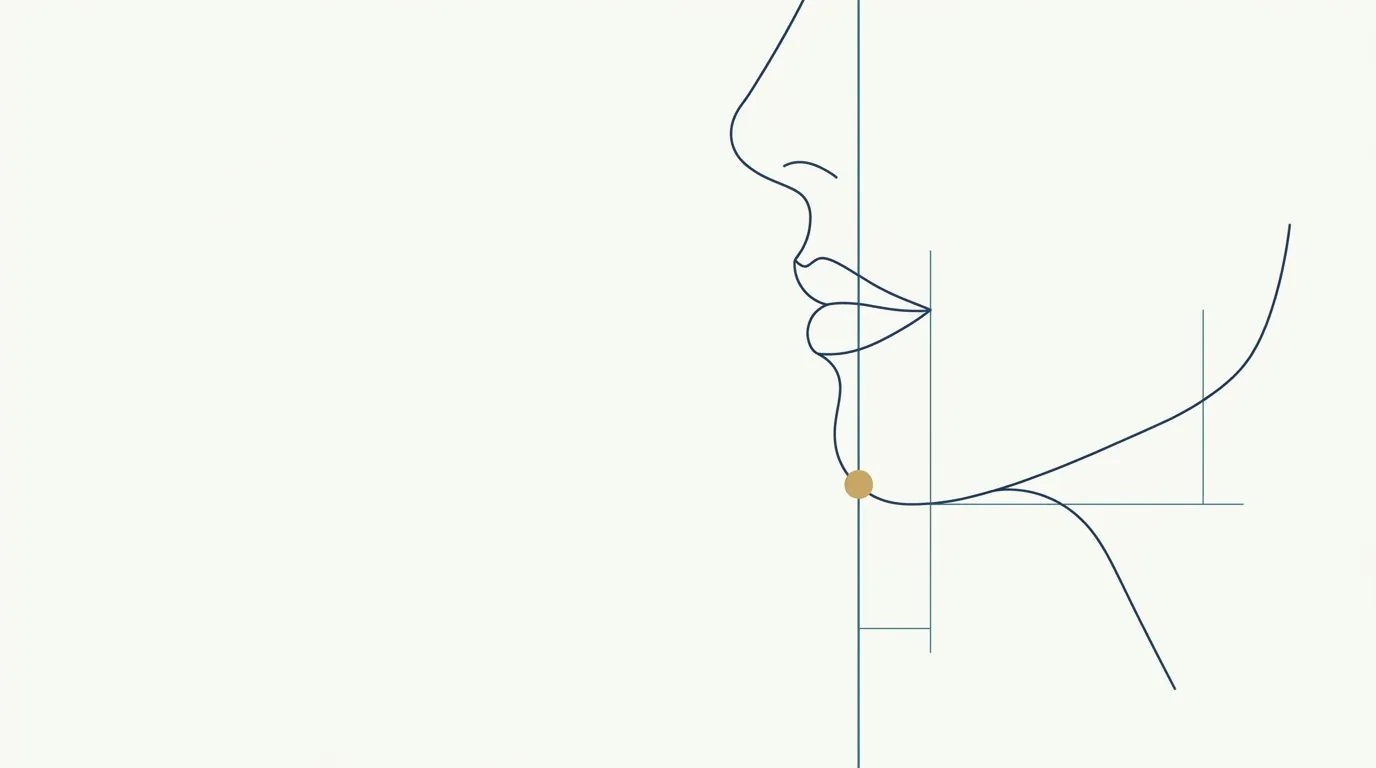
- Nerve
- Highlighted area
Quick facts
- Concern
- Chin that drifts off the center line of the face, more obvious in photos and when smiling
- Key reading
- Chin deviation has bony, dental, muscular or postural causes, and the approach changes for each
- Supporting measure
- Facial midline, dental midline and pogonion position
- Limit
- Volume only camouflages a bony deviation, and a significant or functional deviation calls for orthodontics or surgery
The concern is direct: "my chin is crooked". The patient is right about some of these statements and mistaken about others. A chin slightly off the midline is very common, and many faces have this finding without anyone noticing. When the deviation is visible and bothersome, the question becomes: where does it come from, and what can be done about it?
This text covers deviation of the chin from the axis of the face, whereas asymmetric chin looks at the difference in volume and contour between the sides. Here the focus is position. For the nose and mouth, see mouth off the midline, and for the management plan, midline deviation: how to plan.
How to measure chin deviation
Measurement starts with the facial midline, drawn on the frontal photo between the eyebrows, through the tip of the nose and through the philtrum. Then mark the pogonion, the most prominent point of the chin, and see its distance from the line. Also compare with the midline of the upper and lower teeth.
Each combination suggests a different origin:
| Facial midline | Dental midline | Pogonion | Likely reading |
|---|---|---|---|
| Centered | Centered | Deviated | Isolated chin deviation (bone or tissue) |
| Centered | Deviated | Deviated toward the side of the teeth | Jaw or bite deviation |
| Deviated | Deviated | Follows | Broader facial asymmetry |
| Centered | Centered | Centered, but looks crooked | Volume difference, not position |
This reading is a hypothesis, and imaging or an orthodontic assessment can confirm it. For the technique of drawing lines on the photo, see reference lines on the frontal photo.
What are the causes of the deviation?
Four mechanisms appear frequently, and several may be present together:
- Bony: asymmetric growth of the jaw, with the chin displaced from birth or after trauma.
- Dental and occlusal: the bite pushes the jaw to one side, and the chin follows. See crossbite and asymmetry.
- Muscular and functional: habit of chewing on one side, unilateral masseter hyperactivity, bruxism. See asymmetry from chewing on one side.
- Soft tissue and posture: differences in fat and skin, or head posture at the moment of the photo.
The HOF professional mainly looks at appearance, but must suspect dental and skeletal causes, because they completely change the approach. The muscle and the bite can even explain an asymmetry the patient attributes to the "skin".
What can HOF do?
When the deviation is small and the cause is soft tissue, conservative filler can balance the look, with different volumes on each side. When there is a muscular component, toxin may be considered, at the professional's discretion. For a bony deviation, the most that can be done is camouflage, and the patient needs to know that.
The options discussed are chin filler and, when the angle and contour take part, jawline filler. Planning the whole is covered in chin and jaw: combining in the plan.
In the chin and jaw area, the risks include bruising, swelling, asymmetry, nodules and, rarely, vascular compromise, as well as injury to the mental nerve. Hyaluronidase must be available when hyaluronic acid is used, and the patient must be informed before injection.
When the deviation is bony: the limit of HOF
If the deviation is larger than a few millimeters and comes from the skeleton, the real correction is surgical or orthodontic. Orthognathic surgery repositions the jaws, and the orthodontist prepares the bite. HOF does not do this, and promising a correction would mislead the patient.
Camouflage can be a legitimate choice when the patient does not want surgery or when the deviation is mild. Even so, it is wise to document the limit in the patient record and in the consent form. For other limits of the specialty, see concerns that HOF does not solve and when bone is the problem, not volume.
How does Harmy fit into the conversation?
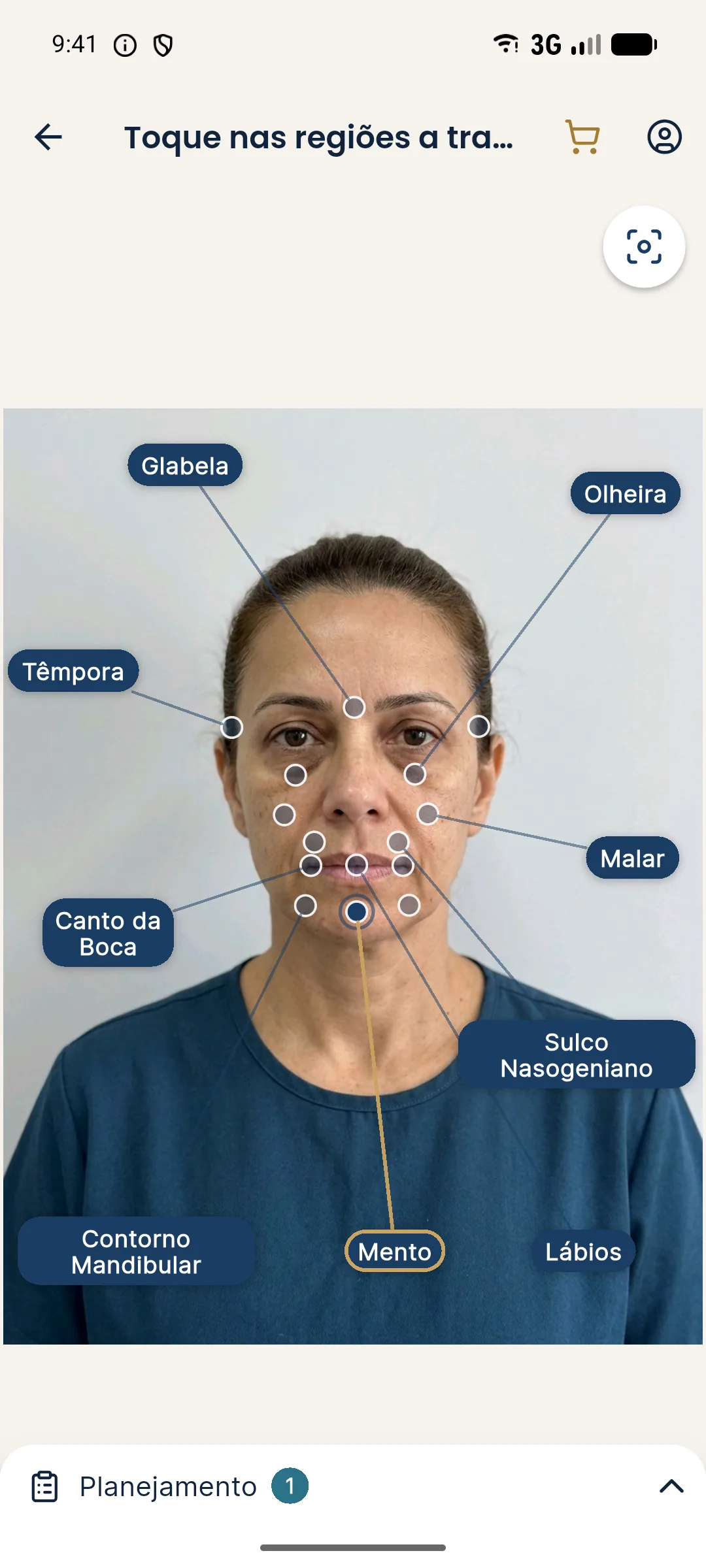
Harmy's projection uses the frontal photo and changes the volume of the Chin point uniformly, as a single area with one total ml. This shows the direction of the adjustment, but it does not allow drawing a chin fuller on one side than the other. For this case, the simulation serves to discuss proportion, not to promise symmetry.
Record keeping
Record the photo with the lines, the measure of the deviation, the result of the bite test and the guidance given. If there was a referral, note the specialty and the patient's response. At follow-up, repeat the photos at the same angle and lighting. Standardized clinical photography and the history per patient help keep the method consistent.
Frequently asked questions
What degree of chin deviation is considered normal?
Small deviations are common and often go unnoticed. What matters is whether the deviation is visible, bothers the patient or comes with a bite change, which calls for a specialist assessment.
Can filler correct a deviated chin?
It can camouflage mild volume differences. When the deviation comes from the bone or the bite, the effect is partial, and the professional should tell the patient the limit.
How do you tell chin deviation from jaw deviation?
By checking whether the dental midline also deviates and whether the deviation grows when the mouth closes. If so, the whole jaw may be displaced, and the orthodontist should assess.
When does chin deviation require surgery?
In marked skeletal deviations, with significant functional or aesthetic impact, the oral and maxillofacial surgeon may recommend treatment. The decision depends on imaging and a specialist assessment.
Harmy images are illustrative simulations generated by AI from the patient's photo to support the conversation between practitioner and patient. They are not a promise of results. Indication, technique, product and volume are solely the decision of the licensed practitioner. This content is for information only and does not replace a clinical assessment.