
Facial Midline Deviation: How It Fits a Facial Harmony Plan
- Nerve
- Highlighted area
Quick facts
- Topic
- Facial midline deviation
- Origins
- Skeleton, teeth, soft tissue or photo
- First step
- Confirm in person and in a standardized photo
- Caution
- Facial harmonization does not correct skeletal or dental deviation
Every face has some midline deviation, and almost nobody notices it until the photo is taken. In facial harmonization, the deviation shows up as an off-center chin, a tilted smile, a nose that does not sit in the middle. The planning question is not "how do I correct it?" but where does the deviation come from, and what is actually within the scope of facial harmonization? This page organizes the answer.
What is the facial midline?
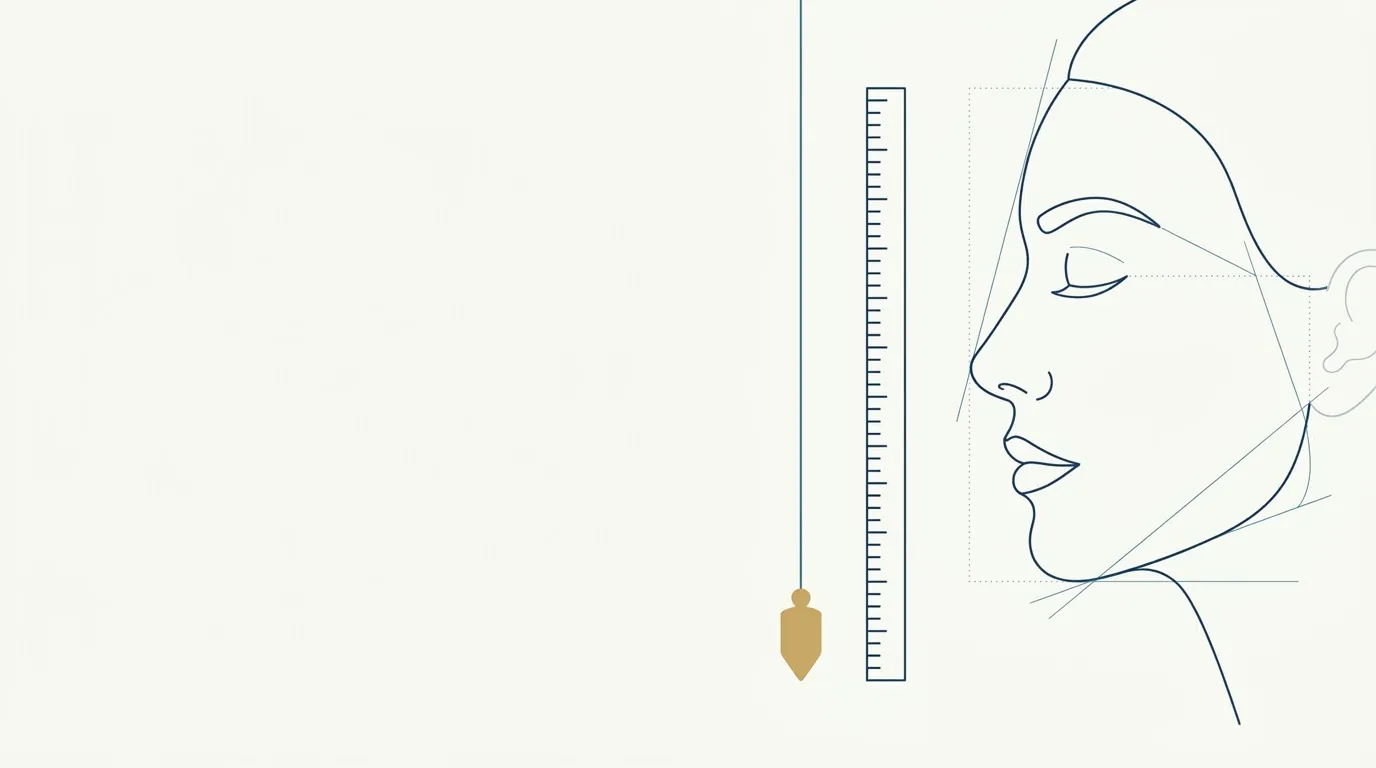
It is the imaginary vertical axis that splits the face into two halves, usually passing through the glabella, the nasion, the tip of the nose, the philtrum and the pogonion. In clinical practice there is more than one "midline": the facial, the upper dental and the lower dental, and they do not always match. More details in facial midline and in how to measure facial symmetry.
Where does the deviation come from?
| Origin | How it shows up | Who treats it |
|---|---|---|
| Skeletal | Deviated mandible or maxilla, off-center chin | Orthodontics, surgery, depending on assessment |
| Dental | Midline of the teeth out of line with the face | Dentistry |
| Muscular or functional | Overactivity on one side, preferred chewing side | Clinical assessment, may involve toxin |
| Soft tissue | Volume asymmetry, scar, unilateral loss | Facial harmonization planning, when indicated |
| Photo | Head rotation, camera angle, expression | Retake the photo |
The origin changes everything. If the deviation is skeletal, filling one side of the chin may partly mask it but does not solve the cause, and the temptation to "balance" with volume can create excess. See when the bone is the problem, not the volume and facial skeleton before injecting.
Does the deviation go into the plan?
Only if it is relevant to the concern or to safety. In many cases the best plan is to leave the deviation untreated and plan the other areas while respecting the natural axis. When it bothers the patient, the plan may include a conservative compensation, with explicit expectations.
A practical rule: over-symmetrizing is risky. A patient with a skeletal deviation who receives volume only on the more "hollow" side can end up with a face that is wider on one side, an axis that is still deviated and an artificial look. See also plan for an asymmetric face and perfect symmetry is not the goal.
When should you refer?
Refer when there is:
- Crossbite, functional jaw deviation or joint pain.
- Progressive deviation of recent onset.
- Significant asymmetry with functional impact.
- A markedly discrepant dental midline without an orthodontic assessment.
Integration with dentistry is covered in orofacial harmonization integrated with dentistry, and the handoff flow between professionals in plan handoff between professionals.
How do you plan when the patient wants to "straighten" the face?
Area by area: the chin is the one that gives the deviation away the most. For the chin projection logic, see plan to project the chin and chin and jaw: combining them in the plan.
What about the Harmy simulation?
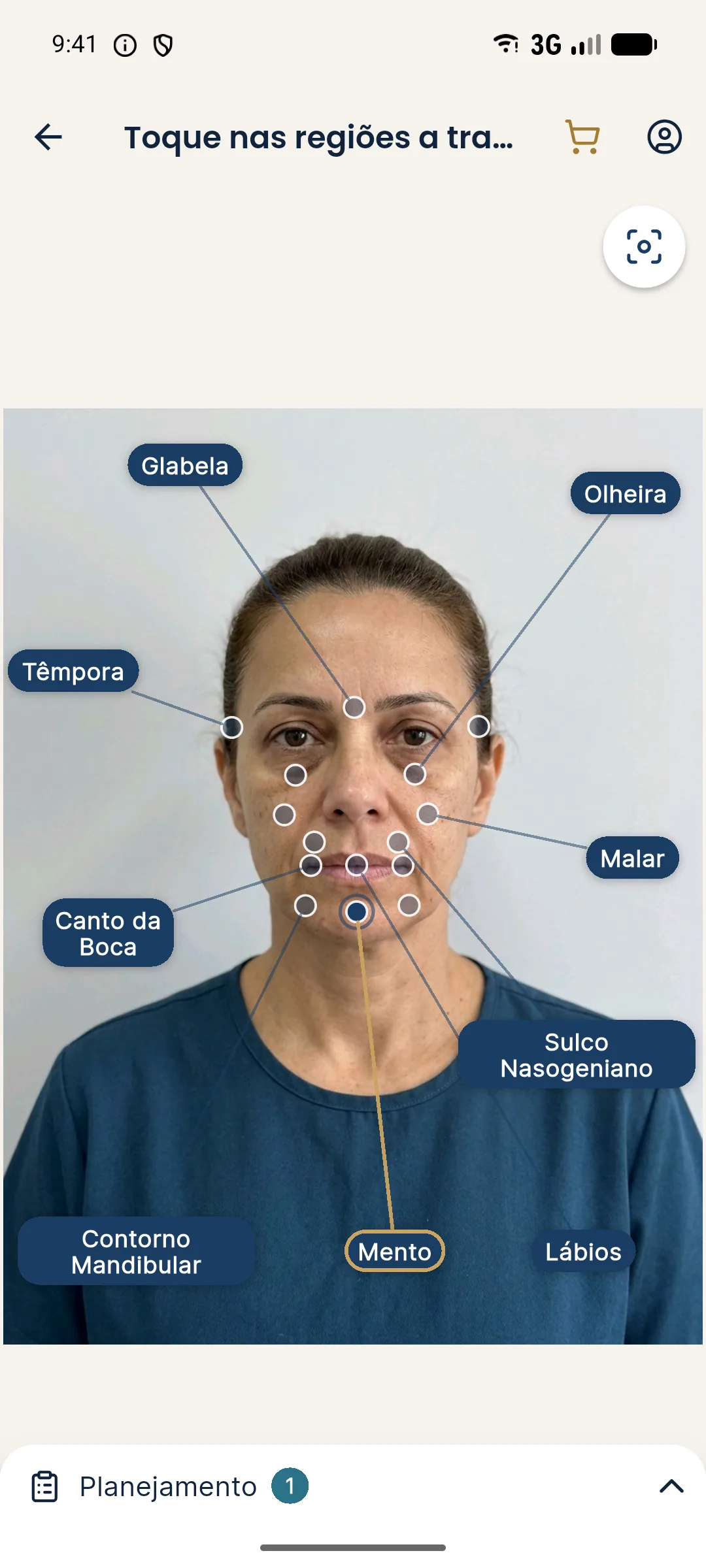
Harmy marks the Chin and the Jawline on the frontal photo, with ml and intensity, and generates an illustrative projection. It does not correct the axis, does not align the midline and does not measure deviation. In a bilateral area the ml is the total, split between the two sides, which does not allow asymmetric compensation in the image. Use the projection sparingly in this kind of case and make clear that it does not show a correction of the deviation.
More on limits in simulation in a patient with asymmetry and limits of 2D simulation.
How does the deviation affect each area of the plan?
Even when the deviation is not treated, it influences how the other areas should be planned.
- Chin. If the tip of the chin is deviated, filling symmetrically can accentuate the deviation. Plan with the axis in mind.
- Lips. The philtrum and the cupid's bow follow the lip midline. A dental midline deviation can make the lip look crooked, and the volume must respect that.
- Cheekbone. If one side of the skeleton is less projected, the same ml on both sides keeps the difference.
- Jaw. Functional jaw deviations can go along with masseter asymmetry, the topic of jaw and masseter: combining them in the plan.
- Nose. Nonsurgical rhinoplasty with hyaluronic acid does not correct a deviated septum or bridge, and the conversation should be frank.
In every case the golden rule is never promise symmetry. The plan aims for perceived balance, respecting the natural axis, and the patient must know this beforehand. A good alignment line is "I will improve what is possible without trying to rebuild the foundation of your face."
Record in the patient record the deviation observed, your explanation to the patient and the decision. If there is a referral, note to whom and why. At reassessment, photograph again with the same standard and compare, remembering that small pose changes can simulate differences. When in doubt, a second photo on the same day is worth taking to confirm.
Summary
Confirm the deviation, find the origin, check whether there is a concern and decide with the patient what falls within facial harmonization. Refer when needed and record everything. The decision belongs to the qualified professional, after assessment, in line with the rules of their professional board in Brazil.
Frequently asked questions
What is facial midline deviation?
It is the difference between the central axis of the face (from glabella to chin) and the dental midline, or between structures that should line up. Small deviations are common and often go unnoticed.
Does facial harmonization correct midline deviation?
It does not correct the skeletal or dental cause. In some cases it can soften the perception with soft tissue volume, at the practitioner's discretion after assessment.
How do I tell a true deviation from a photo error?
Retake the photo with the head level and the camera centered, and confirm in person. If the deviation disappears or switches sides, it was an artifact.
When should the patient be referred?
When a relevant dental, skeletal or functional cause is suspected, such as a deviated bite or progressive asymmetry. The referral goes to the appropriate professional, such as a dentist or a surgeon.
Harmy images are illustrative simulations generated by AI from the patient's photo to support the conversation between practitioner and patient. They are not a promise of results. Indication, technique, product and volume are solely the decision of the licensed practitioner. This content is for information only and does not replace a clinical assessment.