
Perfect symmetry is not the goal of treatment planning

Quick facts
- Topic
- Symmetry and natural asymmetry in the facial harmonization plan
- Core idea
- Every face is asymmetrical, and that is part of identity
- When to correct
- When the difference bothers the patient and is treatable
- Risk
- Chasing exact symmetry and producing an artificial result
- Tool
- Frontal photo, reference lines and clinical judgment
The word "symmetry" carries prestige in facial aesthetics. A symmetrical face is spoken of as a synonym for beauty, and many patients arrive asking to "fix the left side." But perfect symmetry does not exist in real faces, and chasing it often leads to poor decisions. This page explains why exact symmetry is not the goal and how to use the idea as a sensible criterion without turning it into a target.
Is every face asymmetrical?
Yes. Differences between the right and left sides are present in almost everyone: eyebrow height, orbit size, mouth tilt, cheekbone projection, chin position. These differences come from bone growth, chewing habits, sleeping position, handedness and muscle variations. Most go unnoticed day to day, and many authors note that a perfectly symmetrical face can look strange.
See how to measure facial symmetry and natural facial asymmetry for the patient's point of view.
Why is perfect symmetry not a good target?
There are three reasons. The first is anatomical: part of the asymmetry lies in the bone, which facial harmonization does not change. The second is aesthetic: slightly asymmetrical faces tend to look natural and alive, and exact symmetry can look artificial. The third is practical: trying to even out the sides with volume may require adding product on one side only, which raises the risk of excess and of a new asymmetry.
When does an asymmetry deserve correction?
Not every difference calls for action. A practical criterion involves four questions: Is the difference noticeable to other people? Does it bother the patient? Can it be addressed safely? Is the patient's expectation realistic? If all four answers are yes, the plan can include a partial correction, in stages, with reassessment.
The question of who noticed it matters. Pointing out an asymmetry the patient had never perceived creates dissatisfaction and opens the door to unrealistic expectations. See how to point out asymmetry without offending and aligning expectations about asymmetry.
What causes explain asymmetry?
| Cause | How it usually presents | Line of reasoning |
|---|---|---|
| Bone | A difference that does not change with expression | Facial harmonization has limited reach; talk about the limits |
| Muscle | A difference that appears or worsens with facial movement | Assess in motion before any decision |
| Volume | A natural difference in fullness between the sides | Possible adjustment, with caution |
| Skin | A difference in texture and firmness | Consider other approaches |
| Postural or habit-related | A difference tied to sleeping position or chewing | Counsel on habits |
| Iatrogenic | The result of a previous procedure | Reassess and correct, when indicated |
The table guides the conversation; it does not set the treatment. The in-person assessment and the history complete the reasoning. For marked asymmetry, see plan for an asymmetrical face and midline deviation: how to plan.
What is a reasonable tolerance?
There is no magic number, but there is an idea of tolerance: differences a casual glance does not catch are usually acceptable, and the goal of the plan should be to bring marked differences into a range where they stop drawing attention. That is very different from making the sides identical. Telling the patient that the plan aims to "reduce what stands out most," and not to "make it even," sets the expectation.
How do the mirror and the photo mislead?
The mirror flips the image, and the patient gets used to the flipped version. The photo shows the "opposite" side from the one they are used to, which feels strange. A close camera, a tilted face and side lighting also create or hide differences. That is why the analysis photo must be standardized and the conversation must account for this perception. See mirror, selfie and photo: differences in self-image and reference lines on the frontal photo.
How does the simulation handle symmetry?
The Harmy projection changes only the marked areas, with a volume proportional to the ml entered. In bilateral areas, such as cheekbone, tear trough and temple, the ml is the total and is split between the two sides. This means the app does not correct asymmetry with different amounts per side: it applies the change in a balanced way. The projection is for talking about the whole, not for simulating the correction of one specific side.
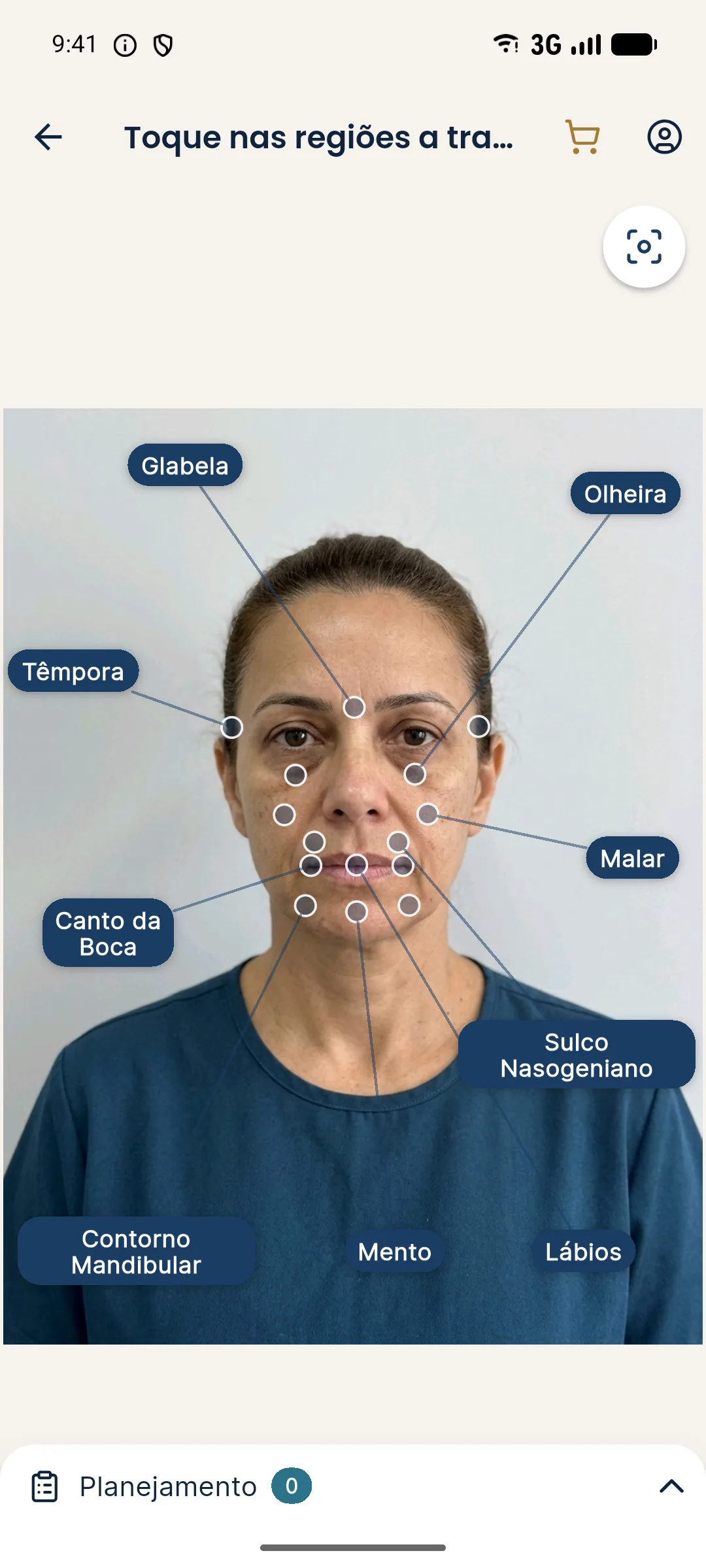
See simulation in a patient with marked asymmetry and limits of 2D simulation.
How to talk to the patient?
Value natural asymmetry as part of identity and make clear that the goal is harmony, not sameness. Show, with the photo, that differences exist in everyone and that the proposal is to soften what bothers them most.
How to document it?
Note the asymmetries observed, the probable cause, what the patient reported and the decision made about each one, including "respect it" when that applies. Photograph in the standard way before and after each stage. This prevents a pre-existing difference from later being blamed on the procedure. See new asymmetry during the plan and photo record by plan stage.
Frequently asked questions
Is every face asymmetrical?
Yes. Small differences between the two sides are the rule and part of a natural look. What varies is the degree and how much it bothers the person.
When is it worth correcting an asymmetry?
When the difference is noticeable, bothers the patient and can be addressed safely. The decision weighs the cause of the asymmetry, the risk and the expectation, and it belongs to the qualified professional.
Can I aim for total symmetry in the plan?
It is neither a realistic nor a desirable goal. Besides being impossible with bone and muscle structures, exact symmetry tends to make the face look artificial.
Can the frontal photo mislead the symmetry analysis?
It can. A tilted face, a close camera and side lighting create differences that do not exist. That is why the photo must be standardized and the in-person exam confirms the finding.
Harmy images are illustrative simulations generated by AI from the patient's photo to support the conversation between practitioner and patient. They are not a promise of results. Indication, technique, product and volume are solely the decision of the licensed practitioner. This content is for information only and does not replace a clinical assessment.