
Plan for an asymmetric face: what to correct and what to accept

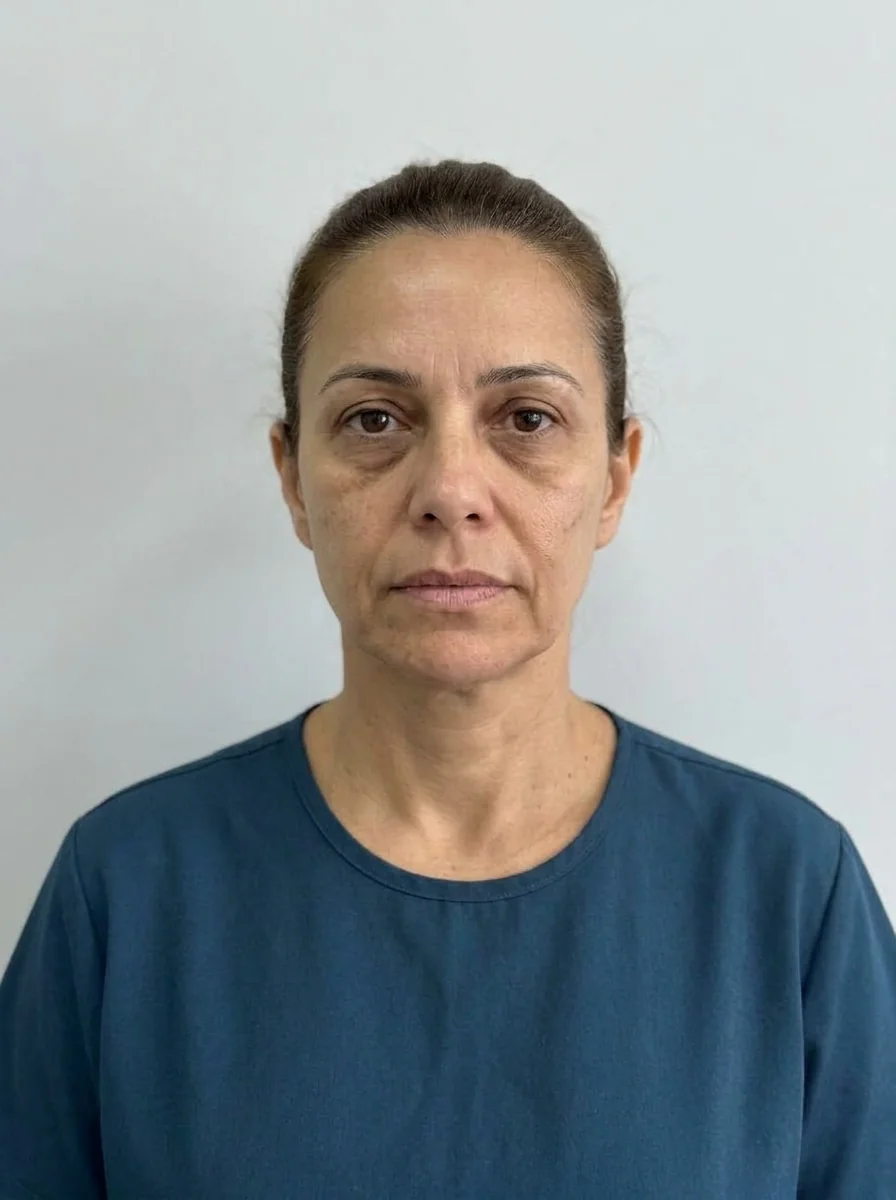 BeforeSimulation
- Nerve
- Highlighted area
Quick facts
- Topic
- Planning for an asymmetric face
- Starting point
- Every face is asymmetric; the question is what bothers the patient and what can be treated
- Core criterion
- The origin (bone, muscle or soft tissue) defines the approach
- Realistic goal
- Balance, never perfect symmetry
- Records
- Standardized photos and reference lines from the start
There is no such thing as a symmetric face. The left and right halves differ in bone, muscle, fat, skin, eyes, mouth and even in the way a person smiles. The planning question is not "how do I make this symmetric" but "which asymmetries bother the patient, which have a treatable cause and which should we accept". This page gives the criteria for that decision and shows how to document, simulate and talk about it without promising the impossible.
What is the first step when facing an asymmetry?
Listen and measure. The patient points out what they see, and you confirm or refute it with an exam and standardized photos. Often the asymmetry that bothers them is not the largest one on the face, and the one you notice most does not bother them. Record both. See how to measure facial symmetry, natural facial asymmetry and facial asymmetry.
How do you identify the origin of the asymmetry?
The approach depends on the origin. A bone asymmetry (maxilla, mandible, orbits) responds little to injectables. A dental or bite-related asymmetry may be linked to a crossbite, a midline deviation or the habit of chewing on one side. A muscular asymmetry (masseter, facial expression) may respond to toxin. A soft tissue asymmetry (fat, skin) is the one that benefits most from volume. Often there is a mix. See crossbite and asymmetry, asymmetry from chewing on one side and larger masseter on one side.
| Origin | How to recognize it | Usual response to facial harmonization |
|---|---|---|
| Bone | Difference that persists with the face relaxed and on palpation | Limited; partial compensation in soft tissue |
| Dental/bite | Associated with the bite and the dental midline | Orthodontic assessment; harmonization as support |
| Muscular | Changes with expression; hypertrophy on one side | Toxin, in selected cases |
| Soft tissue | Difference in volume, fold or projection | Filler, biostimulator, at the professional's discretion |
| Functional | Appears when smiling or speaking | Assess the dynamics; caution with toxin |
What criteria should you use to decide what to treat?
Five criteria, in practical order. Bother: does the patient complain? Visibility: is it visible under normal conditions, without special lighting? Origin: can it be treated safely? Risk: does the benefit justify the risk of the area? Reversibility: can it be undone if it does not turn out well? An asymmetry with high bother, good visibility, a treatable origin and low risk is a candidate. The others can be accepted, observed or referred.
If the asymmetry is recent, of sudden onset, or accompanied by pain, weakness or changes in movement, it is not a case for facial harmonization: refer for medical evaluation. See facial paralysis and new asymmetry during the plan.
How do you document the asymmetry from the start?
Standardized frontal photos, with the head straight, gaze on the horizon, neutral expression and diffuse light. Draw the bipupillary line and the facial midline to put a name to what you see. Also record photos while smiling and, with consent, a short video. Without initial documentation, any asymmetry after the procedure becomes an argument. See reference lines on the frontal photo, bipupillary line, facial midline and midline deviation: how to plan.
How do you use the simulation on an asymmetric face?
The simulation needs extra care. In Harmy, the projection starts from the frontal photo and simulates volume in the marked areas. On an asymmetric face it may highlight the difference between the sides instead of correcting it, because the AI respects the volume entered, which is the total split between both sides. If you want to treat one side more, that must be discussed and planned clinically, and the simulation serves only as partial support.
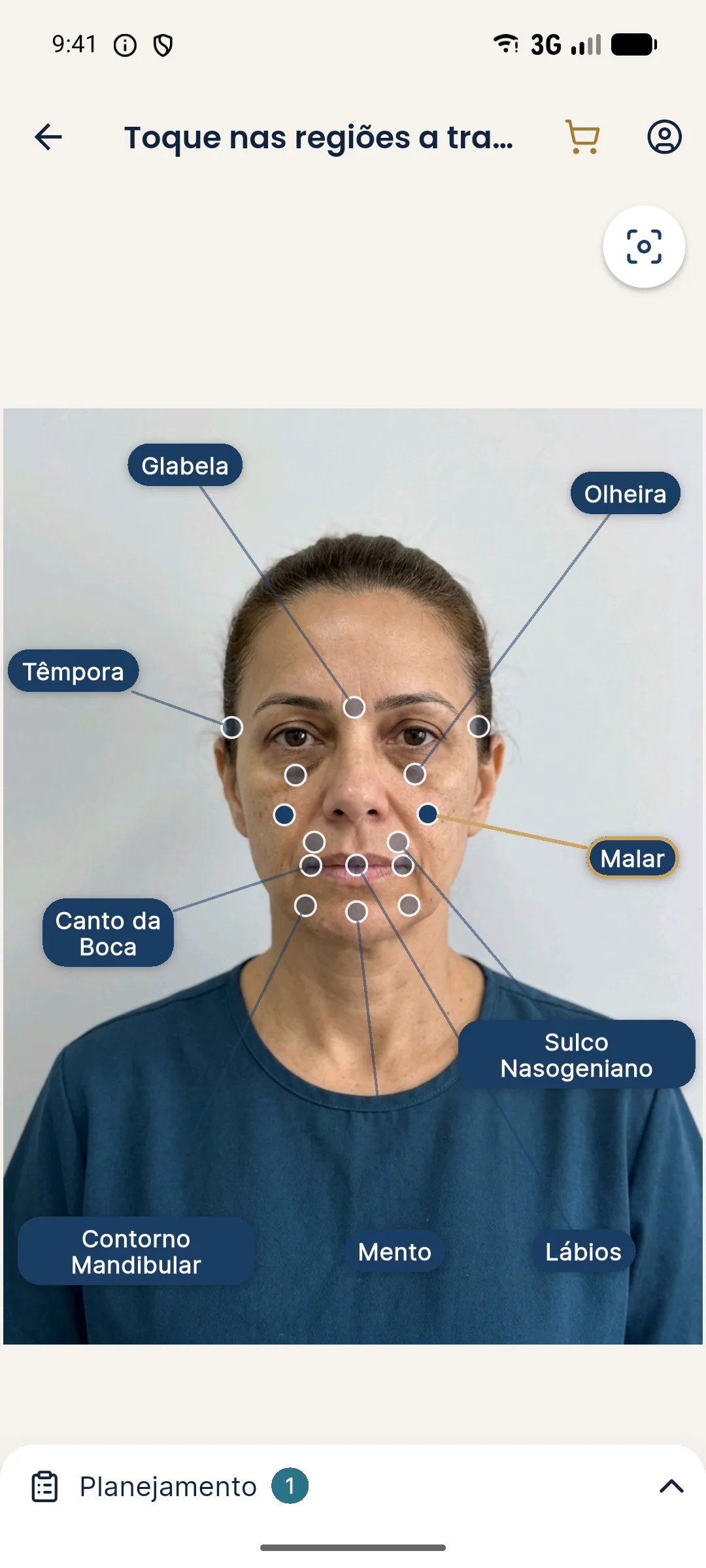
Explain to the patient that the image does not guarantee symmetry and that the difference between the sides may remain. See simulation for a patient with asymmetry, the simulation shows the patient's asymmetry and perfect symmetry is not the goal.
Which areas usually get attention?
Lips (cupid's bow and mouth corner asymmetry), eyes (different heights, palpebral fissure), eyebrows, cheekbone (projection), jaw (width and masseter), chin (deviation) and folds. Each area has its own risk and logic. With asymmetric lips, for example, the difference is often anatomical and the approach is careful. See asymmetric lips: assessment, eyes at different heights, asymmetric jaw and asymmetric chin.
What is the sequence of the plan?
See also plan for first-time facial harmonization and facial identity: how to preserve it.
How do you talk with the patient?
Replace "correct" with "balance" and "flaw" with "difference". Show the photos and let the patient point out what they want to treat. Say what the procedure can and cannot do. If the patient wants perfect symmetry, that is a sign to dig deeper in the conversation. See patient with unrealistic expectations and body dysmorphic disorder in facial harmonization.
Reasoning test
Summary
On an asymmetric face, define the origin of each difference, treat only what bothers the patient and can be improved safely, document with photos and lines from the start, and be honest: the goal is balance, not symmetry.
Frequently asked questions
Can facial asymmetry be fully corrected with facial harmonization?
Generally no. Injectables can soften soft tissue volume asymmetries, but bone, dental or functional asymmetries have limits. The goal is balance, not symmetry.
Should every asymmetry be treated?
No. Most are natural. You treat what bothers the patient and what can be improved safely. Accepting is also a valid approach.
How do you find the origin of an asymmetry?
Through examination at rest and in movement, the bite, standardized photos and, when needed, assessment by other professionals such as an orthodontist or surgeon.
Does the simulation show how symmetry will turn out?
It shows the subtle effect of the volume marked. It does not promise symmetry and may even highlight asymmetries that already exist, which should be discussed.
Harmy images are illustrative simulations generated by AI from the patient's photo to support the conversation between practitioner and patient. They are not a promise of results. Indication, technique, product and volume are solely the decision of the licensed practitioner. This content is for information only and does not replace a clinical assessment.