
Eyes at different heights: how to assess
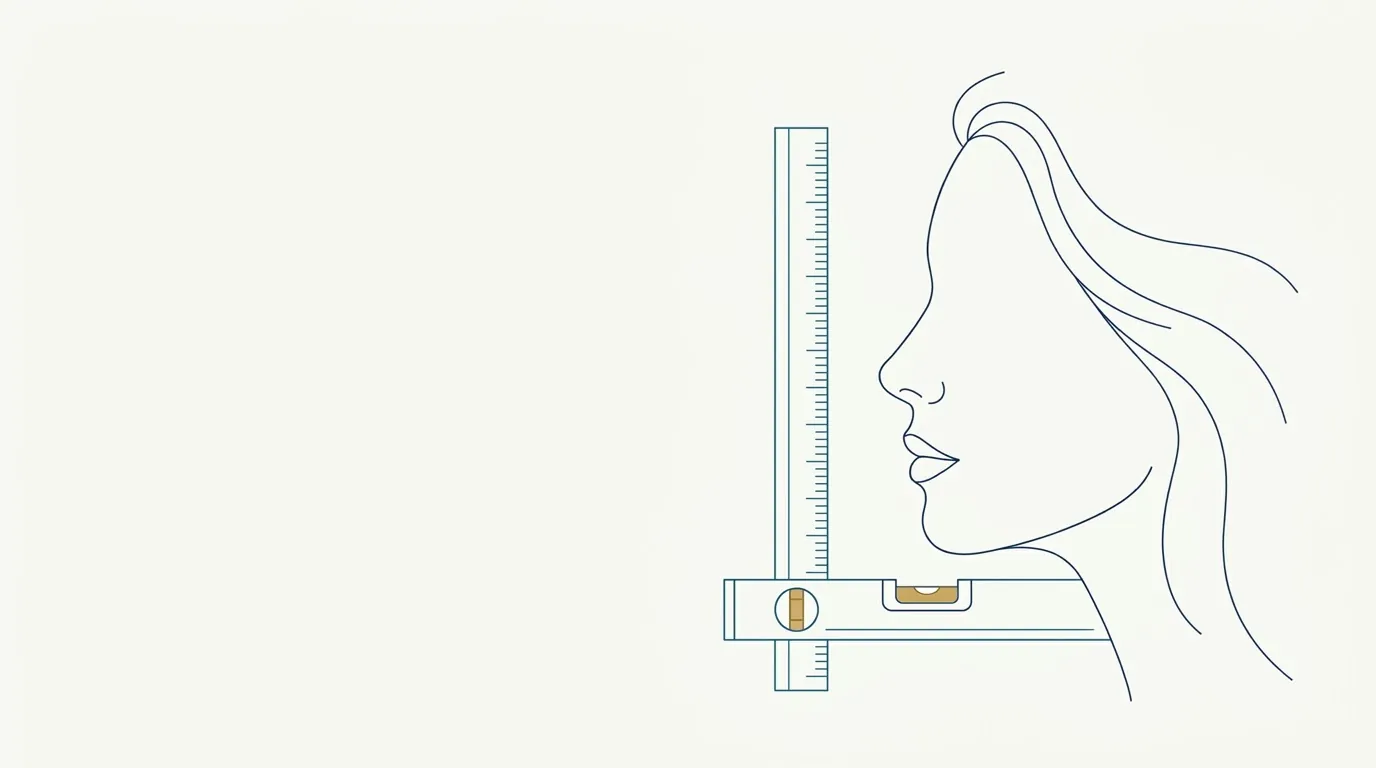
- Nerve
- Highlighted area
Quick facts
- Concern
- One eye looks higher than the other, with a tilted line of the eyes
- Key question
- Is the difference in the bony position of the orbits, the brow, the eyelid or the tilt of the photo?
- Plan risk
- Trying to equalize eye height with toxin or volume when the cause is bony
- First step
- Front photo in the Frankfurt plane and tracing of the bipupillary line
Two eyes at different heights change how the whole face reads. The patient notices that the line of the eyes "drops" to one side, that glasses sit crooked, that makeup does not line up. The concern is concrete, and the assessment is therefore one of the most measurable in the clinic: it can be traced, measured and documented.
The challenge is the cause. A difference in height can come from the orbit, from the head position in the photo, from the brow or from the side of the face that grew differently. This page explains how to measure, what misleads and where facial harmonization can help. For the general picture, see asymmetrical eyes and tilted bipupillary line.
How to measure eye height
The starting point is a standardized front photo. The head should be in the Frankfurt plane, the gaze at the horizon, the shoulders level and the camera at eye height. Without that, any measurement is worth little.
On the photo, draw:
- The bipupillary line, connecting the center of the two pupils.
- A reference horizontal (the edge of the image, if the photo was aligned).
- The facial midline, vertical, through the glabella, nose tip, philtrum and chin.
- The line of the mouth corners.
Compare the tilt of the three horizontal lines. If the bipupillary and commissural lines tilt together, the whole face is tilted. If only the bipupillary line strays, the difference is in the eyes.
| Finding | Likely reading | Usual approach |
|---|---|---|
| Bipupillary, commissural and photo tilted together | Photo or posture | Retake the photo |
| Bipupillary tilted, commissural horizontal | Orbit or eye position difference | Assess bony cause |
| Bipupillary horizontal, brows tilted | Brow difference | Assess toxin and ptosis |
| Equal eyes, eyelids at different heights | Ptosis or eyelid crease | Ophthalmologist, oculoplastic surgeon |
Bony causes and the limit of facial harmonization
When the orbits are at different heights, the orbital rim and the facial skeleton are responsible. It is a case of skeletal facial asymmetry, often associated with deviation of the jaw, the midline and the occlusal plane. The definitive correction is surgical, with specific and rare indications.
Facial harmonization does not move the orbit. What it can do, in some cases, is soften how the face reads through small volume compensations in nearby areas, such as the cheekbone and the temple, and through adjustments to brow position. Expectations need to be realistic: the goal is to reduce what draws the most attention.
For the planning logic, see plan for an asymmetrical face and simulation in a patient with asymmetry.
The brow as an ally or as a disguise
A lower brow can make the eye on that side look lower or smaller. The opposite also holds: lifting the brow on one side to compensate for a heavy eyelid makes the eye look higher. Botulinum toxin in the frontalis and in the depressors can balance the position, at the professional's discretion. But if the lift is compensatory, treating the side that works harder can drop the brow and worsen the asymmetry.
For the assessment, see asymmetrical eyebrow, botulinum toxin for facial asymmetry and ideal eyebrow position. When in doubt, start with the side the patient already uses less.
When to investigate beyond the aesthetic
Some signs change the approach:
- recent onset of the height difference;
- associated eyelid droop;
- double vision, pain or headache;
- an eye that recently looks more sunken or more prominent;
- history of facial trauma.
In those cases, referral to an ophthalmologist, neurologist or surgeon comes before the aesthetic plan. Also refer when ptosis from a neurological change is suspected. See referring patients in HOF.
The role of habit
Some people tilt their head habitually, and the photo catches that habit. In others, posture compensates for a real asymmetry. Ask whether the patient usually tilts the head in photos or when speaking. Watch them walk and talk before photographing them, to see their natural posture. See asymmetrical selfie and mirror, selfie and photo: differences in self-image.
Simulation and expectations
Harmy starts from the front photo and simulates the markable areas. It does not correct the tilt of the bipupillary line or alter the position of the eyes. If the photo is tilted, the projection inherits the tilt. That is why standardized photography is indispensable. The image is an illustrative simulation, in 2D.
Summary for the decision
Eyes at different heights require a standardized photo, tracing of the bipupillary line and separation of orbit, brow, eyelid and posture. Facial harmonization balances specific points, it does not move the orbit. Refer when the cause is medical or surgical and be honest about the limits. All at the discretion of the qualified professional, according to the rules of their professional council in Brazil, without promising results.
Frequently asked questions
What is the bipupillary line?
It is the line connecting the center of the two pupils. In an aligned face, it sits close to horizontal. It serves as a reference for assessing eye height and facial tilt.
Can eyes at different heights be corrected?
When the cause is bony, the correction is surgical and rare. If the difference is in the brow or soft tissue, facial harmonization can balance part of how it reads. Often the goal is to reduce what draws attention, not to equalize.
Can the photo show eyes at different heights when it is not real?
Yes. A tilted head, uneven shoulders and an off-axis camera create a tilted bipupillary line. Standardizing the photo comes before the assessment.
When should I investigate beyond the aesthetic?
If the difference is recent, progressive or comes with visual symptoms, pain or neurological changes, the medical referral comes before any aesthetic approach.
Harmy images are illustrative simulations generated by AI from the patient's photo to support the conversation between practitioner and patient. They are not a promise of results. Indication, technique, product and volume are solely the decision of the licensed practitioner. This content is for information only and does not replace a clinical assessment.