
Face after pregnancy: what changed and what to assess

- Nerve
- Highlighted area
Quick facts
- Concern
- A face that looks more tired, thinner or different after pregnancy and breastfeeding
- Key insight
- Part of the changes is temporary, tied to hormones, sleep and weight, and rushing makes the plan worse
- Supporting measure
- Breastfeeding stage, stable weight, sleep and photos from before pregnancy
- Limit
- Injectable procedures are not planned during pregnancy or, in general, during breastfeeding
The woman who comes to the clinic months after giving birth often brings a similar sentence: "I don't recognize myself in the mirror." Her face is different, and she cannot say whether it is the sleep, the hormones, the weight or her age. The urgency to fix it is high, because life with a baby demands a presentable look. The most useful response from the professional is usually to hold back the rush and organize the reading.
This page helps you separate what is temporary from what is structural, decide the timing of the plan and talk about breastfeeding and safety. For related contexts, see pregnancy and breastfeeding in facial harmonization, menopause and the face and global concern in stages.
What changes in the face during and after pregnancy?
Several factors act at the same time. Pregnancy hormones change fluid retention, oiliness and pigmentation. Weight gain increases facial fat, and the later loss can leave the face thinner than before. Postpartum sleep deprivation highlights dark circles and dullness. And in women who breastfeed, the body's nutritional demand can contribute to a more tired appearance.
Some changes are temporary and tend to settle within months. Others stay and become part of the face's story. The difficulty is that the patient cannot tell which group she is in, and neither can the professional in the first weeks. That is why photographing and waiting are diagnostic tools.
When to wait and when to act?
The rule of prudence is simple: do not plan on a face that is still changing. Weight, hormones and sleep stabilize over time, and the face eight months after delivery can be very different from the face at two months. In addition, injectable procedures in pregnant women are not planned, and during breastfeeding the approach depends on the professional's assessment and on the rules of their professional board, generally with great caution.
That does not mean the consultation cannot happen. A good time to talk is early, to record the starting point, guide skin care and agree on a plan for later. The patient leaves with a clear expectation, and the professional with a history.
| Moment | Suggested stance | Reason |
|---|---|---|
| Pregnancy | Do not plan injectables | Safety and no indication |
| Breastfeeding | Wait, unless specifically assessed | Caution and professional board rules |
| Weight still changing | Wait | The face will still change |
| Stable weight and regular sleep | Plan calmly | More reliable baseline |
| Functional complaint or pain | Medical assessment | Not an aesthetic concern |
Which concerns appear most often?
Three groups stand out. The first is the tired look, with a tear trough and a less lifted cheek, described in tired-looking face. The second is volume loss in someone who lost weight after gaining it, which resembles the picture of gaunt face after weight loss. The third is skin changes, with spots and texture, which do not always belong to facial harmonization.
Not every postpartum concern is about volume. Hormonal spots and pigmentary dark circles call for a skin assessment, and filler may be poorly indicated. Recognizing this avoids frustration: the professional gains credibility by saying what facial harmonization does not solve, as in purple or dark under-eye circles and facial spots and facial harmonization.
What if there are clinical complaints?
Persistent fatigue, heavy hair loss, mood changes and unexpected weight loss can have clinical causes postpartum, such as thyroid changes or anemia. It is not the facial harmonization professional's job to investigate, but it is their job to notice and refer. A respectful sentence, such as "this deserves a conversation with your doctor," does the job without alarming. When the emotional side dominates the consultation, the priority is to listen and guide, and aesthetics can wait. See anemia and facial harmonization.
How to plan when the time comes?
When the right time arrives, the plan follows the usual logic of structure before detail. If volume loss is the main issue, support for the cheekbone and, when indicated, the temples comes first. If the tear trough from relief is the issue, it is assessed after cheek support. If the concern is skin quality, there may be room for a biostimulator, at the discretion of the qualified professional, after assessment.
All injections carry risks, which include swelling, bruising, asymmetry and, rarely, vascular complications, and hyaluronidase must be available when the material is hyaluronic acid. The patient needs to understand that she is treating a face in transition, and that the plan is reassessed.
What does Harmy add?
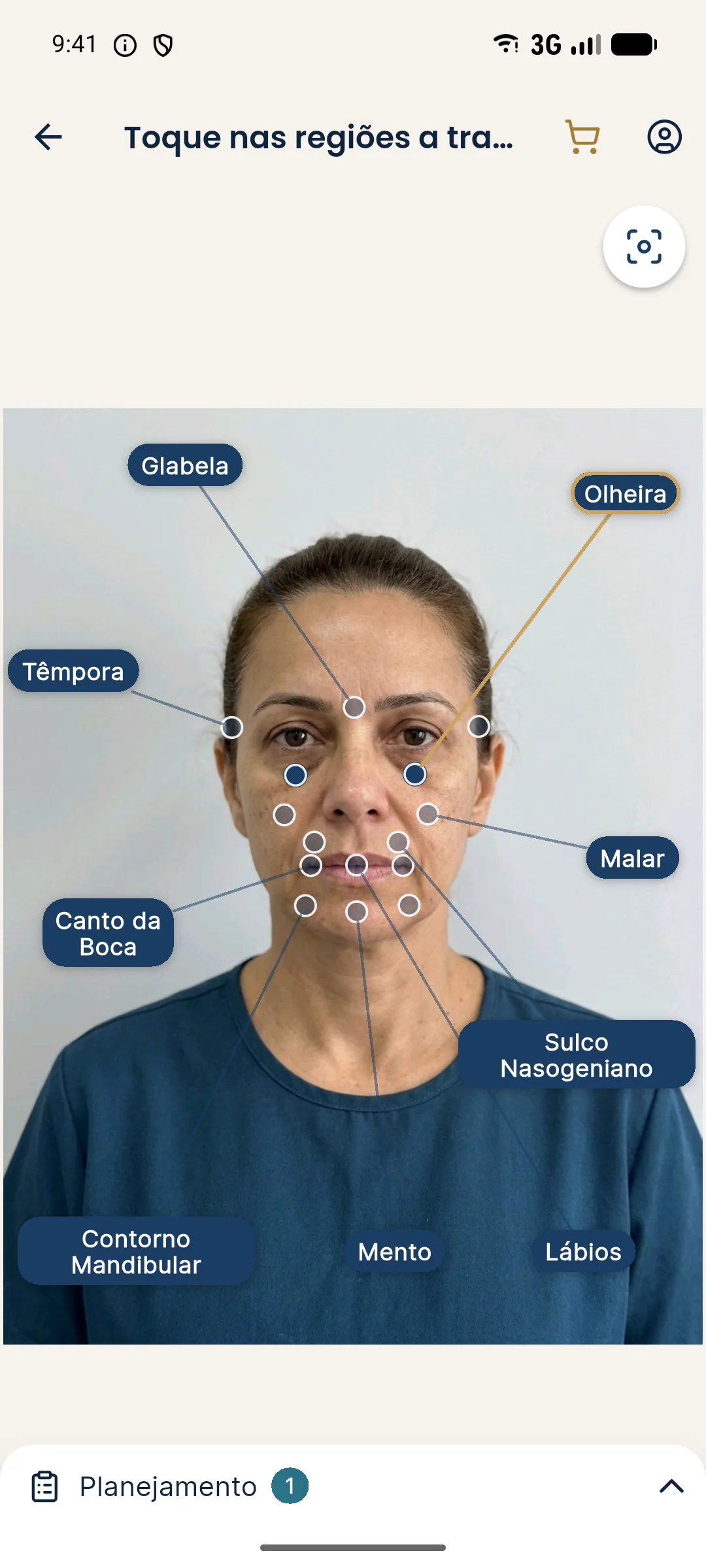
The app is useful once the face has stabilized and the patient wants to visualize the plan. Harmy uses a frontal photo and shows a subtle projection in the marked areas, without changing makeup, skin or background. The image will not correct spots, pigmentary dark circles or weight, and this should be said clearly.
Frequently asked questions
When can I have facial harmonization after pregnancy?
The decision is the professional's, and generally takes into account the end of breastfeeding and the stabilization of weight and body. Injectable procedures are not planned during pregnancy.
Why did my face change after giving birth?
Hormonal and weight changes, fluid retention, sleep deprivation and, in some cases, loss of facial fat all contribute. Part of this tends to settle over time.
Can I have botox or filler while breastfeeding?
Generally the professional advises waiting. The approach depends on the assessment and on the rules of their professional board, and the subject is handled with caution.
Do postpartum spots and dark circles have a solution with facial harmonization?
Dark circles from pigmentation do not respond well to filler. Spots call for other skin care. Facial harmonization works mainly on volume and structure.
Harmy images are illustrative simulations generated by AI from the patient's photo to support the conversation between practitioner and patient. They are not a promise of results. Indication, technique, product and volume are solely the decision of the licensed practitioner. This content is for information only and does not replace a clinical assessment.