
How to explain temple treatment to the patient

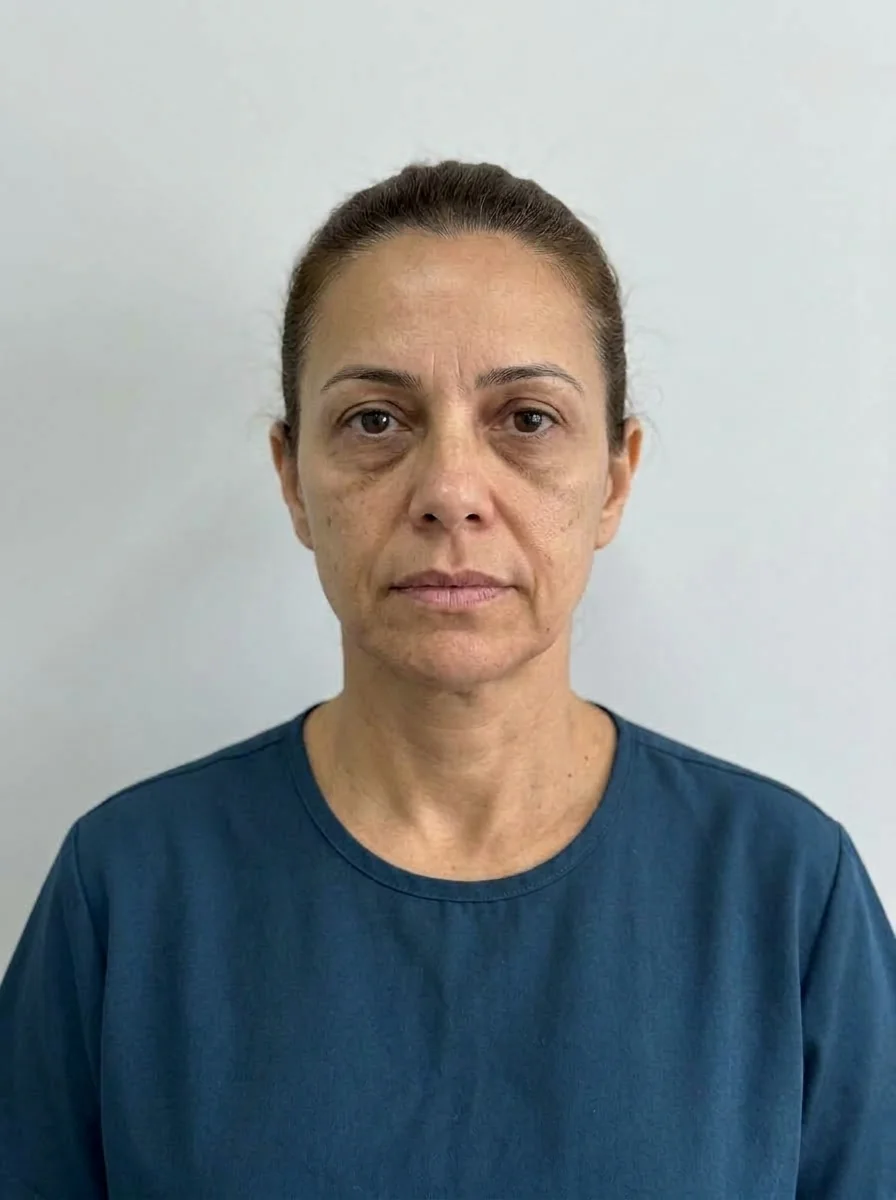 BeforeSimulation
- Artery
Quick facts
- Area
- Sides of the forehead, between the eyebrow, the ear and the zygomatic bone
- Common concern
- Almost none: patients rarely ask about the temples
- Risk to explain
- High vascular risk and the importance of the vessels in the area
- Conversation tip
- Show from the front how the temple hollows and changes the frame of the face
Few patients ask for "temple filler." They ask to look less tired, younger, more harmonious. The one who notices the temple is the professional, who sees the face from the front and spots the hollow frame, the more evident bone and the lateral shadow. The challenge of the conversation is to justify an area the patient never mentioned as a concern, without forcing a sale and without creating a need they do not feel.
At the same time, the temple is among the areas of highest vascular risk on the face. So the conversation has to be honest in both directions: why it can make a difference and why it demands care. This page offers a structure. For the technical content, see temples and temple filler. For the fossa and the fat pad, temporal fossa and temporal fat pad.
How do you show the temple to someone who doesn't see it?
The most effective way is to use the mirror or the front photo and ask the patient to look at the frame of the face, not the forehead. In a young face, the line between the forehead and the cheek is convex and continuous. When the temple loses volume, that line breaks and the face seems to narrow from top to bottom. Showing this, instead of just saying it, changes the conversation.
This line informs without pressure. The patient stays free to decide, and the professional documents that the area was shown and discussed. See also how to use the mirror in the consultation and how to use the zone map in the conversation.
When does it make sense to bring up the temple?
| Situation | How to approach it |
|---|---|
| Patient concerned about a tired look | The temple can be part of the explanation, along with the tear trough and the cheekbone |
| Middle-aged patient with lateral volume loss | Show the frame and ask whether it bothers them |
| Young patient, no hollowing | Generally no indication |
| Patient with no concern and no interest | Respect that; do not insist |
| After weight loss | Assess the whole face, carefully |
The principle is the same one behind how to compliment without inducing a procedure: inform without creating need.
Which risks should be explained?
The temple has large, superficial vessels, including branches of the superficial temporal artery and the middle temporal. Vascular occlusion, rare, can cause necrosis and visual changes. There is also the risk of swelling, bruising, asymmetry and, in this area, discomfort when chewing in the first days in some patients. The professional must know the anatomy and keep hyaluronidase available.
What is the timeline?
What does the simulation show?
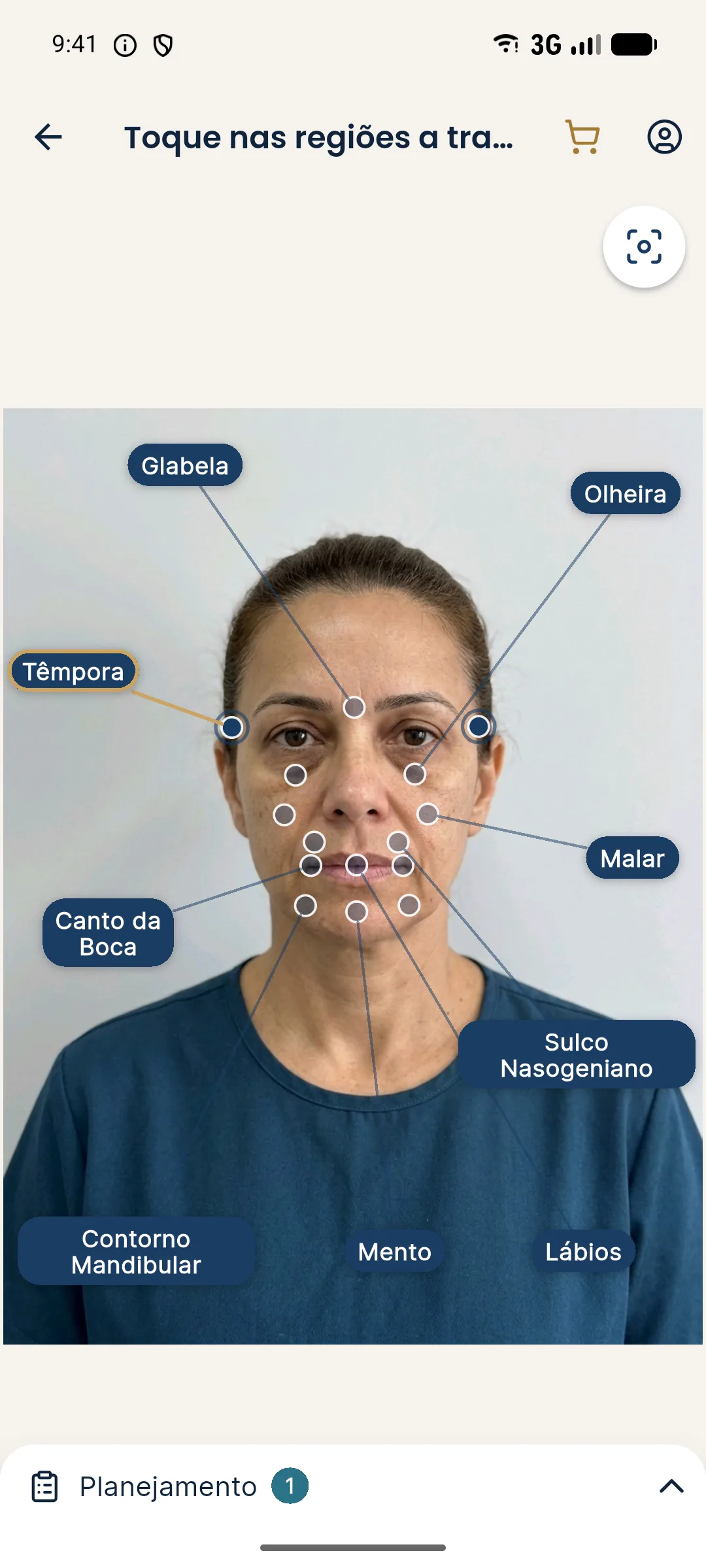
The temple is a marking point in Harmy, and the projection helps the patient see the effect on the frame of the face, which they had not noticed. It is an illustration: the visual difference is usually subtle, and showing the image next to the mirror helps them understand what changed. Use this tool with caution so as not to induce a need. It is an illustrative simulation, not a promise of results.
How do you handle the patient's decision?
If they say "it doesn't bother me," respect that. If they say "I want to see," show the simulation as an illustration. If they say "what if I don't like it?", remind them that hyaluronic acid can be treated with hyaluronidase, but that prevention is better. In any case, do not pressure and do not use fear-based arguments. See what if I don't like the result? and explaining the cheekbone to the patient, a neighboring area that often comes up in the same conversation.
What should be recorded?
Write down that the area was shown, the concern (or the lack of one), the risks explained, the patient's decision and the consent. The informed consent should mention vascular risk. If the patient declines, record it without adjectives. For the broader conversation of explaining the whole face, see facial analysis by thirds.
The temple is an area where informing well is worth more than selling. When the patient decides with clarity, satisfaction tends to follow.
Frequently asked questions
Why treat the temple if the patient doesn't complain about it?
Because volume loss in the temple changes the frame of the face and can accentuate a tired or aged look. The decision is the professional's, after assessment, and should be explained carefully.
Is temple filler safe?
The area has important vessels and is considered high vascular risk. The most serious complication is vascular occlusion, rare but urgent. Hyaluronidase must be available when hyaluronic acid is used.
What does the patient notice after treating the temple?
They usually notice a more harmonious facial frame, and sometimes say their gaze looks more rested. Expectations should be adjusted, because the effect is subtle and varies between people.
Does every patient with hollow temples need treatment?
No. The indication depends on the face as a whole, the concern and the patient's wishes. Treating an area only because it is hollow, with no complaint, is something to think about.
Harmy images are illustrative simulations generated by AI from the patient's photo to support the conversation between practitioner and patient. They are not a promise of results. Indication, technique, product and volume are solely the decision of the licensed practitioner. This content is for information only and does not replace a clinical assessment.