
How to explain the cheekbone plan to the patient

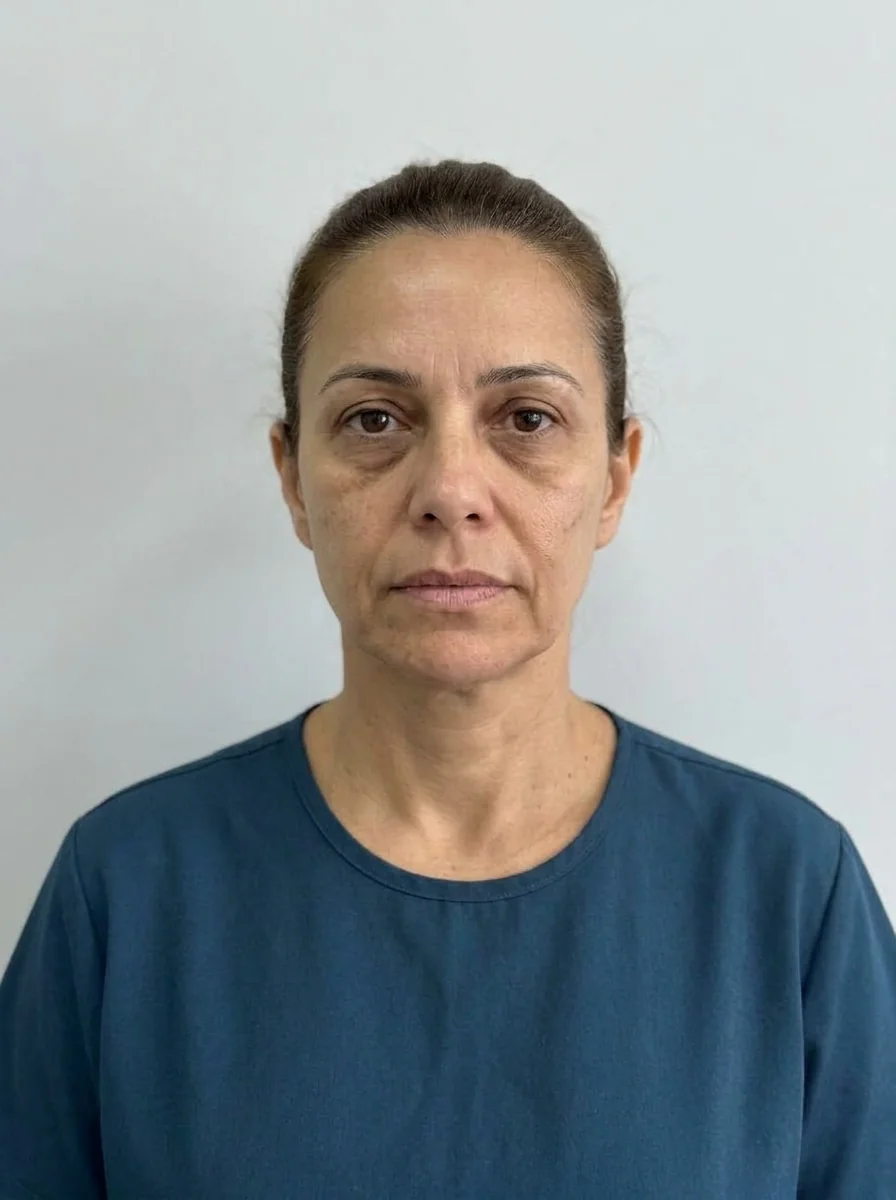 BeforeSimulation
- Nerve
- Highlighted area
Quick facts
- Core message
- Malar projection supports the midface, it does not slim the face
- Tools mentioned
- Filler and biostimulator, at the professional's discretion
- Limit
- Does not replace surgery or correct excess skin
- Risk to mention
- Swelling, bruising, asymmetry, nodules and vascular complication
"I want a slimmer, lifted face, with filler in the cheek." This request is common and contains two expectations the technique does not always deliver. The malar area (the "apple" of the cheek) supports the midface and the gaze but, if treated without judgment, it can round the face out instead of slimming it. The explanation to the patient needs to separate what malar projection can offer from what it cannot.
What can you say about what the cheekbone does?
The sentence defines the function (support), the usual concern (tiredness) and the goal (balance). It also removes the idea of "more volume." The page on the malar area details the point for the professional.
How do you tell projection apart from volume?
Patients tend to think "more cheek" is the solution. Show the difference:
| Concept | In plain language | Possible effect |
|---|---|---|
| Projection | Moving forward and outward, giving support | May improve the transition to the eye |
| Volume | Filling the cheek | May round the face |
| Lift support | Propping up tissue that descends | May soften the shadow around it |
Support and volumization are different tools. The plan may combine the two, at the professional's discretion after assessment. See malar filler and zygomatic filler.
What about the promise of a slimmer face?
This is the sensitive point. Those who ask to "slim" usually mean the perception of contour, not an actual reduction. Depending on the face, increased malar projection can favor the sense of slimming (because it creates a more defined line of light and shadow) or, on the contrary, make the face rounder. Be clear:
For a plan that combines areas, see explaining the jawline plan and explaining facial planning.
How do you use the Harmy simulation?
Harmy marks the Cheekbone point on the front-facing photo. The simulation shows a subtle change in support, useful for patients who fear overdoing it. Because the projection is generated from a front-facing photo, it does not show lateral projection or depth, and this must be stated.
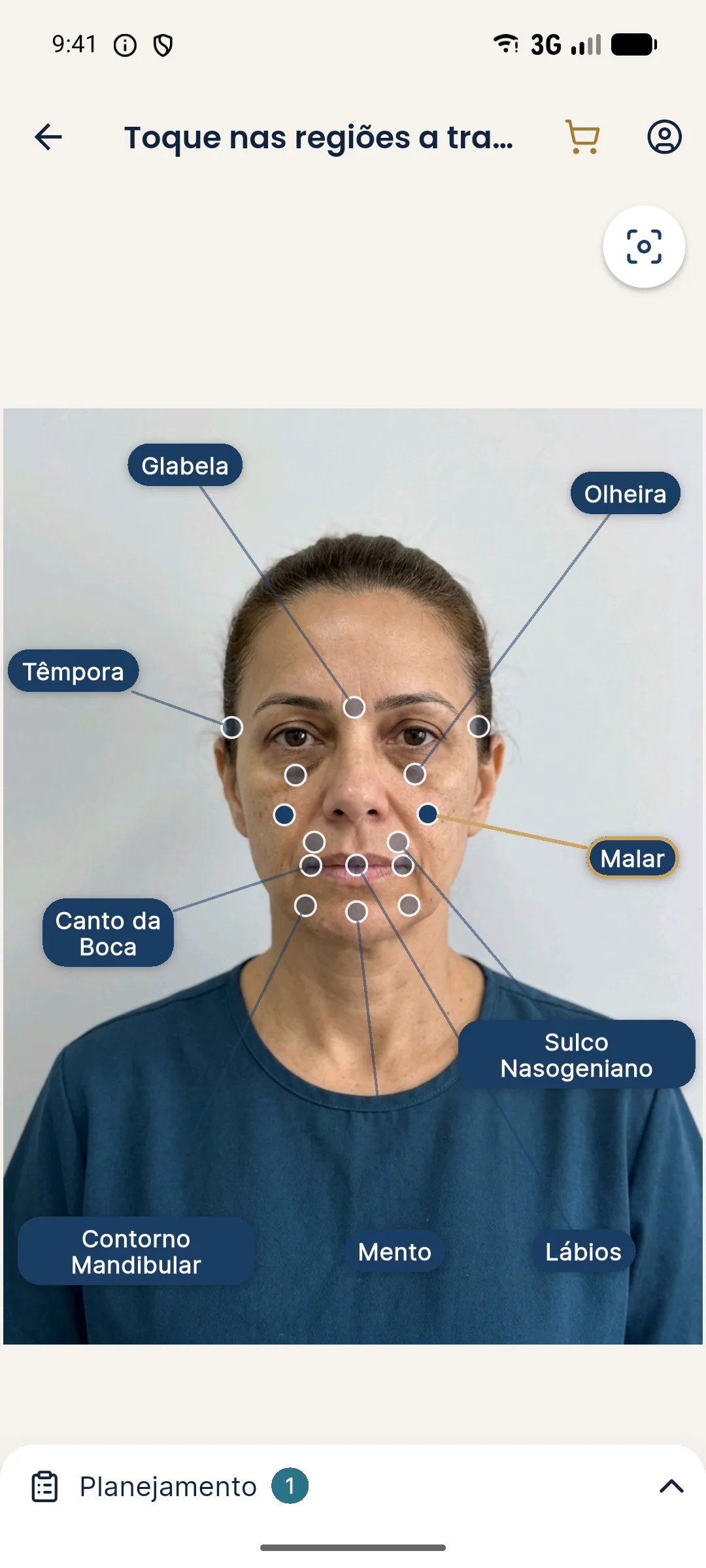
Show the Before and the simulation in the slider, and ask the patient to describe the difference they notice. This helps see whether their expectation resembles yours. See presenting the projection in the consultation.
Which risks should you explain?
The malar area is a moderate-risk area, with vessels and the infraorbital nerve nearby. The patient should hear, in proportion:
- swelling and bruising, which are common;
- asymmetry, from different volumes or from anatomy;
- nodules or irregularities;
- excess volume, which may require correction;
- more rarely, a vascular complication.
When hyaluronic acid is used, hyaluronidase should be available, and it is worth explaining to the patient that dissolving is possible (see explaining hyaluronidase). For assessing malar bags and folds, see malar bags: assessment.
What can you say about the timing of the result?
The volume may look larger in the first days because of swelling. The right time to assess is once the product has settled.
How do you handle a patient who wants a very projected cheekbone?
Some people ask for a very prominent cheekbone, inspired by references from the internet. Be clear about what suits their bone structure and facial proportions, and show in the simulation the contrast between Subtle and Pronounced intensity. Explain that excess projection can make the gaze look heavy and the face artificial, and that the goal is harmony. If they still insist on something you consider inappropriate, it is legitimate to decline and propose a staged path.
Which questions should you expect?
What should you record?
Note the concern, the face shape, the projection plan, the risks mentioned, and standardized front and three-quarter photos in the patient record. Record the informed consent. Face shape weighs on the decision, and a plan for a round face differs from one for an elongated face.
A well-explained cheekbone plan gives the patient back control over their expectations, and gives you the confidence of delivering what you promised, which is balance.
Frequently asked questions
Does malar filler slim the face?
That is not a promise anyone can make. It can add support and projection to the midface, and in some faces the perception of contour changes, but it can also round it out. Explain this beforehand.
What should I say about malar projection?
Explain that the malar area is the apple of the cheek, which supports the midface and the gaze. Projection aims at balance, not at greater volume for its own sake.
Does malar filler improve dark circles?
In some cases, by supporting the transition between the cheek and the eye, the shadow may soften. But dark circles have diverse causes, and the indication belongs to the professional after assessment.
Which risks should I explain in the malar area?
Swelling, bruising, asymmetry, nodules, excess volume and, more rarely, vascular complication. Hyaluronidase should be available when hyaluronic acid is used.
Harmy images are illustrative simulations generated by AI from the patient's photo to support the conversation between practitioner and patient. They are not a promise of results. Indication, technique, product and volume are solely the decision of the licensed practitioner. This content is for information only and does not replace a clinical assessment.