
Glasses, Earrings and Accessories in the Clinical Photo
Quick facts
- Remove
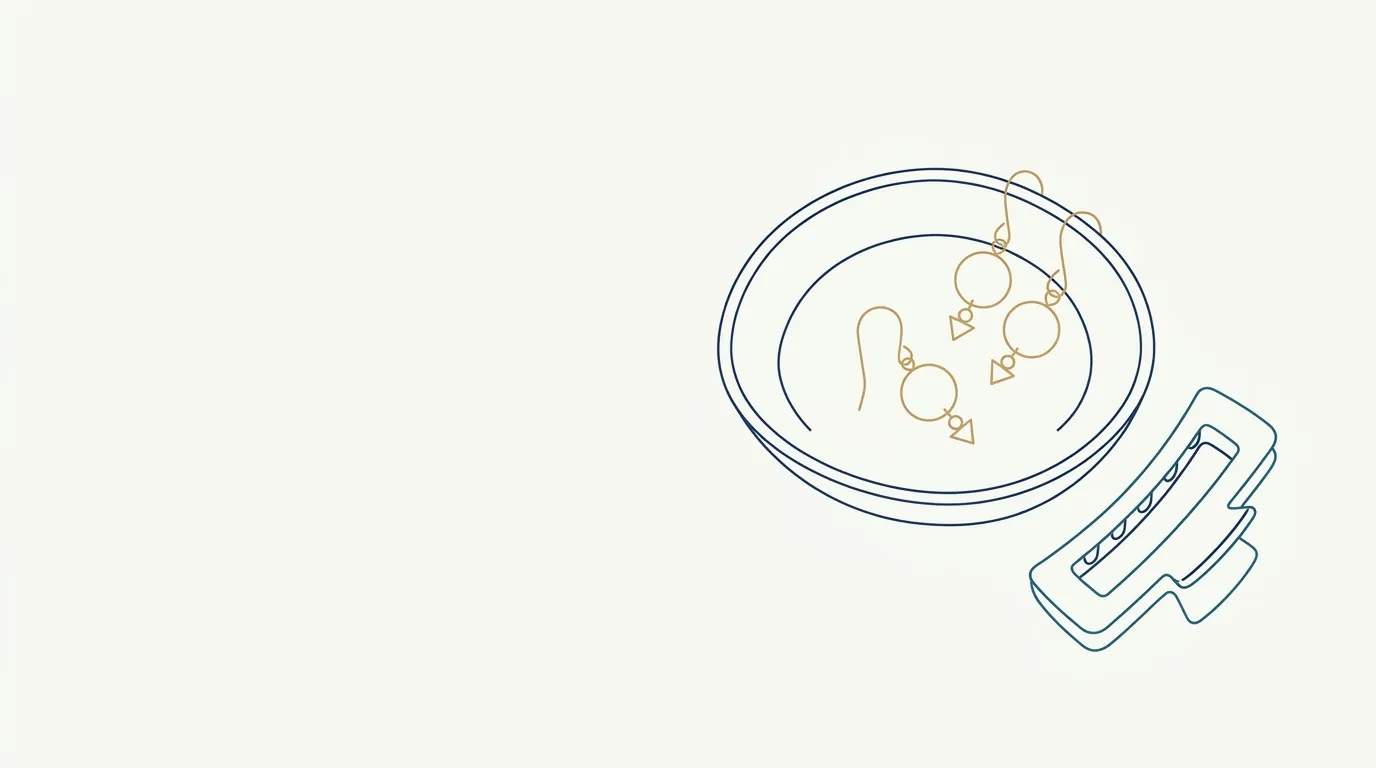
- Glasses, large earrings, removable piercings, necklaces that cover the neck, headbands and hair clips.
- Why
- They hide contours, create reflections and shadows and change how the eye, ear and jaw read.
- If you cannot
- Photograph anyway, note the accessory in the patient record and repeat it the same way at the follow-up visit.
- Watch out
- The ear and neck are also in the frame: whatever sits on them shows.
The clinical photo documents the face, not the patient "dressed up to go out." Every accessory left in the frame is one more element that can hide a contour, create a reflection or change place at the next visit. Earrings that were one way in the before and another in the after, glasses with a glare, a necklace covering the neck: all of it enters the comparison, even if no one notices.
The general rule is simple: what can come off, comes off. What cannot come off is recorded. This page lists the most common accessories, what each one interferes with and how to solve it.
Why remove accessories?
There are three reasons that keep coming up.
- Hiding contours. Glasses cover the periorbital area and part of the cheekbone; hair, headbands and scarves cover the forehead and ear; necklaces cover the neck.
- Creating reflection and shadow. Glasses frames and metal earrings reflect light. Lenses with an anti-reflective coating still reflect the light of the flash or ring light.
- Changing between visits. If the before was with small earrings and the after with large earrings, the observer's eye goes to them and the reading of the face changes.
Accessory by accessory
| Accessory | What it interferes with | What to do |
|---|---|---|
| Glasses | Covers the periorbital area, reflects light, distorts the position of the eyes | Remove. If the patient needs them to see the fixed point, photograph a sequence without and one with, and note it |
| Large or dangling earrings | Draw the eye, shade the jaw | Remove, or always use the same discreet pair |
| Small earrings | Little impact | May stay, if they are the same in both photos |
| Nose, eyebrow or lip piercing | Changes the contour and creates reflection | Remove if removable; if not, note it |
| Necklace or choker | Hides the neck and the cervicomental angle | Remove, especially for contour concerns |
| Scarf, high collar or hood | Covers the jaw and neck | Swap for a low-collar top or use a cape |
| Headband, hair clip, cap | Hide the hairline and forehead | Remove and tie the hair back, as in hair pulled back in the clinical photo |
| Colored contact lenses | Change the eye color | Note it; remove if the focus is the periorbital area |
What about a patient who cannot remove it?
There are situations where the accessory does not come off: a recent piercing, glasses without which the person cannot see, an earring the person does not remove for personal or religious reasons. The professional approach is to keep the photo, record the condition and repeat it the same way in later ones.
When the reason is religious, cultural or personal, respect the patient's choice and document it. The photo serves the care, and the patient's comfort is part of the equation too.
Care with patients who wear glasses to see
Many patients cannot look at the fixed point without their glasses. A practical solution is to ask them to look at the point with the glasses on, take them off at the last second and you take the shot right after. Another is to place the fixation point at a distance where they can see without lenses. More on gaze in looking at the horizon in the clinical photo.
How do I keep the accessory from coming back in the next photo?
The most common problem is not the accessory that stays, it is the one that changes. The patient shows up with different earrings, a different necklace, different glasses. A simple list prevents this:
What about the small objects we forget?
Some items go unnoticed and show up only in the photo:
- wireless earbuds in the ear;
- marks from a hair tie or glasses on the skin (wait a few minutes);
- mask cord;
- false eyelashes and other cosmetic adornments.
On makeup, which is a category of its own, see makeup in the clinical photo. On skin marks, such as tattoos, see face photo with a tattoo or identifiable mark.
What changes in Harmy?
In Harmy, the app detects the face in the frontal photo, on the device, and marks the points of the areas. Glasses and other elements that cover the periorbital area interfere with detection and the reading of the areas, and the projection only changes what was marked. For a more reliable illustrative simulation, photograph without glasses, with hair pulled away and accessories removed, as in standardized frontal photo.
Summary for the routine
Remove what can be removed, record what cannot and repeat the same at the follow-up visit. A short list before the photo prevents most problems and takes less than a minute. The photo is cleaner, the comparison more honest and the patient understands that there is a method.
See also the set of precautions in standardized clinical photography, which brings together light, background, distance and positions.
Who takes care of this in the clinic's routine?
Assign someone to check the preparation before each photo session, which can be the professional or a trained team member. Keep a small box or tray in the room to hold glasses, earrings and necklaces during the record, returning everything to the patient afterward. A note when booking ("come without makeup and, if you can, without large earrings") reduces the need to improvise on the day and shows the patient that there is a method behind the photo.
Frequently asked questions
Do I need to take off my glasses for the clinical face photo?
Yes, in most cases. The frame covers the periorbital area, causes reflections and shadows and changes how under-eye circles, eyelid and cheekbone read. The exception is when the patient needs the glasses to see the fixation point.
Do earrings show up in the photo and get in the way?
Large or dangling earrings draw attention, pull the eye toward the ear and may shade the jaw contour. Ideally remove them or wear the same discreet pair in every photo.
What about a facial piercing, what should I do?
If it is removable and safe to take out, take it out. If not, photograph with it and note it in the patient record, repeating the same condition in later photos.
Can I ask the patient to take off a necklace or scarf?
Yes. Items on the neck hide the cervicomental angle and the jawline, which are important assessment points in many concerns.
Harmy images are illustrative simulations generated by AI from the patient's photo to support the conversation between practitioner and patient. They are not a promise of results. Indication, technique, product and volume are solely the decision of the licensed practitioner. This content is for information only and does not replace a clinical assessment.