
Facial analysis at 30: early signs and prevention

 BeforeSimulation
Quick facts
- Goal
- Identify the first signs of aging at 30 and prioritize the plan without overdoing it
- Typical signs
- More marked dynamic lines, under-eye hollows, subtle malar volume loss and duller skin
- Plan focus
- Dynamic lines, skin quality and small volume corrections
- Caution
- Prevention is not an obligation: treat what exists and what bothers the patient, not what the calendar suggests
At 30, the patient generally does not see themselves as "aged", but already notices something. A line that used to show only when smiling is now a little more marked. The under-eye hollow looks more evident in photos. The face looks more tired at the end of the day. The skin no longer has the same glow. These are early, subtle signs that call for careful planning and, almost always, fewer procedures than the patient imagines.
This page shows how to read those signs, what to prioritize and where the idea of "prevention" calls for caution. For the previous age group, see facial analysis at 20; for the next, at 40.
Which signs usually appear at 30?
| Sign | What happens | Planning reading |
|---|---|---|
| More marked dynamic lines | Repeated muscle contraction makes the mark more visible | May respond to toxin adjustments, at the professional's discretion |
| Under-eye hollow | A combination of shadow, pigment, vessels and volume loss in the area | Requires a diagnosis: not every under-eye hollow is about volume |
| Subtle malar volume loss | Reduced support of the middle third | Watch the palpebromalar groove and the start of the nasolabial fold |
| Duller skin | Less hydration and renewal | A skin care topic, not always one for injectables |
| First perioral signs | Faint vertical lines | Observation, not necessarily treatment |
Dynamic wrinkles are the ones that appear with movement. When repeated over years, they can leave a crease that persists at rest, the static wrinkles. At 30, it is common for the patient to be right in this transition, which explains the mix of concerns.
Prevention: what can you honestly say?
The word "prevention" sells, and the science gives nuanced answers. What can be said with confidence:
- Botulinum toxin reduces muscle contraction while the effect lasts, and that softens the expression line.
- The hypothesis that continued use reduces future crease formation is debated and depends on the patient and the area.
- Care with sun, sleep, smoking and hydration has a recognized role in skin quality.
- Fillers do not "prevent" aging; they correct or reinforce volume that has already been lost or is out of proportion.
How do you prioritize the plan?
Follow the order that usually respects the face at 30:
- Listen to the concern before any suggestion. Many patients at this age ask for something specific.
- Dynamic lines that bother them. Assess the forehead, glabella and periorbital area in movement, as in dynamic facial analysis.
- Under-eye hollow. Tell apart shadow from volume, from pigment and from vessels; only the first responds to filler. The area is covered in under-eye hollows.
- Middle third. Subtle loss of malar support can respond to small volumes, but only if there is a concern or disproportion.
- Lips, if the patient wants them. With conservative proportion and volume.
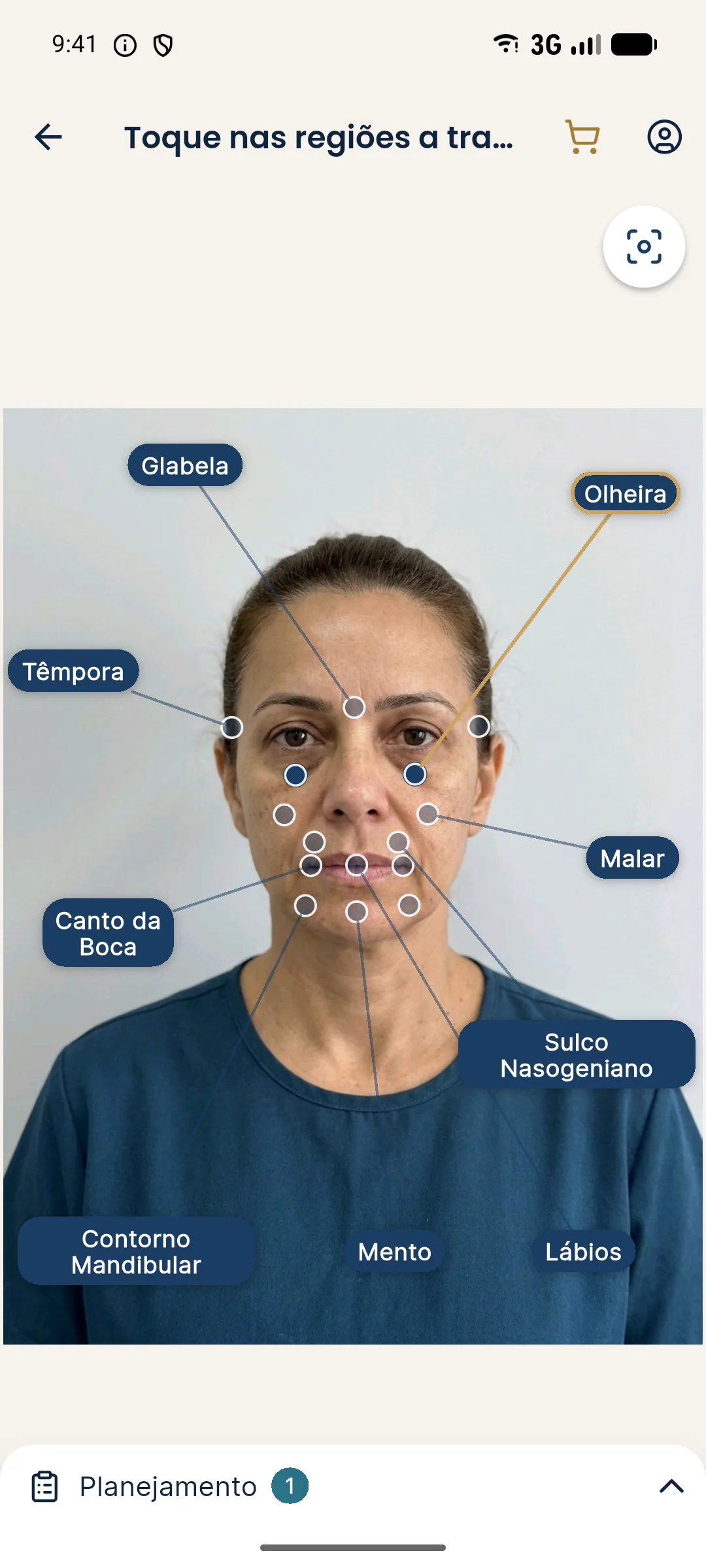
Under-eye hollows at 30: not every one calls for filler
The under-eye hollow is one of the most common requests at this age. It can come from lost volume in the tear trough, skin pigmentation, vessels visible through thin skin, or fat bags. Filler resolves, in some cases, only the volume component. With pigmentary under-eye circles, the treatment is different.
The tear trough is a high vascular risk area. Hyaluronidase must be available, and the patient needs to know that the Tyndall effect and persistent swelling are described complications. The diagnostic reasoning is on the pages for under-eye hollows and under-eye filler.
How do you use the simulation at 30?
The projection helps the patient understand what the area can gain and, just as important, what it does not gain. On a 30-year-old face, the changes in the simulation are subtle, because the volume is small and the intensity should be conservative.
And the skin, outside the clinic?
At 30, an important part of the plan happens at home. Daily sunscreen, regular sleep, hydration and cutting back on smoking change skin quality in a way no injectable replaces. It is worth asking what the patient uses, since when and how regularly, and advising a dermatological assessment when the concern is about texture, spots or acne. Saying this is not steering the patient away from the clinic: it shows that the HOF result rests on habits, and that part of what they want to see in the mirror depends on them.
Another practical point is the expected cost over the years. Even conservative plans have maintenance, and a 30-year-old who starts with everything at once usually ends up with a higher yearly budget than expected. Talking about this at the first consultation avoids dropped treatment and uneven results between sessions.
How do you handle a request to "prevent"?
Some patients arrive with a ready-made plan: toxin, filler and biostimulator "to not age". The professional is responsible for telling a wish from an indication. Useful questions: what do you see in the mirror today that bothers you? What do you expect five years from now? How much time and money do you want to invest in maintenance?
Maintenance over time is covered in maintenance: toxin, filler and biostimulator, and the influence of habits in habits that change the plan: sun, smoking and sleep.
What should you record to track progress?
At 30, the big advantage is the observation window. A standardized photo today is the best argument five years from now. Record rest, expression and profile, with the same light and distance standard, and note the habits and skin products in use.
Myth or fact?
Summary
- At 30, the signs are early: lines, under-eye hollows and subtle volume loss.
- Prevention calls for caution: the promise of "preventing wrinkles" does not hold up.
- Prioritize the concern, dynamic lines, under-eye hollows and middle third, with conservative volumes.
- Tell the type of under-eye hollow before thinking about filler.
- A standardized record today is worth a lot in the coming years.
Frequently asked questions
What changes in the face at 30?
In general, expression lines become more marked, under-eye hollows more evident and there is a subtle loss of volume in the middle third. The pace varies a lot with genetics, sun, sleep and habits.
Is filler already needed at 30?
Not necessarily. The indication depends on the concern and the assessment. Many patients in this age group do not need volume, but skin care and, sometimes, toxin for dynamic lines.
Does preventive botulinum toxin work at 30?
Toxin softens muscle contraction while it lasts. The idea that it prevents future wrinkles is debated and depends on the case. The decision belongs to the licensed professional, weighing benefit, cost and risk.
What is the planning priority at 30?
Listen to the concern, treat the dynamic lines that bother the patient and look at the middle third and the under-eye area, with conservative volumes and a standardized photo to track progress.
Harmy images are illustrative simulations generated by AI from the patient's photo to support the conversation between practitioner and patient. They are not a promise of results. Indication, technique, product and volume are solely the decision of the licensed practitioner. This content is for information only and does not replace a clinical assessment.