
Planning Facial Harmonization for a Heart-Shaped Face

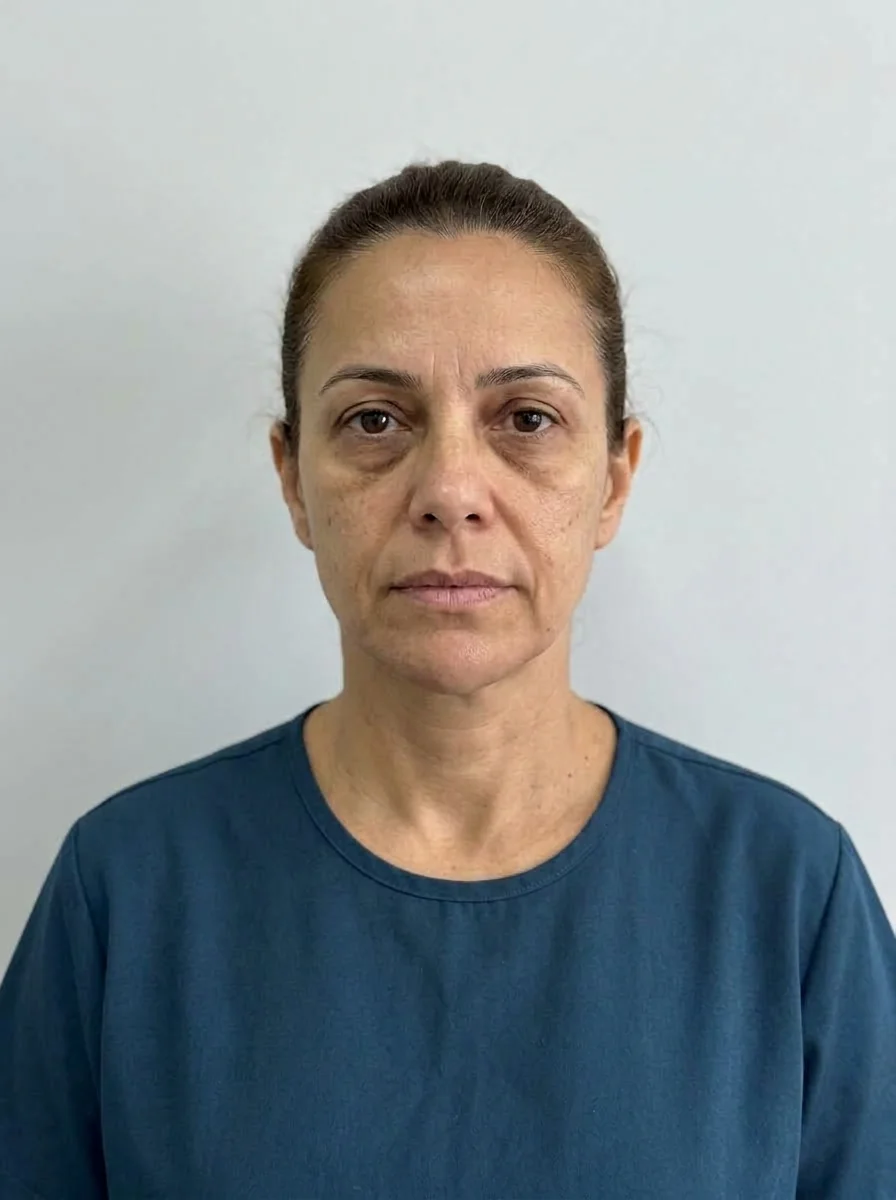 BeforeSimulation
Quick facts
- Characteristic
- Wide forehead and temples, a thinner and narrower chin
- Usual goal
- Balance the lower third with the upper third without creating a heavy chin
- Avoid
- Widening the upper third or over-projecting an already pointed chin
- Points of attention
- Temples (vascular risk), chin and jawline
The heart-shaped face has a recognizable geometry: a wider forehead and temples and a lower third that tapers to a narrow chin. Many patients with this shape complain of a "small chin" or an "upside-down triangle face". The planning task is to balance the contrast between the parts without overdoing either one.
How do you recognize and confirm it?
Photograph from the front, with hair pulled back and the forehead visible, and compare three widths: forehead, cheekbones and jaw angle. In the heart shape, the forehead and cheekbones are usually the widest and the jaw the narrowest. The glossary entry on heart-shaped face summarizes the traits. The rule of fifths and thirds helps make it objective.
But remember: shape is a starting point, not a destination. A heart-shaped face can be perfectly harmonious, and the plan is only justified if there is a concern or an imbalance that both the patient and you recognize.
What is the logic of the plan?
There are two ways to balance: increase what is small or soften what dominates. In injectable facial harmonization, only the first is possible, and the risk is overdoing it. That is why the principle is usually to treat the lower third with moderation.
| Area | Possible role in the plan | Caution |
|---|---|---|
| Chin | Give a bit more presence and projection | Avoid lengthening or making it pointed |
| Jawline | Soften the transition between cheekbone and chin | Do not create a heavy jaw |
| Cheekbone | Balance the width of the cheekbones | Avoid widening the midface too much |
| Temples | Treat volume loss that accentuates the wide forehead | High vascular risk, hyaluronidase available |
How do you treat the chin with this shape?
The chin on a heart-shaped face is often narrow and not very projected. The request is "more chin". The right questions are: is projection, width or height lacking? If projection is lacking, the benefit comes from a moderate volume; if width is lacking, extra care is needed so as not to create a square chin in the middle of a heart. See chin filler and chin and jaw: combining them in the plan.
Since assessing projection requires a profile view, photograph from the side too. The relationship with the lips, covered in lips and chin: combining them in the plan, changes how the profile reads.
What about the temples?
In many cases, the wide forehead is anatomical and should not be touched. But when the temple has lost volume and become hollow, the appearance can worsen the sense of disproportion. The decision is clinical, and the area demands extra attention: the local vascular anatomy is complex and hyaluronidase should be at hand. See temple filler.
How does the simulation help?
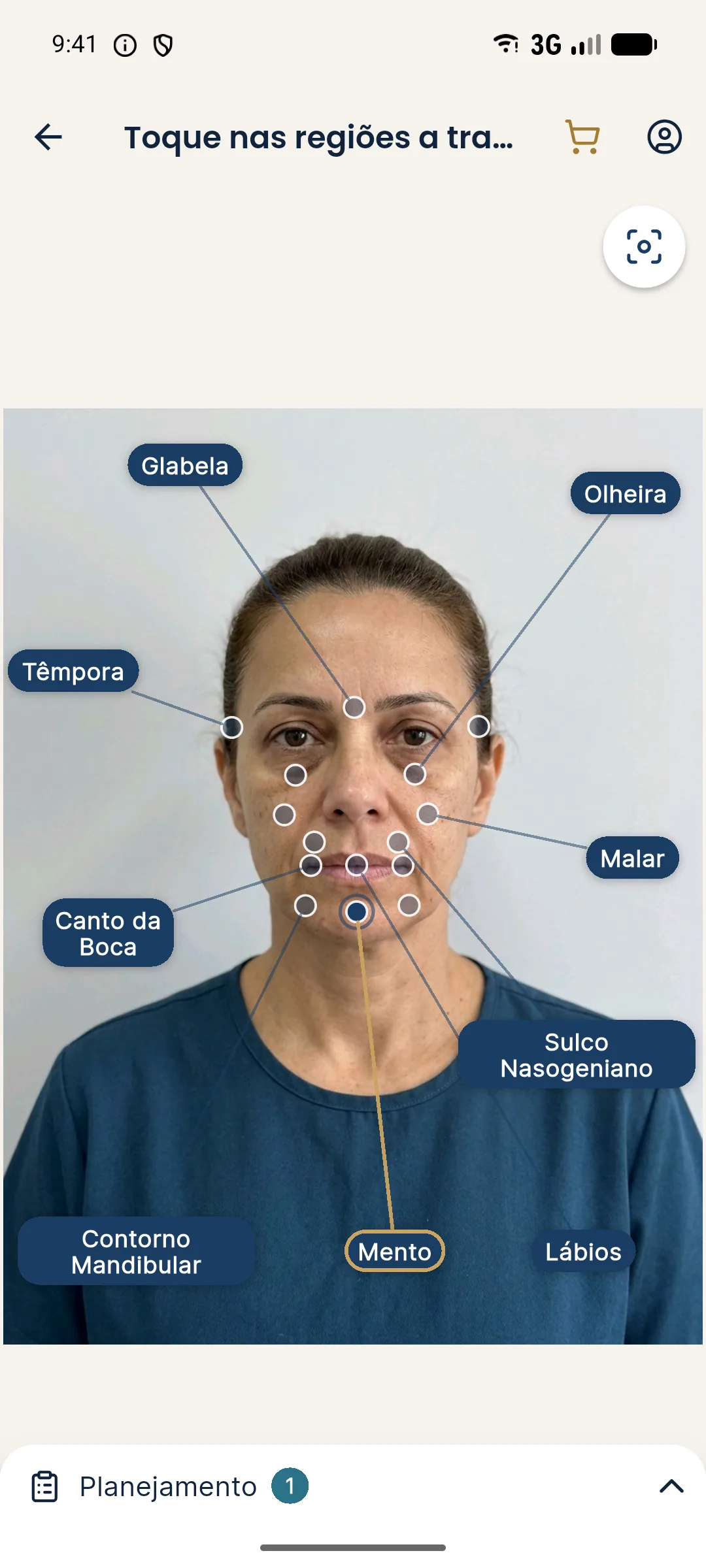
The chin simulation illustratively shows the effect of a moderate volume in the lower third. The most useful use with this shape: compare with no treatment, with 0.5 ml and with 1 ml, and see whether the relationship between chin and jaw improves or turns into contrast.
Take care not to let the image justify the volume: if the simulation looks better with more ml, remember that the real face responds differently. See comparing intensities and limits of 2D simulation.
How do you talk to the patient?
The patient with a heart-shaped face often compares themselves to an image of a "perfect oval face". Reframe the conversation: the shape is a characteristic, and the goal is balance and a natural look.
How do you organize the steps?
A practical logic: start with structure (cheekbone and jaw, if indicated), assess the response, and only then adjust the chin and the details. This way you avoid piling up product in the lower third before seeing how the whole face behaves. See structure before detail.
What reading mistakes are common?
The heart shape is mistaken at a glance for an inverted triangular face, and for a face with hollow temples, where the forehead looks wide because the lateral area lost volume. The difference matters: in the first, the structure is constitutional; in the second, there is treatable volume loss. So look at the temple in three-quarter view before concluding.
Another mistake is assuming a thin chin is always a problem. On many heart-shaped faces, a delicate chin is part of the charm. The question that decides is: does it bother the patient, and is the profile really unbalanced?
How do you check the profile before touching the chin?
Photograph from the side, in a neutral position, and look at the relationship of the chin to the lips and to the base of the nose. A chin that looks thin from the front can have adequate projection in profile. In that case, adding volume would only lengthen it or make it "pointier". See profile facial analysis for the checklist.
What if the patient asks for a "square chin"?
The shape of the chin has limits: a narrow base hardly becomes square with an injectable without looking artificial. Explain what is realistic, propose a moderate adjustment and avoid promising the desired shape. If the patient insists on something the face cannot support, go back to the expectations conversation, as in I want a bigger chin.
Practical summary
On a heart-shaped face, the rule is restraint: distinguish a constitutionally wide forehead from a hollow temple, assess the profile before projecting the chin, treat the transition with the jaw and compare versions in the simulation. If the patient has no clear concern, the plan can be minimal or nonexistent.
Frequently asked questions
What is a heart-shaped face?
It is a face with a wider upper part (forehead and temples) and a lower third that tapers to a narrower chin. It is a description of proportion, not a diagnosis.
Do I need to fill the chin on every heart-shaped face?
No. The indication depends on the concern, the profile and the balance of the whole face. Many heart-shaped faces have harmonious proportions and do not call for chin treatment.
What should be avoided with this shape?
Avoid adding width to the upper third and enlarging an already thin chin too much, which can accentuate the contrast between the parts. The plan tends to be conservative.
Can temple filler help?
When volume loss leaves the area hollow, it can be discussed. It is an area of high vascular risk, and the decision rests with the qualified professional after assessment.
Harmy images are illustrative simulations generated by AI from the patient's photo to support the conversation between practitioner and patient. They are not a promise of results. Indication, technique, product and volume are solely the decision of the licensed practitioner. This content is for information only and does not replace a clinical assessment.