
Chin filler: how many ml to use?

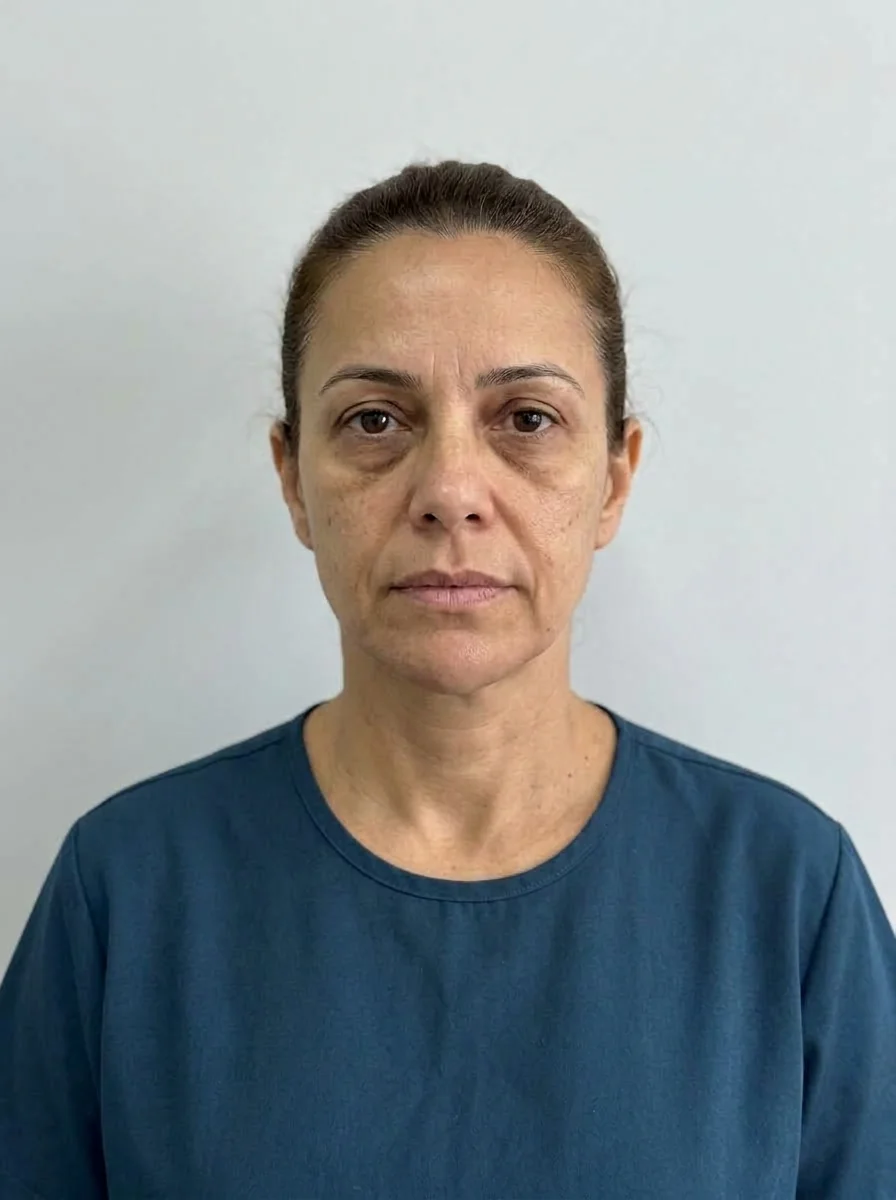 BeforeSimulation
- Nerve
- Highlighted area
Quick facts
- Question
- How many ml in the chin
- Usual range
- Small to moderate volumes, set at assessment
- What decides
- Projection, height and proportion with the lower third
- Who sets it
- Licensed professional, after assessment
The short answer: there is no number of ml that fits every chin. In general you work with small to moderate volumes, and the licensed professional sets the amount after looking at the face from the front and in profile. What the patient calls a "small chin" can be little projection, little height, or both, and each calls for a different calculation.
This page is for you to explain why chin ml cannot be settled by a chart, and how to turn the question "how many ml?" into a conversation about what the patient wants to change in their profile.
Why is ml not the right question?
Ml is a consequence, not a starting point. Three decisions come first: how far the pogonion needs to advance, how much height the chin needs to gain and whether that fits the rest of the facial profile. A patient with a short, wide chin may need a little well-supported volume; another, with a long, narrow chin, may need only projection, with no added height at all.
The same amount of product produces opposite results depending on each person's bone shape. That is why comparing ml with a patient from the internet does not help: the bone, the skin thickness and the chosen gel are different.
Projection or height: what changes in the volume?
| Goal | What it usually calls for | Risk of overdoing |
|---|---|---|
| Projection (chin further forward) | Concentrated volume and a product with good support | Pointed chin or too much projection in profile |
| Height (longer chin) | Vertical distribution of the volume | Long lower third and an elongated face |
| Width (fuller chin from the front) | Smaller, spread-out volumes | Loss of the chin's finer contour |
| Refining a chin already treated | Small addition | Build-up over product still present |
The names of the layers and the technique are up to the professional; what matters here is the reasoning. Someone who wants projection but gets height, for example, leaves with a chin that looks bigger but not better.
How proportion with the face enters the calculation
The chin is read in relation to what is above it. A prominent nose makes a normal chin look recessed; very projected lips call for a chin that keeps pace with them. That is why assessment by facial thirds matters more than the isolated measurement of the chin.
It is also worth looking at the angle between chin and neck, the position of the teeth and the bite. When the recession comes from the bone, filler camouflages it, and that conversation is in receding chin. When the patient wants to reinforce the contour together with the jaw, planning changes, as in chin and jawline in the same plan.
When starting with less is better
The chin is an area where excess shows quickly: the face gets heavy, the profile loses naturalness and the skin of the lower lip can look tight. Starting conservatively, waiting for the swelling to go down and seeing the patient again is usually safer than trying to get it right all at once.
That follow-up also protects you. If the result falls short, adding is simple. If it overshoots, you will have to discuss hyaluronidase, which is much more uncomfortable for the patient. The logic of splitting into stages is in when to split the volume into sessions.
How to simulate the volume with the patient in Harmy
In Harmy's marking screen, the Chin point takes a volume in steps of 0.5 ml, from 0.5 to 5 ml, and an intensity: Subtle, Moderate or Pronounced (default Moderate). The "Full harmonization" shortcut already brings the chin at 1.5 ml in Moderate intensity, as a starting point for a conversation.
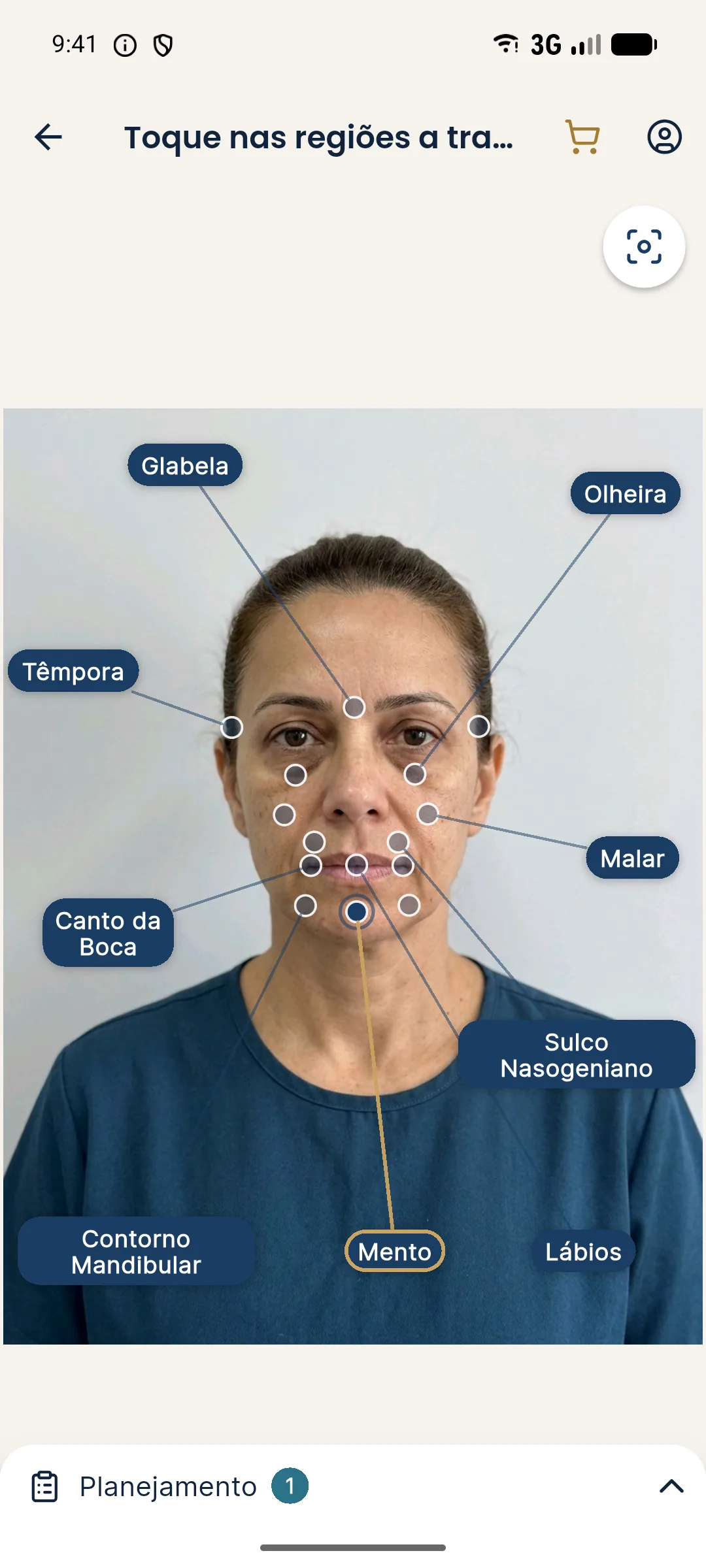
Since the projection uses only the frontal photo, it shows the change in volume and contour from the front, but it does not prove the profile projection. Use the feature to align expectations, never as a promise: it is an illustrative simulation, not a promise of results; see also the simulation does not show movement.
Questions patients often ask
Risks and precautions
The chin is a moderate vascular risk area, but any hyaluronic acid injection can cause bruising, swelling, asymmetry, nodules and, rarely, vascular occlusion. Hyaluronidase must be available in the room. The mental nerve also demands anatomical respect; the pain and sensations afterward are covered in does chin filler hurt?.
If the patient or you are unsure between chin and double chin, or between filler and another path, see chin filler or implant to understand when filler stops being the best answer.
Summary for the consultation
- Chin ml comes after reading the profile, not before.
- Projection and height call for different reasoning.
- Starting conservatively and reassessing protects the result.
- The simulation helps the conversation but does not replace assessment.
- Volumes and technique are at the discretion of the licensed professional, according to the rules of their professional council (in Brazil).
For the full view of the procedure, see chin filler and the area page at chin.
Frequently asked questions
How many ml of filler go in the chin?
There is no single number. In general they are small to moderate volumes, and the amount depends on how much the chin needs to project, whether it is short or tall and the proportion with the nose and lips.
Do more ml make the chin look better?
Not necessarily. Going past the volume the bone and skin can support usually leaves the chin long, heavy or soft to the touch, and that worsens harmony instead of improving it.
Can the chin be done in two sessions?
Yes, and many professionals prefer it. Injecting gradually lets you see what the first layer did once the swelling goes down and decide whether an addition is really needed.
Does Harmy show how many ml to use in the chin?
Harmy does not prescribe volume. You mark the Chin, choose the ml and the intensity, and the app generates an illustrative simulation to talk through with the patient.
Harmy images are illustrative simulations generated by AI from the patient's photo to support the conversation between practitioner and patient. They are not a promise of results. Indication, technique, product and volume are solely the decision of the licensed practitioner. This content is for information only and does not replace a clinical assessment.