
Jawline filler: how many ml and why it varies

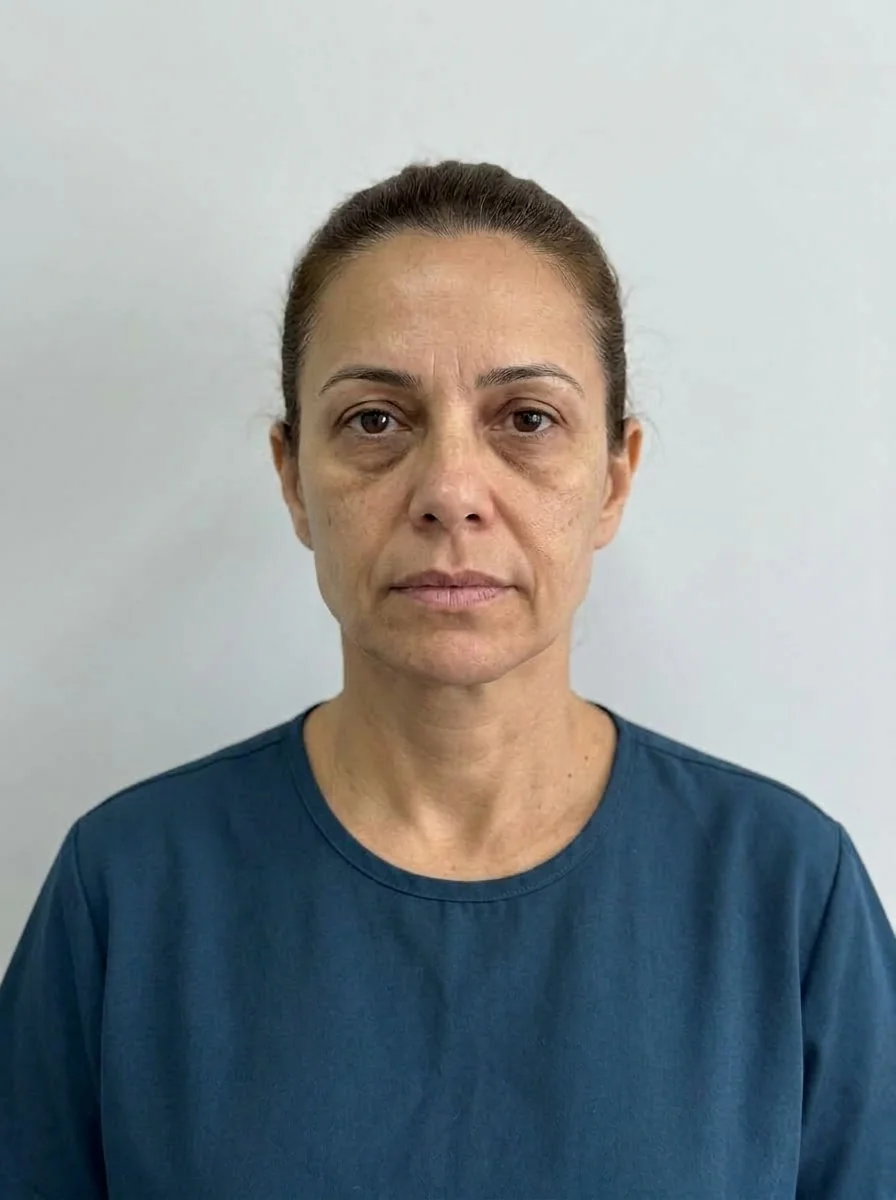 BeforeSimulation
Quick facts
- Question
- How many ml of jawline filler
- Usual range
- Larger volumes than lips and under-eyes, varying a lot between patients
- What defines it
- Bone structure, the stretch treated, desired design and soft tissue
- Who decides
- The licensed professional, after assessment
The jawline is the area of the face where filler tends to use larger volumes. It is also where the question "how many ml?" generates the most comparisons between professionals and the most confusion. The reason is simple: "jawline" is not a point, it is a path, and each patient needs different things along it.
This page shows why the volume varies, what to look at during assessment and how to talk about it without promising a number. Volume and technique are up to the licensed professional, according to the rules of their professional council (in Brazil).
Why jawline ml varies so much
The jawline includes the angle, the body and the jaw line, and ends at the transition to the chin. One patient may need definition only at the angle, another along the whole line, and another only chin support. The stretch treated changes the total volume more than any other factor.
| Factor | How it weighs on volume |
|---|---|
| Bone structure | A poorly defined angle and small bone call for more support |
| Length of the stretch | Angle only or the entire line |
| Soft tissue | Fat and laxity hide the contour; gel alone may not solve it |
| Sex and desired design | Sharper or softer contours call for different strategies |
| Product | Firmer or more flexible |
| History | First time or maintenance |
Two people with the same complaint of an "undefined jaw" may have different causes and very different volume plans. See also defined jawline and jawline filler in women.
Volumes in perspective
Compared with other areas, the jawline usually takes more product, because of its length and bone support. In Harmy's simulations, for example, the jawline uses 4 ml, while lips, tear trough and chin use 1 ml, and cheekbone and nasolabial fold use 2 ml. That difference reflects the proportion between areas, not a clinical recommendation.
| Area (Harmy simulation) | ml in the simulation |
|---|---|
| Lips | 1 |
| Tear Trough | 1 |
| Chin | 1 |
| Cheekbone | 2 |
| Nasolabial Fold | 2 |
| Temple | 2 |
| Jawline | 4 |
When ml is not the answer
Volume does not solve everything. If the complaint is laxity or submental fat, more ml in the jawline can make the lower third worse. If the masseter is very bulky, the contour can look heavy. In these cases, the conversation may include other approaches, such as those discussed in biostimulator and double chin and buccal fat removal or masseter botox.
Stages are safer
Splitting into stages lets you assess symmetry, adjust stretches and avoid overfilling. The first stage defines the angle and the base; the follow-up, after the swelling goes down, shows what is still missing. How long the result lasts also affects the decision: see how long jawline filler lasts.
How to use the simulation in the conversation
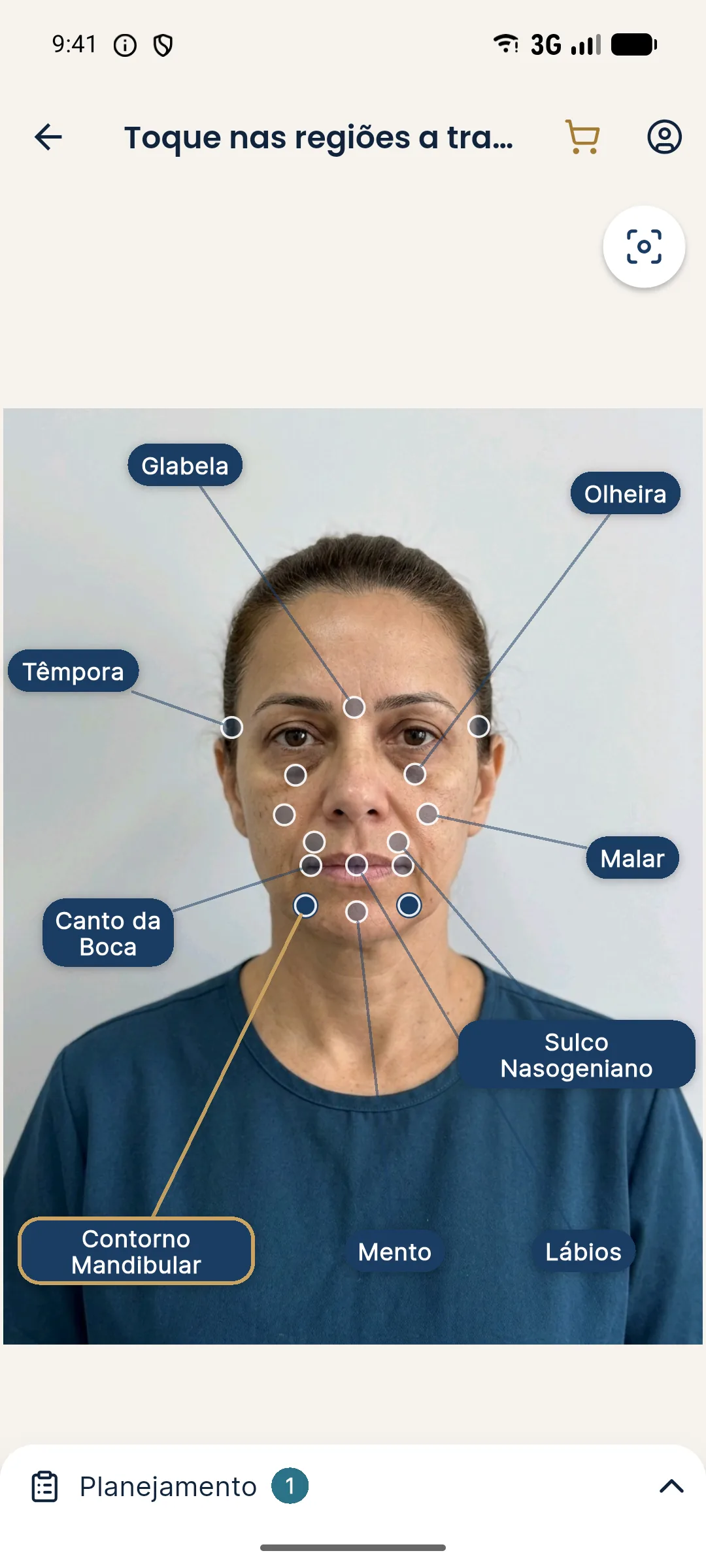
In Harmy, the Jawline point accepts ml from 0.5 to 5, in steps of 0.5, and intensity Subtle, Moderate or Pronounced. The "Full harmonization" shortcut brings the jawline at 2 ml in Moderate intensity. By testing 2 ml and 4 ml on the same photo, the patient sees the difference and takes part in the choice. In a bilateral area, the ml is the total, split between the two sides. The projection uses only the frontal photo and is an illustrative simulation, not a promise of results.
Care and risks
The area has vessels and the marginal mandibular branch of the facial nerve, and injecting requires anatomical knowledge. Complications include swelling, bruising, asymmetry, nodules and, more rarely, vascular occlusion. Hyaluronidase should be on hand. Pain and recovery are covered in does jawline filler hurt?.
Summary
Jawline ml varies because the path varies. Understand the design, start conservatively, reassess and adjust. Comparing totals between patients is of little use; comparing photos of the same patient is what counts.
Frequently asked questions
How many ml of filler are used in the jawline?
Usually larger volumes than in areas such as the lips and under-eyes, and they vary quite a bit with bone structure, the stretch treated and the goal. The professional sets it after assessment.
Why does jawline volume vary so much?
Because the contour includes the angle, the body and the chin, and each patient has different bone, fat and laxity. A face with a well defined angle needs less than one with a poorly marked jaw.
Is it better to do it in one session or more?
Many professionals split it into stages to assess symmetry and avoid overfilling.
Do more ml make the jawline more defined?
Up to a point. Excess can harden the contour and widen the lower third.
Harmy images are illustrative simulations generated by AI from the patient's photo to support the conversation between practitioner and patient. They are not a promise of results. Indication, technique, product and volume are solely the decision of the licensed practitioner. This content is for information only and does not replace a clinical assessment.