
Nasolabial fold filler: how many ml

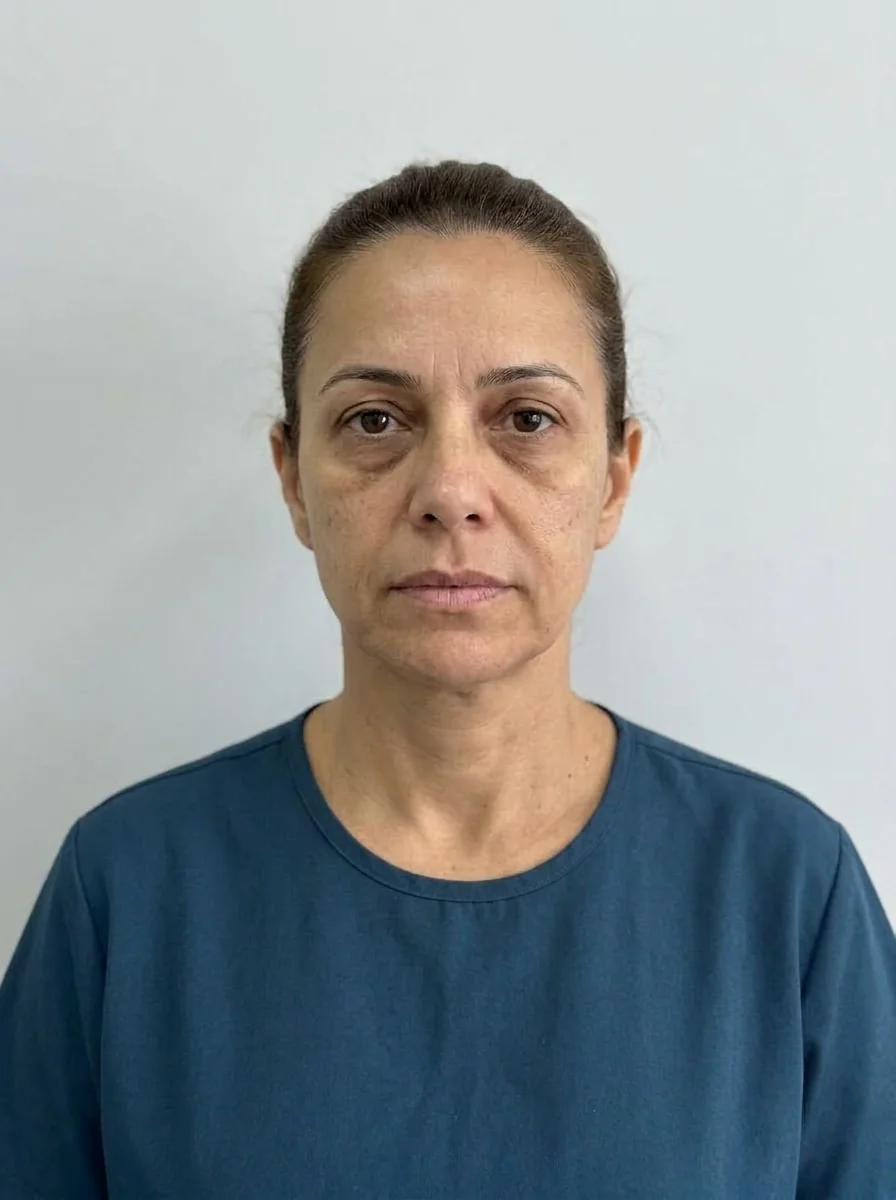 BeforeSimulation
- Highlighted area
Quick facts
- Question
- How many ml in the nasolabial fold
- Usual range
- Small to moderate volumes, depending on the cause
- Central risk
- Vascular occlusion (high-risk area)
- Who decides
- Qualified professional, after assessment
The short answer: in the nasolabial fold (smile lines) volumes are usually small to moderate, and the number depends less on how deep the line is than on the cause of the fold. Two patients with the same fold can need completely different plans, and in many cases the best volume in the fold is a low one.
This page helps you explain why the "how many ml" for the fold only makes sense after you know what is forming the crease.
What forms the fold, and why that changes the volume
The nasolabial fold is the transition between the cheek and the upper lip area. It deepens through loss of support in the midface, descent of the cheek fat pad, bone resorption, excess skin or a combination of all of these. The anatomy of the nasolabial compartment helps explain why filling the crease directly is not always the most elegant answer.
| Predominant cause | Reasoning about volume |
|---|---|
| Cheekbone volume loss | Treat the support first; little or no product in the fold |
| Fold already marked, cheek preserved | Small to moderate volume, in stages |
| Excess skin and sagging | Filling the fold does not solve it; another path may be better |
| Hyperactive smile | The fold shows more in motion; high volume stiffens the smile |
Treating the cause before the fold is a topic in itself, covered in treating the fold or the cause of the fold.
Why more ml in the fold often goes wrong
Filling the crease until it disappears tends to produce a "cord" of product under the skin, which stands out when the patient smiles. It also adds weight to the area and can contribute to a heavy-looking face. The crease is part of the expression: erasing it completely usually looks artificial.
The safest strategy is gradual: a small initial volume, a follow-up after the swelling has gone down and a top-up only if the shape still calls for it. The same reasoning appears on other pages, such as how many ml in the chin.
High vascular risk area
Volume matters from this angle too: pressure and quantity are factors that add risk. A safety reinforcement does not replace anatomical knowledge, but measured volumes help.
Using the simulation to decide with the patient
In Harmy, the Nasolabial fold point takes a volume in steps of 0.5 ml (from 0.5 to 5 ml) and an intensity of Subtle, Moderate or Pronounced. In a bilateral area, the ml marked is the total, split between the two sides. Among the shortcuts, "Maintenance" brings the fold at 1 ml in Subtle, and "Full harmonization" brings 1 ml in Moderate.
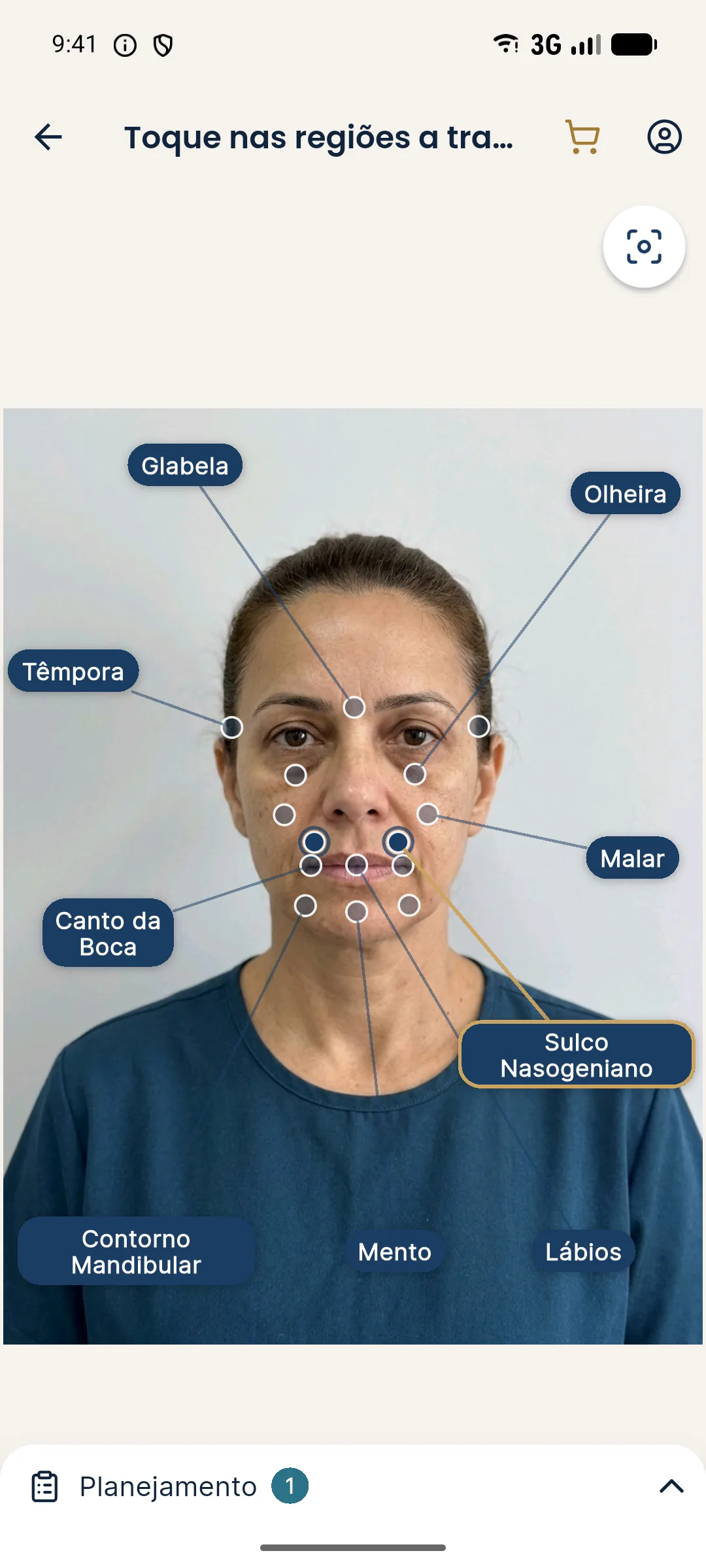
A good practice is to simulate two versions: the fold alone, and cheekbone plus fold. Showing both to the patient usually makes it clear that the cheek can do a good part of the work. To put the set together, see nasolabial fold and cheekbone in the same plan.
Questions to practice the answer
Usual aftercare timeline
Summary
- The fold's volume depends on the cause of the crease, not its depth.
- Small volumes, in stages, usually look more natural.
- The cheek may need volume before the fold.
- The area demands vascular attention and hyaluronidase on hand.
- Amounts and technique are up to the qualified professional, according to the rules of their professional council in Brazil.
For an overview of the area and the procedure, see nasolabial fold and nasolabial fold filler.
Frequently asked questions
How many ml of filler go into the nasolabial fold?
Usually small to moderate volumes, and the amount depends on whether the cause of the fold is volume loss in the midface, sagging or excess skin. The professional decides after assessment.
Does a deeper fold need more ml?
Not always. The depth of the line is not the best guide: often the problem is a cheek that has descended, and filling only the fold with a lot of volume leaves the area heavy.
Can the fold be treated with direct filler alone?
It depends on the cause. In some cases the gain comes from treating the cheekbone area first and using little product in the fold, which usually looks more natural.
Does Harmy simulate the nasolabial fold?
Yes. The Nasolabial fold point lets you choose the ml and the intensity and generates an illustrative simulation of the area for the conversation with the patient.
Harmy images are illustrative simulations generated by AI from the patient's photo to support the conversation between practitioner and patient. They are not a promise of results. Indication, technique, product and volume are solely the decision of the licensed practitioner. This content is for information only and does not replace a clinical assessment.