
Asymmetric Nostrils: What to Assess Before Proposing Anything
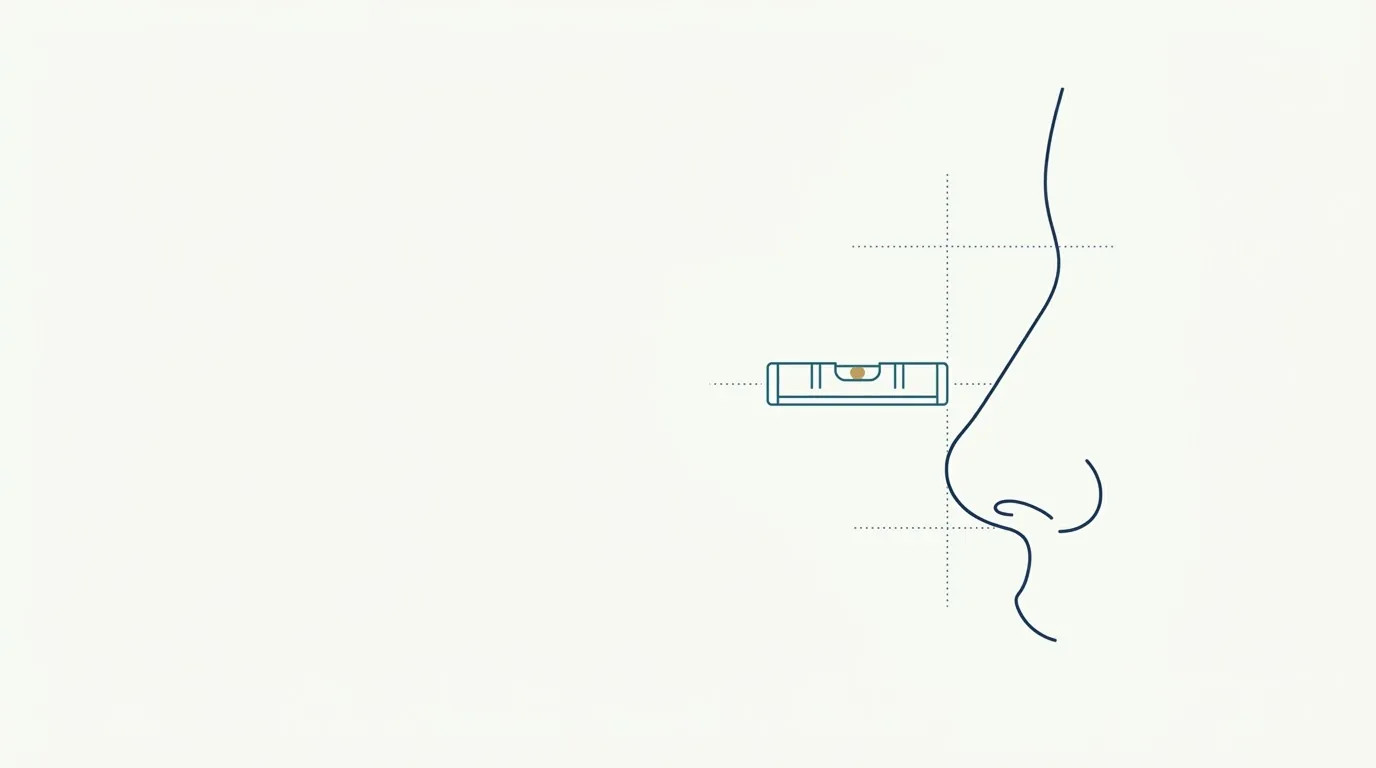
- Highlighted area
Quick facts
- Concern
- One nostril looks larger, rounder, higher or more open than the other
- Key question
- Does the difference exist with the face in a neutral position, or does it appear from tilt of the head, the camera or the face?
- Plan risk
- Proposing volume in the nose for an asymmetry that comes from the septum or bony base, widening the difference
- First step
- Photo of the base of the nose and a front photo aligned to the Frankfurt plane, before any approach
The patient points to the photo: "look, one nostril is bigger than the other". Sometimes they are right, but often the difference comes from the camera angle, the head tilt or an overall facial asymmetry that the nose merely follows. Before proposing any approach, the job is to find out what is actually asymmetric.
This page organizes the assessment so that the professional does not treat the nostril as if it were the cause. The nose is a high vascular risk area, and the limit of orofacial harmonization (HOF) here is narrower than the patient imagines. For an overview of the area, see nose.
Why does a nostril look different from the other?
The nasal opening is the result of several structures: the nasal cartilages, the septum, the nasal bone, the piriform aperture and the surrounding soft tissue. Any deviation at one of these levels shows up in the shape of the nostril.
| Origin | How it appears | Who usually assesses it |
|---|---|---|
| Deviated caudal septum | One narrower nostril, tilted columella | Otolaryngologist, surgeon |
| Asymmetric alar cartilage | Higher, rounder or more collapsed wing | Nose surgeon |
| Asymmetric bony base (piriform) | Larger or smaller nostril from the base | Imaging assessment, surgeon |
| Facial asymmetry | The nose follows the side with an asymmetric maxilla or eye | HOF professional, overall assessment |
| Photo tilt | Difference that disappears with the head aligned | Photo standardization |
| Muscle dynamics | One wing moves more when smiling or breathing | Assessment in motion |
Notice that only the last row and, in part, the fourth touch HOF practice. The others are structural issues that require another specialist.
The role of the face in reading the nose
The nose is read in relation to the rest of the face. If the facial midline is deviated or if the eyes and mouth are at different heights, the nose looks asymmetric even when it is straight. Before pointing at the nostril, assess the reference planes: bipupillary line, commissural line and the relationship of the nose to both.
A good starting point is the page on facial asymmetry and how to measure symmetry. When the nose is off the axis, the reading changes: see nose off the midline and crooked nose.
Dynamics: breathing, smiling, speaking
Some asymmetries show up only in motion. Ask the patient to inhale deeply and to smile. Observe whether a wing collapses on inspiration, whether one nostril flares more than the other, or whether the tip of the nose shifts when smiling. The action of the nasalis muscle and the depressor septi nasi can explain part of these findings, and a tip that drops when smiling has its own page: nose that drops when smiling.
If the concern comes with difficulty breathing or collapse of the wing on inspiration, the case is functional. Refer to otolaryngology before any aesthetic procedure.
What HOF can and cannot do
In general, harmonization works with the appearance of the tip and dorsum, not with the nostril opening. Filler in the nose can change how the contour reads, but it does not reposition cartilage or correct the septum. Hyaluronidase allows hyaluronic acid to be reversed when needed, but that does not make the procedure safe by itself.
Hyaluronic acid in the nose requires deep knowledge of vascular anatomy, and the area is among those with the highest risk of vascular occlusion, with possible damage to the skin and, rarely, to vision. The relevant anatomy is in nose anatomy for injectables. The decision to treat or not is up to the qualified professional, according to the rules of their professional council in Brazil.
When to refer
Refer to an otolaryngologist or plastic surgeon when there is:
- an evident septal deviation or a breathing complaint;
- collapse of the nasal valve on inspiration;
- marked bony asymmetry at the base;
- previous nasal surgery with sequelae;
- an expectation of shape correction that only surgery offers.
A well-made referral keeps trust. Explain that the face is a whole, that you are assessing what can be done safely and that your type of procedure has limits. See referring patients in HOF.
Simulation and expectations
Harmy has no marking point for the nose and does not simulate nostril shape. If useful, the projection can show other areas that improve facial balance, such as the upper lip or the chin, and the patient comes to see the nose within the whole. Any image shown is an illustrative simulation, never a promise of results.
Frequent mistakes
The first mistake is accepting the patient's photo as proof. A selfie taken from below or from the side distorts the nose, and the "discovered" asymmetry changes when the photo is standardized. Always ask for clinical photography, as in standardized clinical photography.
The second mistake is proposing volume to balance. Placing product on one side of the nose to "even out" the nostril tends to create a different contour without solving the opening, and it raises the risk. The third mistake is ignoring a breathing complaint: a patient who needs an otolaryngologist should not hear that filler solves it.
Summary for the decision
Asymmetric nostrils are, most of the time, a normal difference that the photo or the face amplifies. Standardize the image, separate structure from dynamics, refer when there is a functional or bony cause, and do not use volume to even out what filler does not correct. If the patient still wants to treat the nose, the decision requires careful assessment of vascular risk, at the discretion of the qualified professional and according to the rules of their professional council in Brazil.
Frequently asked questions
Can asymmetric nostrils be fixed with filler?
Generally not. Nostril shape depends on cartilage, septum and bone, and filler acts on soft tissue. The area also carries a high vascular risk, so the decision calls for careful judgment by the professional.
Does everyone have one nostril different from the other?
Most people have some difference between the sides, just as with the eyes and eyebrows. What matters is whether the difference is visible in a neutral position and whether it bothers the patient.
Can a deviated septum cause an asymmetric nostril?
It can. A deviation of the septum or the base of the nose changes the opening and shape of one nostril. This is assessed by an otolaryngologist or surgeon, and it is not treated with injectables.
Can the photo be misleading about nostril asymmetry?
Yes. A slight head tilt or a camera below the nose increases or creates differences that do not exist from the front. Standardize the photo before assessing.
Harmy images are illustrative simulations generated by AI from the patient's photo to support the conversation between practitioner and patient. They are not a promise of results. Indication, technique, product and volume are solely the decision of the licensed practitioner. This content is for information only and does not replace a clinical assessment.