
Wide nostril wings: causes and what HOF can do
- Highlighted area
Quick facts
- Concern
- Nostrils or nasal base that look wide relative to the face
- Three causes
- A truly wide ala, a broad nasal base, or the visual effect of the neighboring fold
- Reference measurement
- Alar width compared with the distance between the medial canthi of the eyes
- Central risk
- The nose is a high vascular risk area, with hyaluronidase on hand
When a patient complains of a "wide nose" or "thick nostril wings," the concern often blends three different things: a nasal ala that is truly wide, a broad nasal base (tissue and bone), and the appearance of width created by what surrounds it, such as a deep fold, a poorly projected tip or an unsupported midface. The conversation and the options change a lot depending on the cause.
This page helps you measure, separate the causes and tell the patient clearly what orofacial harmonization can adjust. The area page is nose, and the general concern about width is in wide nose.
What is the nasal ala?
The ala is the lateral wall of each nostril, made of fibrofatty tissue supported by the alar cartilages. It fits into the bony piriform aperture and joins the face at the alar groove. The flaring movement depends on the nasalis muscle, and the depressor septi nasi pulls the tip downward when smiling. The supporting structure is covered in nasal cartilages.
Alar width is the distance between the most lateral points of the two alae. A frequent assessment reference is to compare it with the distance between the medial canthi of the eyes, which fits within the rule of fifths. It serves as a guide, not as a target: what matters is harmony with the rest of the face.
Three different causes
| Cause | What you see | What HOF can do |
|---|---|---|
| Truly wide ala | Alar width above the intercanthal distance, thick wall | Little; true reduction is a surgical matter |
| Broad nasal base | Wide bone and cartilage, low dorsum | Little; some balance may be gained with tip projection |
| Apparent width from contrast | Deep fold, low tip, unsupported midface | Possible improvement in perception with surrounding support |
The third row is the most frequent in practice: the patient has a width within the normal range, but the surrounding design emphasizes it. People with a deep nasolabial fold and loss of midface support often report that "the nose opened up."
How to assess
The examination should be done from the front, in profile, in three-quarter view and in the inferior view (nasal base), taking care not to distort the last one. A standardized photo helps measure without being misled.
Breathing obstruction deserves a direct question. Nostrils that collapse on inhalation or a significant septal deviation are matters for specialist assessment, and injecting the area without that being clear can create a problem.
What harmonization can do
The nose is a high vascular risk area, and nasal vascular occlusion is one of the most serious complications in HOF, with a risk of skin necrosis and, in rare cases, of vision impairment through communicating vascular pathways. That is why any intervention there demands detailed knowledge of the lateral nasal artery, the angular artery and the emergency protocol, with hyaluronidase on hand when hyaluronic acid is used.
Within that context, the approaches discussed are:
- Adjusting perception through lateral support: when the fold beside the nose is deep, restoring support in the midface and the adjacent area can soften the contrast. See nasolabial fold filler and flat nasal base.
- Tip projection and refinement: discussed in nonsurgical rhinoplasty with hyaluronic acid or threads, with the caveat that it adds volume and, in general, does not reduce width.
- Toxin at selected points: acts on dynamics, not on width at rest, and is a limited indication. See botulinum toxin for nasal lines.
What is not possible: slimming a thick ala, narrowing the bony base or reducing cartilage. When that is the concern, the path is to explain the limitation and, if the patient wishes, refer for surgical assessment. See nonsurgical rhinoplasty or rhinoplasty.
How to use Harmy for this concern
Harmy has no specific point for the nose. The points related to this concern are Nasolabial Fold and Cheekbone, which simulate the surrounding support. The projection uses only the frontal photo, so it shows the effect of the support, never the width of the ala itself, and the app changes only what was marked.
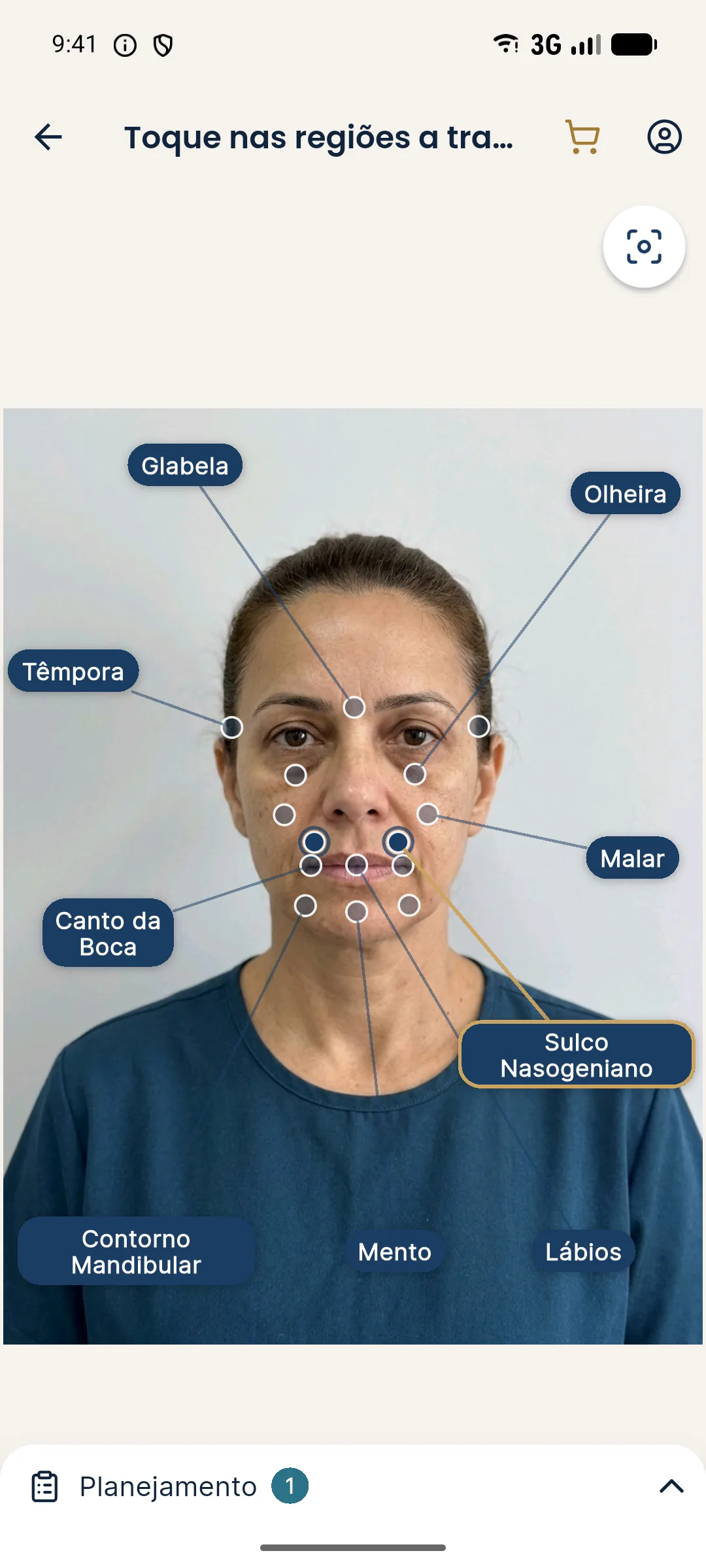
An honest way to use it: simulate the Cheekbone alone and then the Nasolabial Fold alone, and compare with the original photo. If the patient sees the nose as "more settled" when the midface gains support, the cause of the perception was around it; if nothing changes, the width belongs to the nose itself and the conversation is different.
Record and expectation
Document alar width, the predominant cause and what was said about limits. Avoid promises such as "I am going to slim your nose," which do not match what HOF does. For the patient who brings a photo of someone else's nose as a reference, the reasoning is in nose too large for the face and nose off the midline. Volumes and technique are left to the discretion of the licensed professional, after individual assessment.
Frequently asked questions
Can harmonization slim the nasal ala?
It does not reduce tissue or cartilage. In some cases, adjustments to tip projection and to the support of the neighboring fold change the perception of width. True reduction of the ala is a matter for surgical assessment.
Does botulinum toxin slim the nasal ala?
It can reduce the flaring movement of the nostrils when talking and smiling, which changes the expression, but it does not reduce width at rest. The indication is limited and left to the discretion of the licensed professional.
Are a wide ala and a wide nostril the same thing?
No. The ala is the lateral wall of the nostril and alar width is the distance between the two alae. The nostril can be wide or narrow while alar width stays the same, and treatment depends on which of the two is the concern.
Does filling the fold beside the nose improve the look of a wide ala?
Sometimes. A deep fold and a base lacking support make the ala stand out by contrast. Restoring support beside it can soften that impression, but the area demands vascular caution and individual assessment.
Harmy images are illustrative simulations generated by AI from the patient's photo to support the conversation between practitioner and patient. They are not a promise of results. Indication, technique, product and volume are solely the decision of the licensed practitioner. This content is for information only and does not replace a clinical assessment.