
Wide nose: what it can be and what HOF can do
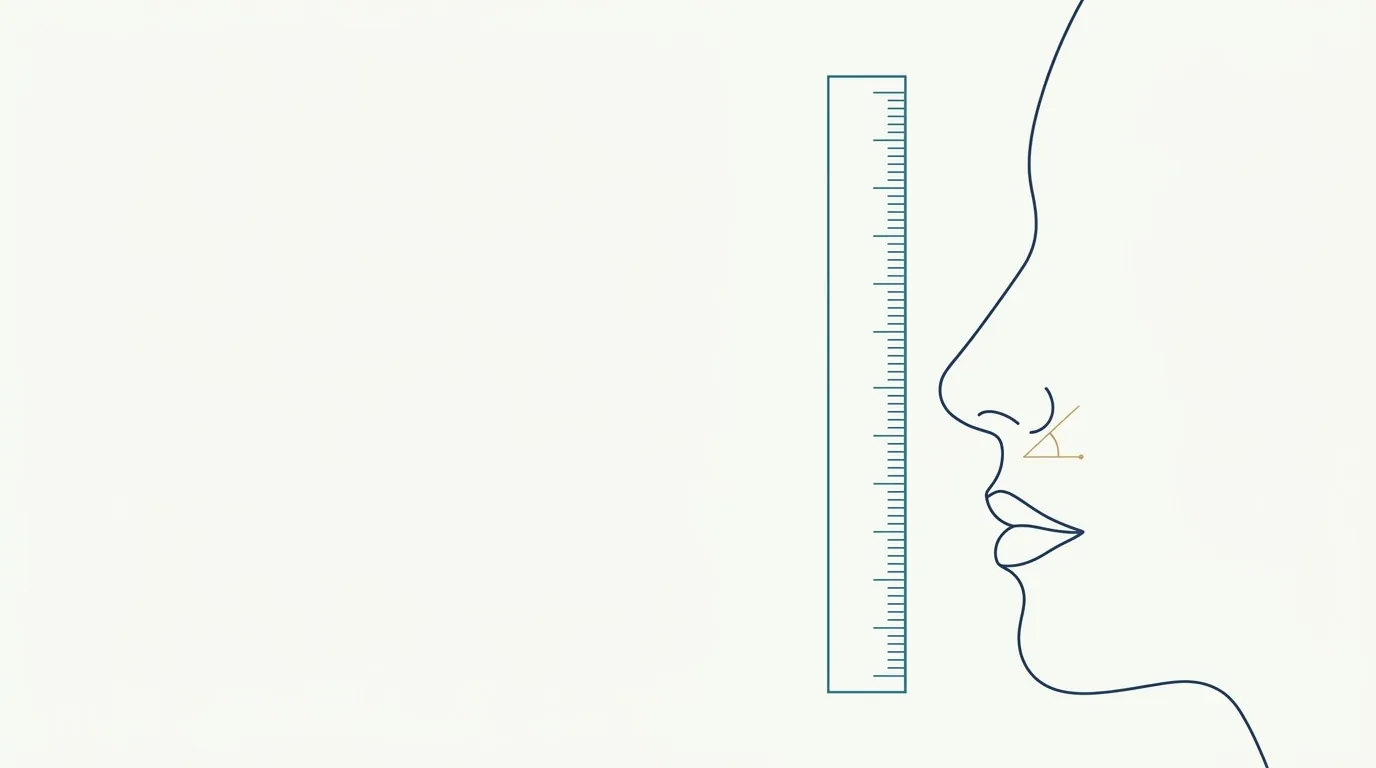
- Highlighted area
Quick facts
- Concern
- A nose that looks wide from the front, at the root, the dorsum, the tip or the nostril wings
- Key question
- Does the width come from bone, the cartilaginous tip or the nostril wings, and is it proportional to the distance between the eyes?
- Plan risk
- Using volume on the dorsum to "slim" the nose and ending up widening the area even more
- First step
- Measure the width of the nose and compare it with the intercanthal distance on a standardized front photo
Nose width is one of the most subjectively loaded topics in the aesthetic clinic. The patient points at the mirror and says "my nose is wide", and the word can mean very different things: a wide dorsum, a bulbous tip, flared wings, a wide base, dilated nostrils. Each has its own origin and calls for its own conversation.
This page separates what a wide nose can be and shows why, in this case, facial harmonization has little room to act. The first task is to measure and find out where the width comes from; the second is to be honest about what is possible. For the area, see nose.
Where does nose width come from?
The nose is made up of three main segments, each with a different framework. The width can be in any of them.
| Segment | Structure | How it shows | Reach of HOF |
|---|---|---|---|
| Upper third (root and bony dorsum) | Nasal bone | Wide, flat dorsum, wide root | None over the bone; limited camouflage |
| Middle third (cartilaginous dorsum) | Upper lateral cartilages | Wide, poorly defined dorsum | Limited camouflage, with risk |
| Lower third (tip) | Alar cartilages and skin | Bulbous or wide tip | Practically none; see bulbous nasal tip |
| Base (wings) | Lateral alar cartilage, muscle | Wide wing, open nostrils | Toxin in muscular cases; see wide nostril wing |
The piriform aperture, which forms the bony outline of the base of the nose, also defines the base width. A wide piriform aperture gives a wide nose that no soft tissue intervention changes.
Width is an ancestral trait
The shape and width of the nose vary between populations and are part of facial identity. In several ancestries, a wider nose and a lower dorsum are common traits and structurally consistent with the rest of the face. Trying to "narrow" that nose can break the harmony of the whole. The conversation should start by asking what the patient wants to preserve. See respecting ancestral traits in the HOF plan and HOF planning and ancestral diversity.
When the problem is the tip or the wing
In practice, the concern about a "wide nose" is often about a bulbous tip or an open wing. A wide tip is determined by the alar cartilage and skin thickness, and facial harmonization has no tool to narrow it. In some patients, an under-projected tip looks wide; in those cases, assessing the support and the upper lip can change how it reads.
A wide wing can have a muscular component, linked to the nasalis muscle. In cases where the wing flares a lot when speaking and smiling, toxin is an option discussed at the professional's discretion, with a modest effect and caution so as not to alter the expression of the upper lip. See botulinum toxin and the nostril wings. If the wing is wide at rest, the cause is structural.
The most common mistake: filling to slim
It is intuitive to imagine that adding volume to the center of the dorsum "pulls" the reading toward the middle and slims the nose. In selected cases with thin skin, a small central addition can create a line of light that suggests narrowing. But the risk is the opposite: the dorsum becomes higher and fuller, and the nose ends up looking even bigger. The outcome depends on the skin, the structure and the technique, and is unpredictable for someone with little experience.
Vascular risk
The nose is a high-risk area for vascular occlusion, because of the arterial network that connects with the circulation of the eye. Disproportionate pain, pallor, net-like purplish skin or visual changes are emergencies. Anyone who uses hyaluronic acid in the nose must have hyaluronidase available and know how to act. See nose anatomy for injectables and visual complication after filler.
Step-by-step assessment
Other ways to balance the face
In many patients, the concern improves when other areas gain prominence. A better-projected middle third, lips proportional to the nose and a balanced chin shift the focus away from the nose. This does not reduce the width, but it changes how the face reads. See nose and upper lip: combining them in the plan and natural-effect plan.
Simulation and expectations
Harmy has no marking point for the nose and does not simulate changes in width. The projection uses only the front photo and works with the areas of the app. If it helps the conversation, simulate Cheekbone or Lips to show the balance of the face, making clear that the nose does not change in the image. The simulation is illustrative, in 2D, and is not a promise of results.
Summary for the decision
A wide nose is a set of possibilities, and the first job is to find out where the width comes from. Facial harmonization has little to offer on bone, cartilage and tip, can act on wings of muscular origin and must respect ancestral traits. Filling to slim is usually the wrong path. Explain the limits, refer when the wish is for a structural change and remember that the nose is a high vascular risk area. All at the discretion of the qualified professional, according to the rules of their professional council in Brazil, without promising results.
Frequently asked questions
Does filler slim a wide nose?
Generally not. The product adds volume, and in a wide nose it can accentuate the width. In selected cases, volume at specific points changes how the dorsum reads, with significant vascular risk.
Does botulinum toxin help when the nostril wing is wide?
When the wing widens through muscle action, toxin can be discussed at the professional's discretion. If the width comes from cartilage or bone, the effect is small or nonexistent.
Is a wide nose a flaw?
No. Width is an ancestral trait and varies between people and populations. The professional should ask what bothers the patient and respect the identity of the face.
What is the difference between a wide tip and a wide nostril wing?
A wide tip comes from the alar cartilages and the skin. A wide wing is the lateral base of the nostrils, supported by cartilage and soft tissue. The approaches and the limits are different.
Harmy images are illustrative simulations generated by AI from the patient's photo to support the conversation between practitioner and patient. They are not a promise of results. Indication, technique, product and volume are solely the decision of the licensed practitioner. This content is for information only and does not replace a clinical assessment.