
Withered Mouth: Volume Loss Around the Lips

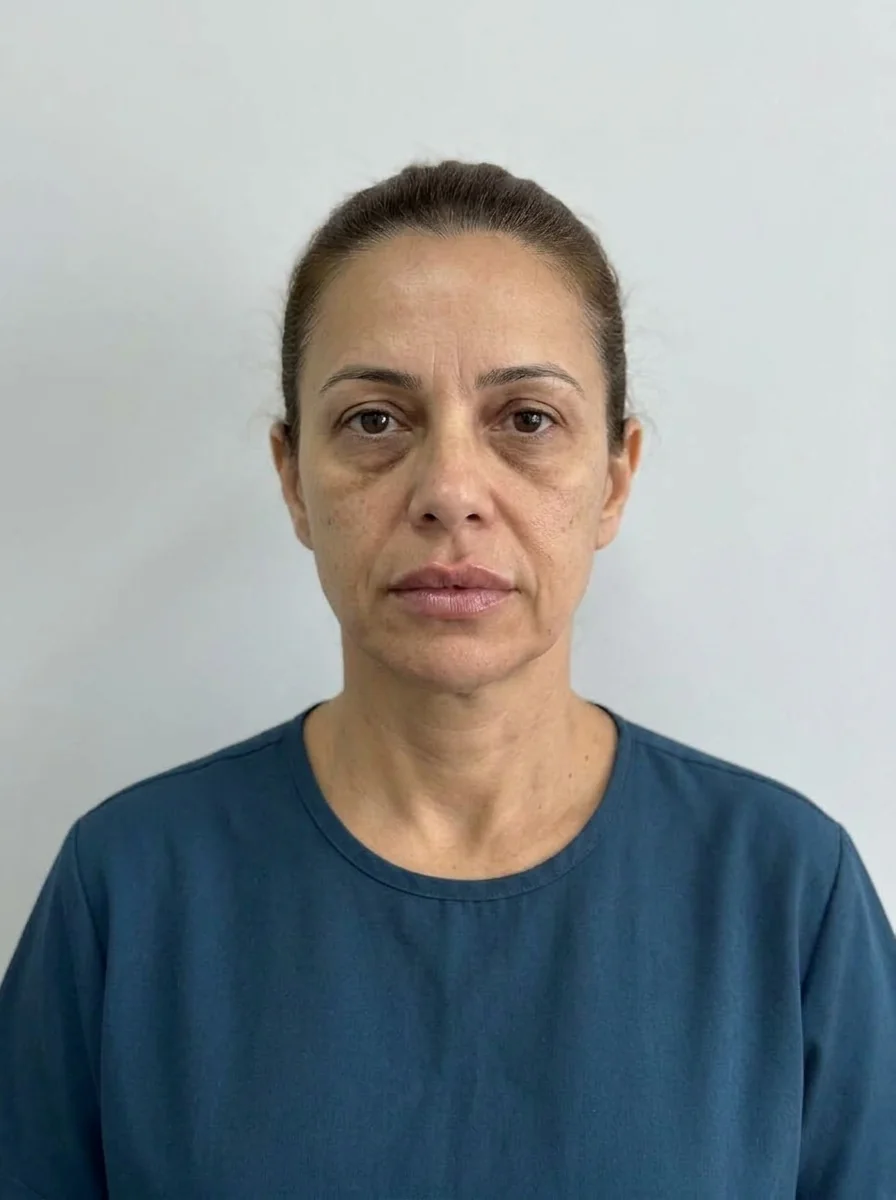 BeforeSimulation
- Muscle
- Highlighted area
Quick facts
- Concern
- A thin, dry or withered-looking mouth, with loose skin and lines around it
- Layers
- Skin, perioral fat, muscle, vermilion and bony and dental support
- Pitfall
- Treating only the vermilion of the lip and forgetting the surroundings
- Caution
- Too much volume in the lip gives away the aging of the contour
There is a difference between a "thin lip" and a "withered mouth." In the first, the complaint is in the vermilion; in the second, the whole face around the mouth has lost volume, quality and support. If you fill only the lip of a withered mouth, the result usually looks like a new lip on old skin, and the patient leaves with the opposite of the effect they wanted.
This page shows how to read the perioral area in layers and how to build a plan in stages. The mouth can be viewed together with lips that disappeared with age, loose skin around the mouth and lip with barcode lines.
What happens in the perioral area with age?
The mouth is held up by layers that age at different rates:
| Layer | What happens | How it looks |
|---|---|---|
| Skin | Thins, loses collagen, gains vertical lines | Lip lines (barcode lines) |
| Perioral fat | Loses volume and redistributes | "Hollow" mouth, deeper grooves |
| Muscle | The orbicularis oris contracts more often in the area | Pursing lines, tight lips |
| Vermilion | Thins and loses projection | Thin, flat lip |
| White line | Loses the ridge that reflects light | Blurred contour |
| Dental and bony support | Bone resorption and tooth loss | Sunken mouth, unsupported lip |
| Corners and grooves | Marionette lines and the labiomental fold deepen | Sad, aged mouth |
This explains why the same amount of filler produces such different results in patients of different ages. The cause of the "withered" look comes from several layers, and the plan follows that complexity. The general process is in facial aging by layers.
How to assess
The assessment starts from what the patient sees in the mirror and goes deeper into objective findings.
What harmonization can offer
The logic is to treat the area in layers and in stages, at the discretion of the licensed professional.
Skin quality. Injectable hydration and skin boosters can improve texture and hydration. See injectable lip hydration. The collagen biostimulator is considered in some cases for quality and support, with caution in the perioral area.
Support of the surroundings. Nasolabial fold filler, mouth corner filler and chin filler restore support and reduce the shadow that "pulls" the mouth down.
Lip. Lip filler comes last or in a small amount, to restore the shape, never to create volume over unsupported skin.
Muscle. In patients who purse the mouth, small doses of toxin can soften the lines, but they require caution because of the risk of affecting the smile and speech.
Teeth and dentures. When the support comes from dentistry, partnership is essential. See dentures and lip support and tooth loss and the face.
Risks
Possible complications include swelling, bruising, nodules, asymmetry, product migration and, less often, vascular occlusion, with a risk of necrosis. The perioral area is supplied by branches of the facial artery, and hyaluronidase must be available. Thin, lax skin increases the risk of irregularities. See lip vascular occlusion.
How to simulate in Harmy
In Harmy, you can mark Lips, Mouth Corner, Nasolabial Fold and Chin in the same projection and see the whole. The projection changes only what was marked, with no skin retouching, which helps show the patient that the gain comes from balance and not from an isolated lip.
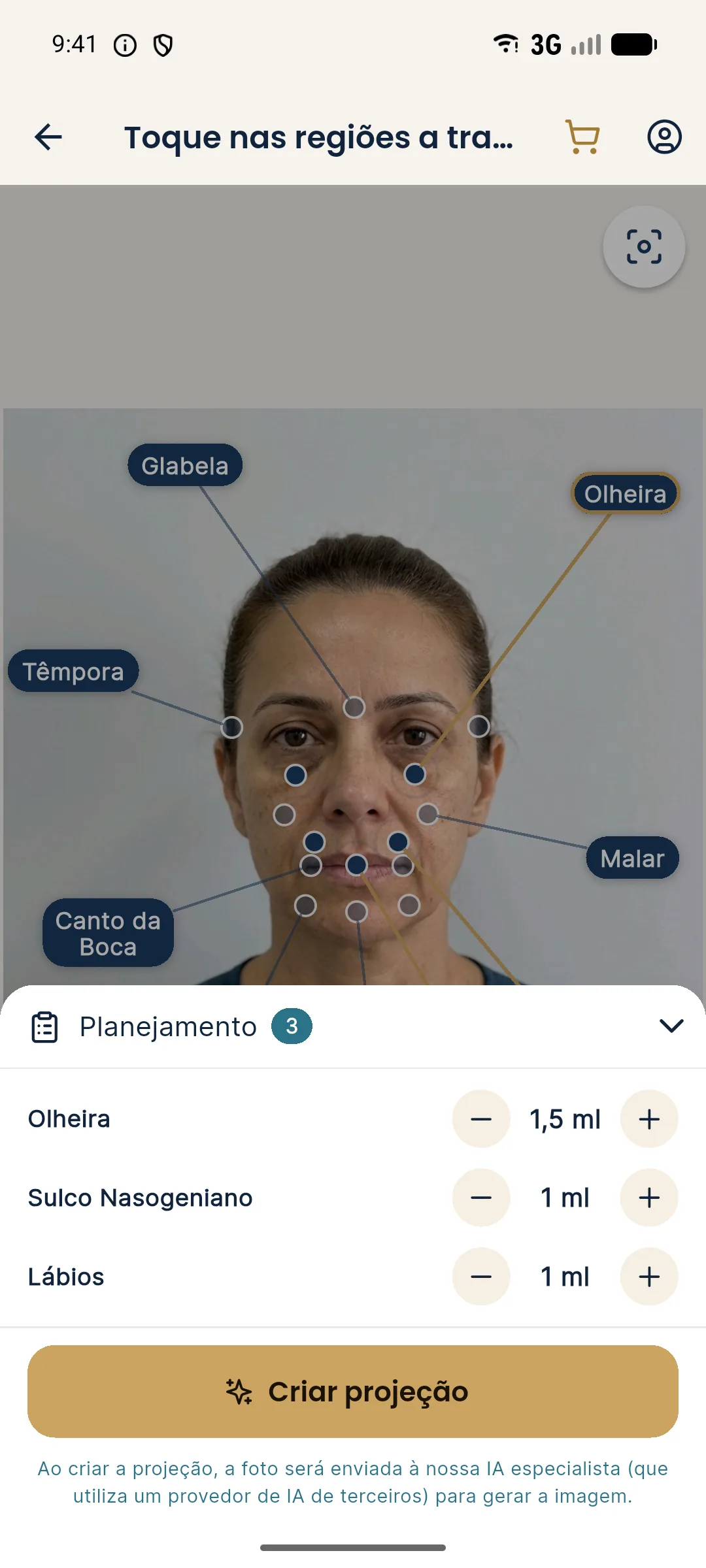
The Maintenance shortcut marks lips 0.5 ml Subtle, fold 1 ml Subtle and cheekbone 1 ml Subtle, a good starting point for a discreet plan. The Full harmonization shortcut brings a different combination. In both, you adjust each ml and the intensity before creating the projection.
Suggested sequence of sessions
One way to organize treatment is to think in sessions with clear goals, adjusted to the case and to the professional's decision.
This order has a practical advantage: the patient sees the effect of the support before deciding about the lip, and often finds out they need less than they asked for. Intervals and amounts are set at the discretion of the licensed professional, after assessment, and vary a lot between patients.
Wrap-up
Record the photos, the layers involved, the proposed order and what was said about limits. Do not promise results. For older patients, see thin skin at 60 and face at 60: volume loss. Volumes and techniques are at the discretion of the licensed professional, in accordance with the rules of their professional council in Brazil.
Frequently asked questions
Why does the mouth become withered with age?
There is loss of collagen and fat in the perioral area, thinning of the vermilion, flattening of the white line, loss of dental and bony support and more lines around the mouth. The lip is only one part of the picture.
Is filling the lip enough to fix the mouth?
In general, no. If the surrounding skin and the support have lost quality, a lip with volume looks out of place and can look artificial. The plan usually combines approaches for the whole area.
Can a biostimulator be used around the mouth?
At the discretion of the licensed professional, after assessment, some biostimulators are considered for skin quality and support, but the area is delicate and the choice depends on the material and the practitioner's experience.
Can a withered mouth be related to tooth loss?
Yes. Tooth loss or an ill-fitting denture removes support from the lip and sinks the perioral area, and in these cases a dental assessment is part of the plan.
Harmy images are illustrative simulations generated by AI from the patient's photo to support the conversation between practitioner and patient. They are not a promise of results. Indication, technique, product and volume are solely the decision of the licensed practitioner. This content is for information only and does not replace a clinical assessment.