
Orange-Peel Chin Texture: What to Assess

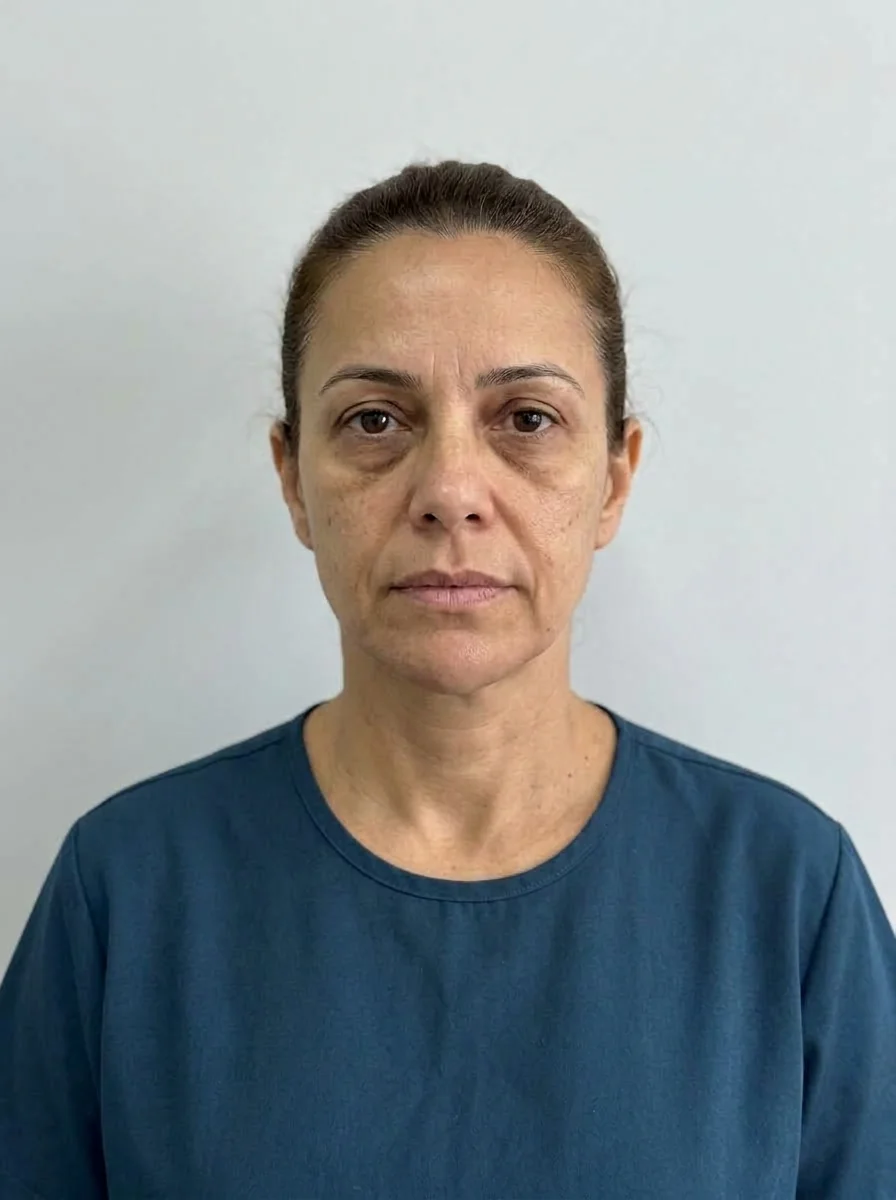 BeforeSimulation
- Muscle
- Highlighted area
Quick facts
- Concern
- Uneven chin skin, with dimples and an orange-peel look when talking or smiling
- Key reading
- It is usually the mentalis muscle contracting over little supporting tissue
- Supporting measure
- Photo and short video with the patient talking, smiling and puckering the chin
- Limit
- Toxin softens the movement but does not change the skin, and excess volume worsens the texture
Some patients do not complain about the size of the chin but about the skin. When talking, smiling or making a doubtful expression, the chin "wrinkles" and an uneven texture appears, much like the peel of an orange. In profile photos and in videos the look stands out, and many people associate it with "aging" or "excess fat".
Understanding the mechanism is the first step. This page shows the anatomy behind the texture, what to look for in the assessment and how toxin, volume and other options fit in. For chin wrinkles at rest, see wrinkled chin skin, and for the small chin, small chin.
What causes orange-peel texture?
The most frequent culprit is the mentalis muscle, a pair of short fibers that runs from the jaw bone to the skin of the chin. When it contracts, it lifts and compresses the chin skin, forming dimples and irregularities. This happens in anyone, but it gets worse when there is little tissue between the muscle and the skin.
Three factors tend to add up:
- Muscle hyperactivity, from habit or from compensating for other structures, such as an everted lower lip.
- Little volume support, either from reduced bone projection or from fat loss.
- Skin characteristics, with thickness, elasticity and collagen that respond differently to repeated contraction.
The texture resembles the dynamic wrinkles that appear in other areas, and the assessment logic is similar: observe at rest, in motion and in different expressions.
How to carry out the assessment
Observe the chin in four situations: at rest, when talking, when smiling and when puckering the chin (as if making a frown of disapproval). Note in which situation the texture appears and how strongly. Palpate the area to feel the thickness of the tissue and the firmness of the muscle.
Pay attention to associated factors: bruxism, lip biting, piercings and the relationship between the lower lip and the chin. An everted lower lip and a deep mentolabial fold often coexist with the "puckered" chin. See mentolabial fold and protruding lower lip.
What are the options within orofacial harmonization (HOF)?
The approach depends on which mechanism predominates. The most commonly used options, always at the discretion of the licensed professional and after an assessment, are:
| Option | When to consider | What it usually does | Limits |
|---|---|---|---|
| Toxin in the mentalis muscle | Texture that appears on contraction | Softens the movement and the dimple | Temporary effect; does not change the skin at rest |
| Conservative volume in the chin | Little support and low projection | Gives support and softens the transition | Excess can worsen the look |
| Toxin plus volume combination | Active muscle and little support | Addresses both causes | Plan the order and the interval |
| Biostimulation or skin care | Thin skin of low quality | Improves texture in the medium term | Gradual result; depends on the skin |
For the muscle, see mentalis toxin and the muscle map for botulinum toxin. For support, see chin filler.
When volume comes into play, remember that the chin is an area with vessels and with the mental nerve, and that hyaluronidase must be available. Bruise, swelling, nodule and asymmetry are possible complications, described in safety and complications.
Why can volume make it worse?
It seems counterintuitive, but adding volume to a chin with texture can accentuate the problem if the muscle stays very active. The product sits under skin that contracts, and the irregularity becomes obvious, sometimes with a "little lump" feeling. That is why, in many cases, the reasoning is to treat the movement first (or at the same time) and only then decide on volume.
Another concern is quantity. Too much volume in the chin can lengthen the face or create what is called a witch's chin. The balance with the lower third is covered in witch's chin: chin ptosis and in chin and double chin: combining in the plan.
And the skin?
Orange-peel texture is often a skin problem and a muscle problem at the same time. Thicker skin, with larger pores and less elasticity, shows the effect more. In that case, skin care, sunscreen and collagen-stimulating treatments complement the plan. Toxin improves the movement, but texture at rest is a matter of skin quality.
Explain to the patient that the improvement in texture is usually partial and that maintenance matters. Toxin has a limited duration and requires follow-up. See maintenance: toxin, filler and biostimulator.
What does the simulation show?
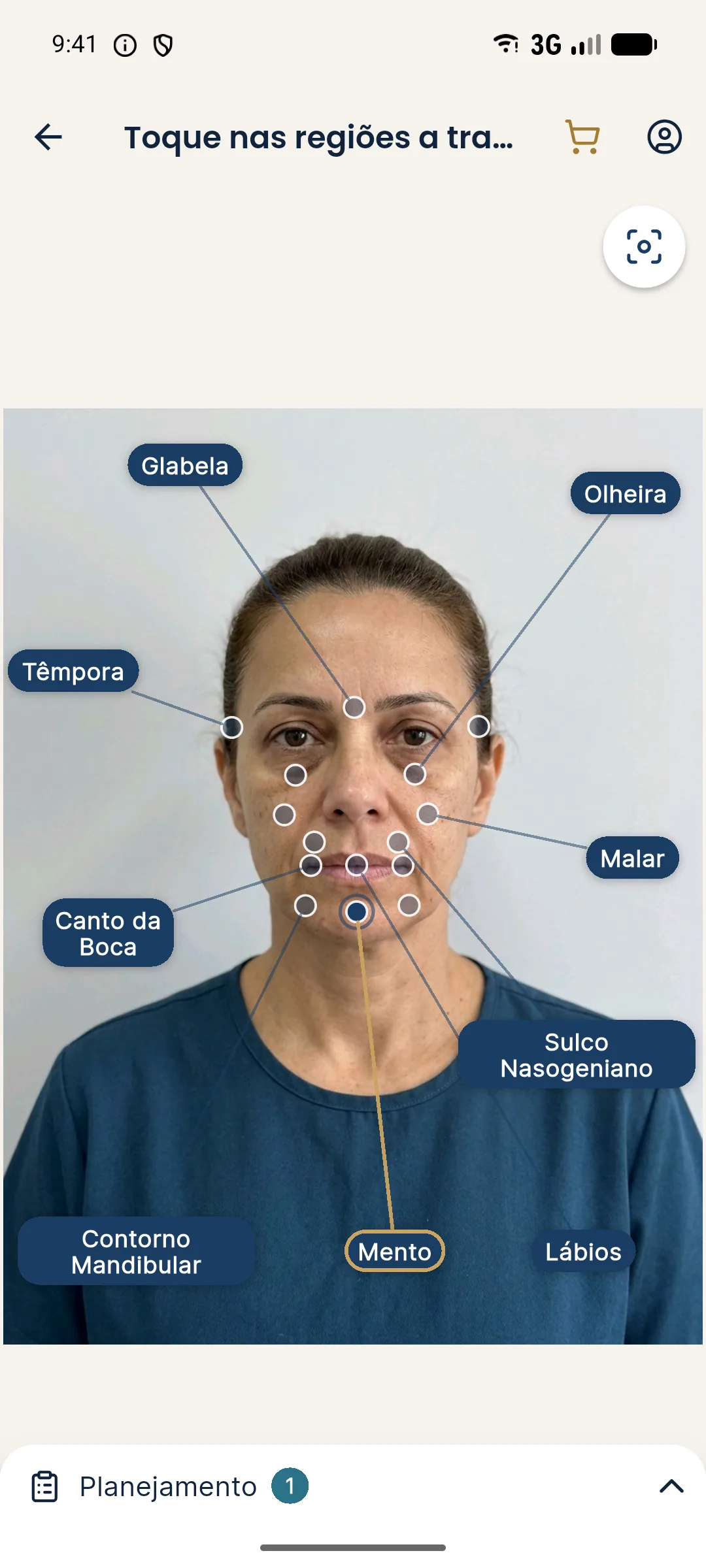
Harmy helps visualize the change in chin projection and contour, but it does not simulate skin texture or muscle contraction. The projection is generated from the frontal photo and the prompt forbids skin retouching, which makes the simulation honest but limited for this concern: it shows the support, not the effect of toxin on movement.
When to refer or revisit the plan
If the texture is longstanding, fixed and scarred, a dermatologic assessment may help. If the patient shows signs of severe bruxism, it is worth talking to the dentist. And if the concern is out of proportion to what is seen, consider the emotional context. For the general limits, see concerns that HOF does not solve.
Frequently asked questions
Why does the chin look like orange peel?
It is usually the mentalis muscle contracting and pulling the skin upward against thin supporting tissue. Thicker skin, little underlying volume and frequent puckering make it more noticeable.
Does botulinum toxin fix orange-peel texture on the chin?
It can soften the look when the cause is mentalis contraction. The indication and dose are up to the licensed professional after an assessment, and the effect is not permanent.
Does filler help with this texture?
In some patients a lack of support contributes, and conservative volume in the chin can help. But too much or poorly distributed volume can make it look worse, and the decision requires an assessment.
Is a dimpled chin the same thing?
They look similar. A congenital dimple is a cleft in the bone or fascia present from birth, while orange-peel texture is usually dynamic. The approach can differ.
Harmy images are illustrative simulations generated by AI from the patient's photo to support the conversation between practitioner and patient. They are not a promise of results. Indication, technique, product and volume are solely the decision of the licensed practitioner. This content is for information only and does not replace a clinical assessment.