
No Separation Between Chin and Neck: Assessment

 BeforeSimulation
- Nerve
- Highlighted area
Quick facts
- Concern
- The chin blends into the neck, with no line marking the separation
- Central structure
- Cervicomental angle, formed between the underside of the chin and the neck
- Causes
- Submental fat, recessed chin, laxity of the skin and platysma, posture
- Approach
- Treat the dominant cause, and only then define with chin projection and contour
In profile photos, many patients notice something they cannot name: the line that descends from the chin goes straight into the neck, with no clear fold between them. There is not necessarily a visible double chin. There is simply no separation. The face seems to end diffusely, and the read is of a lack of definition in the lower third.
The structure responsible for this transition has a name: the cervicomental angle. This page shows how to assess it and how to separate the causes, which are varied and call for different approaches.
The angle that draws the end of the face
The cervicomental angle is the line where the underside of the chin meets the front of the neck, observed in profile. In general, the more defined and the sharper it is, the more sculpted the lower third looks. When it opens up, the transition softens, and chin and neck look like a single surface.
This angle is influenced by several elements: chin projection, the amount of fat under the chin, the position of the hyoid bone, the tension of the platysma, skin elasticity and even head posture. So lack of separation rarely has a single cause. See double chin: assessment for the broader picture.
Four most common causes
| Cause | What happens | Clue |
|---|---|---|
| Submental fat | Buildup under the chin erases the angle | A fold of tissue that can be pinched between the fingers |
| Recessed chin (retrogenia) | Lack of projection opens the angle | Profile with the chin behind the lower lip |
| Skin and platysma | Laxity and bands pull the tissue down | Bands visible when speaking, loose skin |
| Posture and structure | Forward neck, low hyoid | Forward head, open angle even in thin people |
A person can have more than one cause at once, which is the rule in patients over 40. The assessment should estimate the relative weight of each and prioritize. See double chin even when thin and double chin with a small chin.
How to assess in profile
The assessment needs a true profile, with the Frankfort plane horizontal, the head straight and a neutral expression. A head tilted slightly down closes the angle and misleads. A raised head opens it.
Standardizing the position is essential. Photos taken with the head at different angles make the before and after comparison unreliable. See standardized clinical photography and reference lines of the aesthetic profile.
What facial harmonization can do for each cause
The approach depends on which cause predominates. The possibilities follow, always at the discretion of the qualified professional.
Recessed chin. Chin filler can project the lower face and deepen the angle, which improves separation in suitable cases. See ideal chin projection by sex and receding chin.
Submental fat. When there is buildup, the approach involves options such as injectable fat-dissolving agents or other techniques, with their own indications and risks. See submental injectable lipolytics and double chin: threads, biostimulator or enzymatic.
Laxity and platysma. Toxin in the platysmal bands, biostimulator in the neck and PDO threads in the neck can be considered in selected cases, with risks and limits. See aging neck.
Jawline. Jawline filler can mark the lateral contour and give the whole more definition. See chin and double chin: combining in the plan.
Timeline of a plan
The sequence can vary. What does not change is the rule of reassessing the angle between stages, because each intervention changes the effect of the next.
Risks
The submental region has relevant vascular and nerve structures. Among them are branches of the submental artery and the marginal mandibular branch of the facial nerve. Possible complications include swelling, bruising, asymmetry, nodules and, more rarely, serious injury. Hyaluronidase must be available with hyaluronic acid. Fat reduction procedures also have their own risks, which must be explained in the consent. See safety and complications: overview.
How to show it in Harmy
Harmy uses only the front-facing photo. So it does not show the profile or the cervicomental angle, which is a structure seen from the side. What the projection shows is the effect of volume on the Chin and the Jawline in frontal view, which helps in discussing the proportion of the lower third, but does not replace the profile.
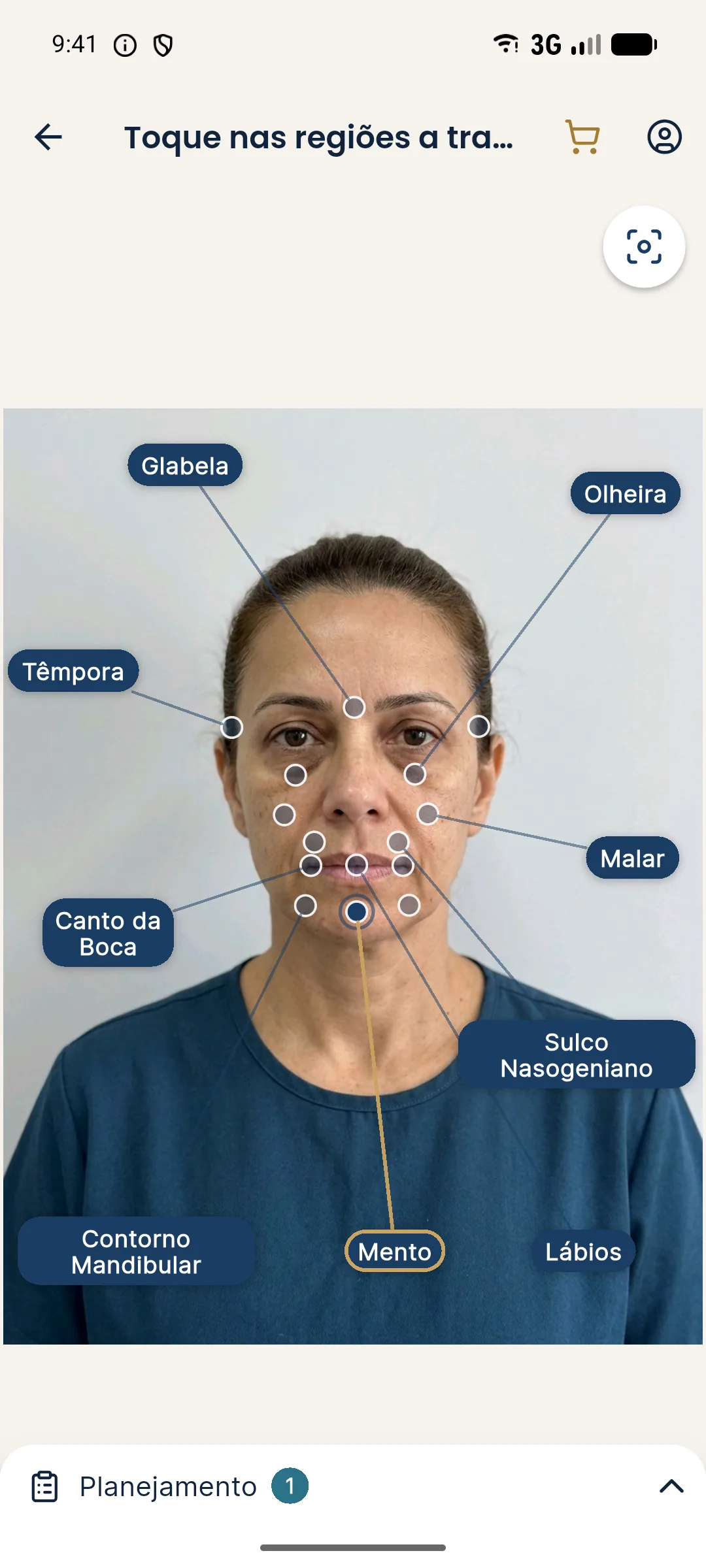
This limit must be stated clearly to the patient. The frontal photo may suggest little change while the profile shows a large effect, or the other way around. Being honest about what the app shows avoids misunderstandings.
Record keeping
Note the profile photos of both sides, the causes identified, the relative weight of each and the stages proposed. Also record the explanations about the limits of the simulation. Volumes and techniques are at the discretion of the qualified professional, after assessment and in line with the rules of their professional council in Brazil.
Frequently asked questions
What is the cervicomental angle?
It is the angle between the underside of the chin and the neck, seen in profile. When it is well marked, the face looks more defined. When it is open or blurred, chin and neck look like a single line.
Does filling the chin help separate chin and neck?
In cases of a recessed chin, projection can help mark the transition. If the cause is submental fat or laxity, other approaches are needed before or alongside.
Are double chin and lack of separation the same thing?
They are related, but not the same. A double chin is a buildup that erases the angle, and lack of separation can also come from a recessed chin, loose skin or posture.
Do threads or a biostimulator help in this area?
They can be considered in selected cases, with their own indications, risks and limits. The decision is up to the qualified professional, after assessment.
Harmy images are illustrative simulations generated by AI from the patient's photo to support the conversation between practitioner and patient. They are not a promise of results. Indication, technique, product and volume are solely the decision of the licensed practitioner. This content is for information only and does not replace a clinical assessment.