
How to explain mouth corner treatment to the patient

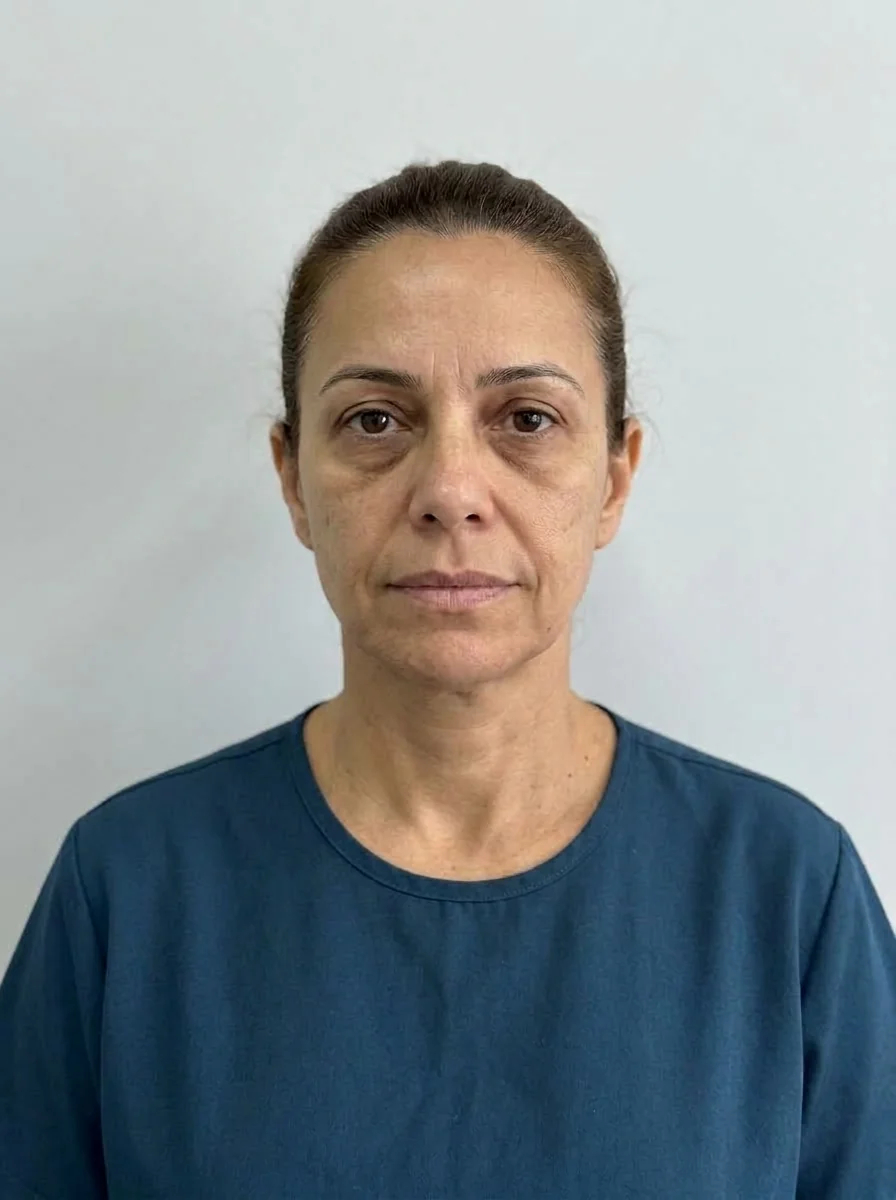 BeforeSimulation
Quick facts
- Common concern
- Looking tired or sad
- Care in wording
- Do not call the patient tired or sad
- Limit
- The mouth corner is a delicate area, with a subtle result
- Risk to mention
- Asymmetry, nodules, swelling, bruising and vascular complication
When the patient points to the corner of the mouth and says "I look angry all the time," they are bringing a concern about expression, not anatomy. The challenge of the consultation is to guide the conversation without repeating the label that bothers them and without promising that a filler will fix what depends on several structures. This page suggests phrases and a step-by-step approach to explaining mouth corner treatment honestly.
Where do you start the conversation?
Ask before stating. "How would you describe what bothers you in this area?" Their words guide your explanation and keep you from using an offensive label. Then describe what you see neutrally:
Note that the sentence talks about the line of the mouth and the relaxed face, not a "tired face" or a "sad" one. The patient feels the care and the conversation stays technical, without judgment.
What should you explain about the anatomy?
In a few words, three structures influence the expression at the mouth corner:
| Structure | What it does, in plain language |
|---|---|
| Modiolus | The point where several muscles meet at the mouth corner |
| Depressor anguli oris | The muscle that pulls the corner down |
| Surrounding tissue and fat | Loss of volume can accentuate the downturned line and the marionette lines |
The table gives the patient the idea that it is not "just" a lack of volume. Depending on the assessment, the plan may include filler, toxin or both, and each acts on one of these structures. The procedure page is mouth corner filler.
What can and cannot filler do?
The patient needs to know that expectations should be modest:
- it can soften the transition between the mouth corner and the neighboring area, to varying degrees;
- it can help reduce the shadow of the fold that descends from the corners;
- it does not change the shape of the bone or the movement of the muscle;
- it does not eliminate the natural expression of the relaxed face.
See also the plan for the lips and the chin, which are often part of the same concern.
How do you use the Harmy simulation?
The simulation helps the patient visualize a subtle change at the mouth corner without you having to describe it. In Harmy, the Mouth Corner point is one of the marking points; you choose the ml and the intensity, and the app generates the projection from the front-facing photo.
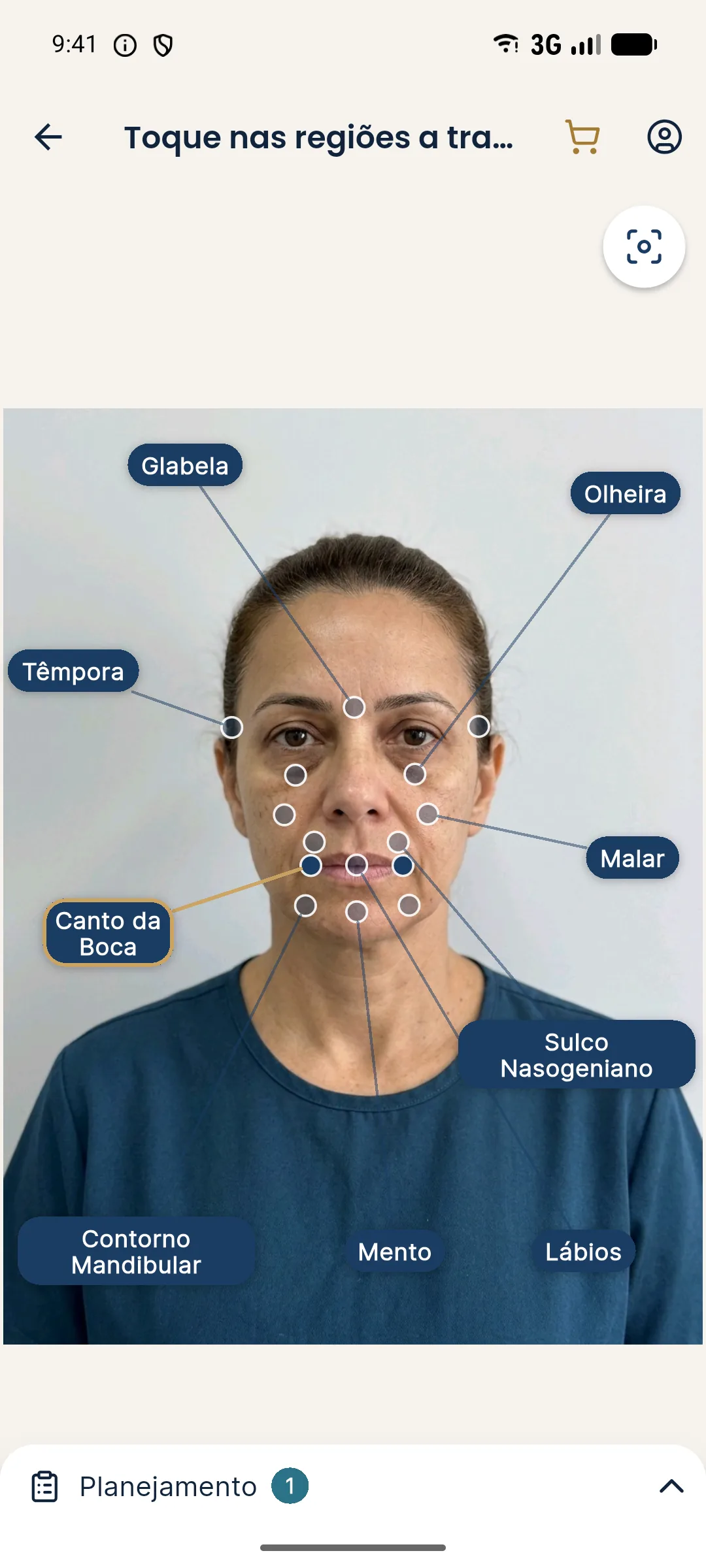
Use the simulation with the question "is this change close to what you imagine?", and always remember that it is an illustration. More on how to lead this in presenting the projection in the consultation.
Which risks should you explain?
Be direct without creating alarm. The area is delicate and the patient should know the following can occur:
- swelling and bruising, which usually pass;
- asymmetry, from movement and anatomy;
- nodules or irregularities, which may need specific management;
- more rarely, a vascular complication, which requires prompt care.
When hyaluronic acid is used, hyaluronidase should be available. This information is part of the informed consent and connects with how to explain hyaluronidase.
How do you handle the patient's dissatisfaction with their own face?
If the patient keeps repeating that they "look sad," check whether the concern is proportionate to what you see. In cases where the worry seems disproportionate, a conversation about expectations and, if necessary, referral for professional support are appropriate. For the general tone, see how to point out an asymmetry without offending and how to talk about age in the consultation.
Which questions should you expect?
What should you record?
Note the concern in the patient's own words, the anatomy observed, the explanation of limits and risks, and standardized photos, at rest and smiling. Also record the informed consent and the agreed follow-up. The explanation about the consent form is in how to explain the informed consent.
A conversation that describes instead of labeling gives the patient the sense of being heard, and brings to the plan the precision a delicate area needs.
Frequently asked questions
How do I talk about downturned mouth corners without offending?
Use descriptive, neutral language, such as the line of the mouth that slopes down at the sides, and ask first what the patient notices. Avoid expressions like sad face or tired face.
Does filler in the mouth corner fix a sad expression?
It can soften it in some cases, to varying degrees, but the expression also depends on muscle, folds and the chin area. Explain that the result is subtle and depends on anatomy.
What else can be considered besides the mouth corner?
Depending on the concern, the professional may assess marionette lines, the chin, the lips and the movement of the muscle that pulls the corner down. The plan defines the whole.
Is the mouth corner a high-risk area?
It is a delicate area, with nearby vessels and a lot of movement. The risks should be explained to the patient, and hyaluronidase should be available when hyaluronic acid is used.
Harmy images are illustrative simulations generated by AI from the patient's photo to support the conversation between practitioner and patient. They are not a promise of results. Indication, technique, product and volume are solely the decision of the licensed practitioner. This content is for information only and does not replace a clinical assessment.