
Harmonization plan for an anxious or needle-fearing patient

Quick facts
- Topic
- Harmonization plan for an anxious patient or one afraid of needles
- Core strategy
- Short stages, from least to most uncomfortable, with the patient in control
- Preparation
- Clear information, a calm setting and unhurried consent
- Attention
- Tell ordinary anxiety apart from a phobia or a clinical condition
- Ethical stance
- Never pressure or downplay the fear
Fear of needles is more common than it seems, and a patient who admits it in the consultation has already made an effort. Anxiety about the procedure, the result or other people's judgment is also very common. For the professional, the point is not to "convince" the patient but to design a plan that respects their pace, reduces discomfort and preserves safety. This page lays out that plan.
What is the difference between ordinary anxiety and a phobia?
Ordinary anxiety is the apprehension expected before a procedure. Needle phobia (trypanophobia) is an intense fear that can trigger a panic attack, fainting or persistent avoidance. When you suspect a phobia, it is not appropriate to "force" the session: an assessment by a mental health professional or a physician may be the first step. The decision to treat is yours, but the patient must be able to consent calmly. See anxious patient in care, anxious patient in the consultation and I am afraid of needles.
How do you prepare the consultation?
The consultation is the time to reduce fear of the unknown. Explain what will be done, how long it takes, what the material is like (a fine needle or a cannula, when indicated), how discomfort is usually described and what the patient can do if they need to stop. Show the room, the sealed supplies and the sequence. Giving control lowers anxiety. See fear of needles in facial harmonization and setting expectations about pain.
How do you split the plan into stages?
Splitting is the central tool. Instead of one long session with several areas, propose a sequence of short sessions, each with one area, and the patient decides between one and the next. This reduces anxiety, gives time to adapt and allows stopping at any time. It also reduces the cumulative risk of swelling and the pressure to "get it over with". See when to split the volume across sessions, harmonization plan in two sessions and how many areas to treat per day.
How do you order from least to most uncomfortable?
Discomfort varies by person and by area, and the order should combine three factors: what the patient wants most, what is usually described as less uncomfortable and what carries the lowest risk. There is no universal ranking. One line of reasoning is to start with a well-tolerated area that addresses the concern, to build trust. More sensitive areas or those with higher vascular risk can come later, when the patient feels more secure.
| Factor | Question | Example of a decision |
|---|---|---|
| Desire | What do they most want to treat? | If it is a sensitive area, discuss anesthesia and pauses |
| Discomfort | Which area is usually described as more tolerable? | Start with it, if it addresses the concern |
| Risk | Does the area carry higher vascular risk? | Leave it for when there is more trust and experience |
| Control | Can the patient relax in that area? | Adjust position, breathing and pauses |
The lips, for example, are usually described as sensitive, and topical anesthetic, when indicated, can help. See lip filler and topical anesthetic. The choice between needle and cannula is the professional's; see cannula or needle.
How do you use the simulation with an anxious patient?
The simulation helps for a simple reason: it reduces fear of the result. In Harmy, the patient sees a discreet Before/After, understands they will not "end up looking too different" and feels more in control. This matters because part of the anxiety comes from fear of overdoing it. Make the projection with a single area at Subtle intensity, and show that the plan can grow if they want.
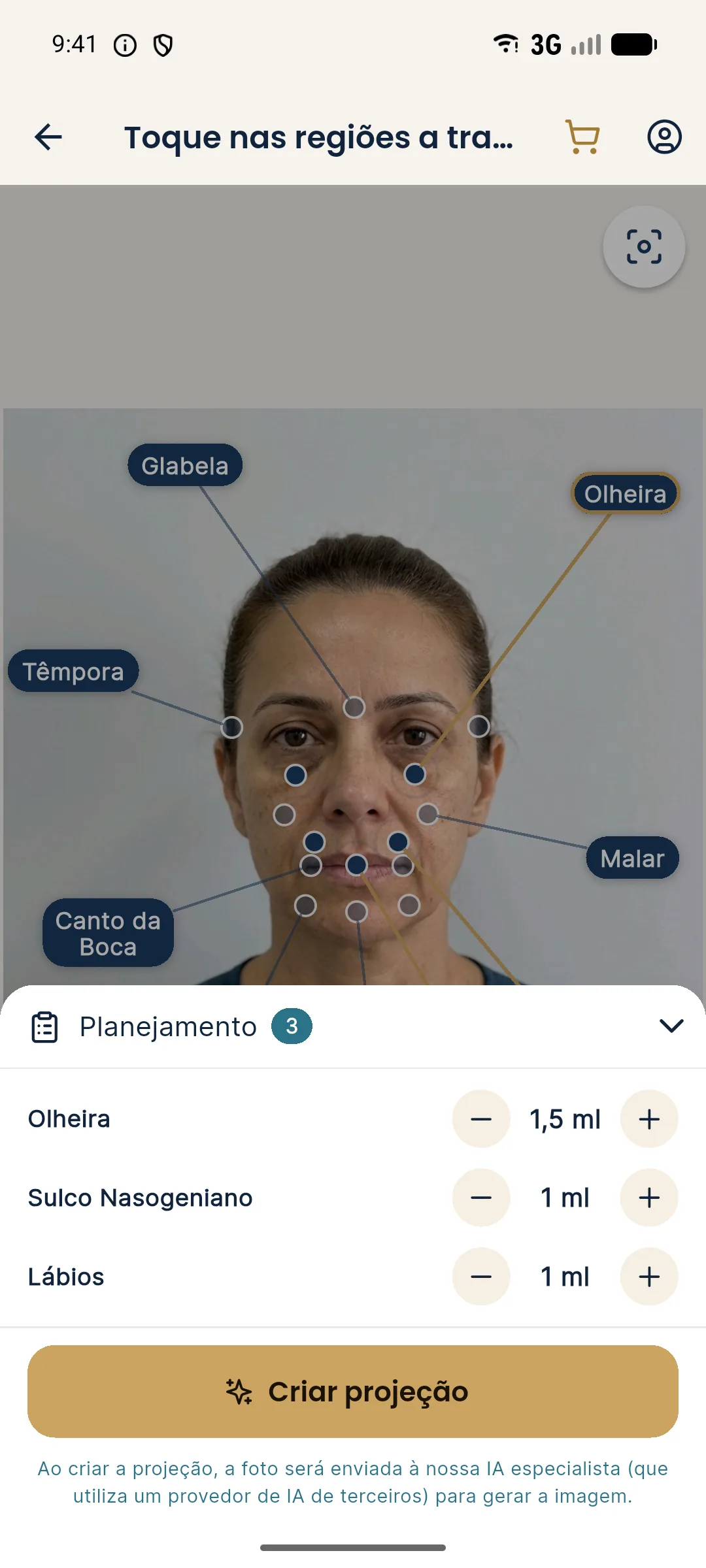
For a patient who needs time to think, the patient link opens the slider on their phone, with the clinic's logo and contact details, so they can review it calmly. Mind the ethics: the simulation is illustrative and does not replace the consent form or the explanations of risk. See simulation for an anxious patient and why the simulation should be subtle.
What should you do during the session?
Control the pace. Announce each step beforehand, let the patient breathe, use pauses and describe what you are doing without excess detail. Respect the agreed pause signal. Keep the position comfortable and avoid letting them see the syringe if that makes it worse. Watch for signs of feeling unwell (pallor, sweating, dizziness) and have a plan for a drop in blood pressure. Hyaluronidase must be available when hyaluronic acid is used.
When should you postpone or decline?
When the patient cannot consent calmly, when anxiety is incapacitating, when body dysmorphic disorder is suspected or when the motivation for the procedure is relief from a distress that the procedure will not resolve. Postponing and referring is not a failure. See body dysmorphic disorder in facial harmonization and harmonization plan and the patient's mental health.
Reasoning quiz
Summary
For the anxious patient, the plan is small, split into stages, predictable and controlled by them. Prepare the consultation, order the stages, use the simulation as support, respect the pause signal and know when to postpone or refer.
Frequently asked questions
Is it possible to do facial harmonization on someone with a strong fear of needles?
In many cases yes, with preparation, short stages and the patient in control. If the fear is so intense that it causes fainting or a panic attack, a medical or mental health assessment may be needed.
Which area should you start with in an anxious patient?
There is no rule. Many professionals prefer to start with an area of lower discomfort and lower risk, to build trust, as long as it addresses the concern.
Does topical anesthetic help?
It can help reduce discomfort in some areas, as the professional indicates. It does not remove the sensation and comes with its own precautions.
Can the patient interrupt the session?
Yes, and they should know this before starting. Agreeing on a pause signal increases control and usually lowers anxiety.
Harmy images are illustrative simulations generated by AI from the patient's photo to support the conversation between practitioner and patient. They are not a promise of results. Indication, technique, product and volume are solely the decision of the licensed practitioner. This content is for information only and does not replace a clinical assessment.