
Planning Facial Harmonization for a Triangular Face and Wide Jaw

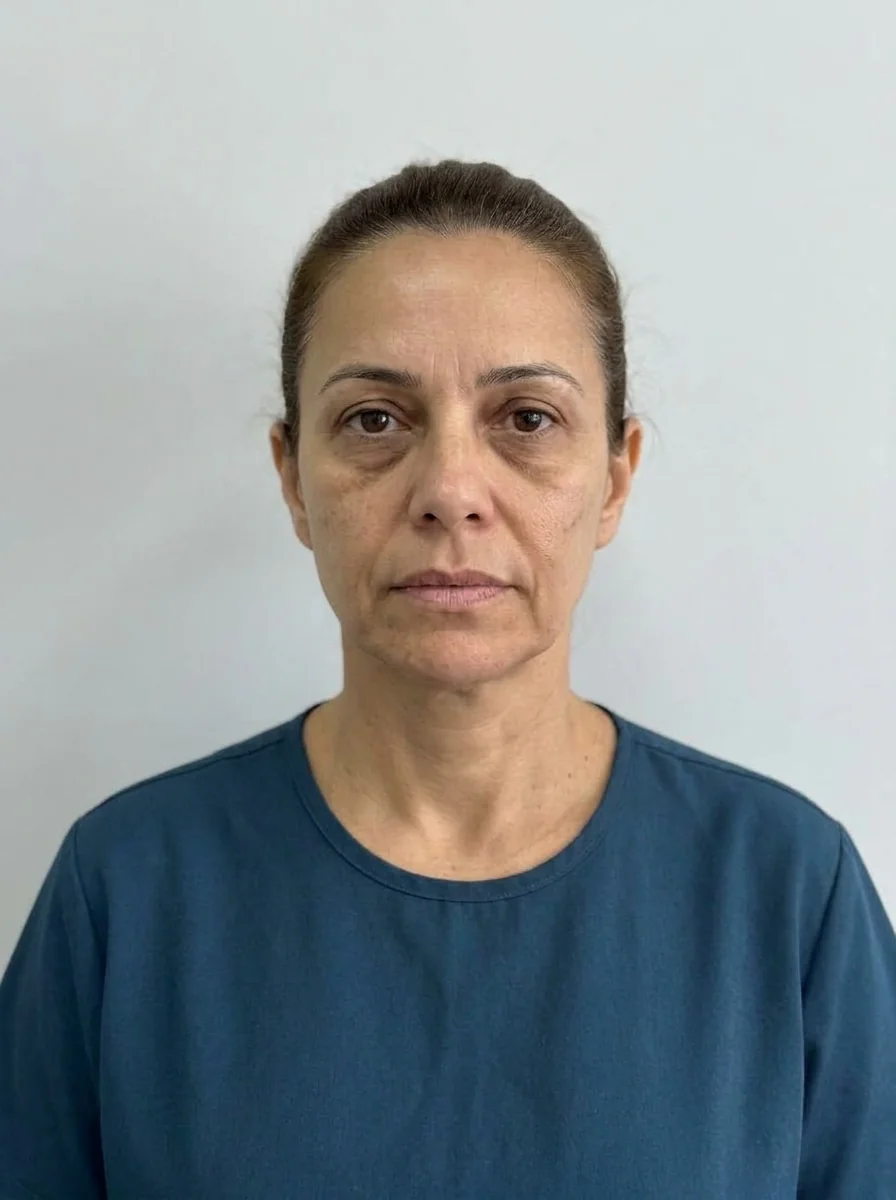 BeforeSimulation
Quick facts
- Characteristic
- Narrower forehead and cheekbones and a wide jaw, with a dominant base
- Usual goal
- Add weight to the midface and soften the dominance of the base
- Avoid
- Adding volume to the jaw and chin without need
- Points of attention
- Masseter hypertrophy, bruxism, symmetry and the cheekbone-to-jaw transition
The triangular face has a base wider than the top: the jaw dominates and the forehead and cheekbones look narrow. The typical concern is a face that is "heavy at the bottom", "square" or "angry". The planning strategy here reverses that of many other shapes: instead of working on the base, the focus tends to be the midface and the cause of the jaw width.
How do you confirm the shape and the cause?
Photograph from the front and measure the relationship between forehead, cheekbones and jaw angle. Not every wide jaw is the same, and the cause changes the plan:
| Possible cause | How it shows | Direction of the plan |
|---|---|---|
| Bone structure | Wide, rigid jaw angle | Accept the shape; balance the midface |
| Hypertrophic masseter | Bulky muscle when clenching the teeth | Assess toxin and address the habit, if indicated |
| Fat and skin at the base | Soft contour in the lower area | Assess other strategies before adding product |
| Asymmetry | One side wider | Plan correction of one side only, with caution |
The glossary entry on triangular face summarizes the traits. On the muscular cause, read jaw and masseter: combining them in the plan and square face from bruxism.
Where do you act to balance?
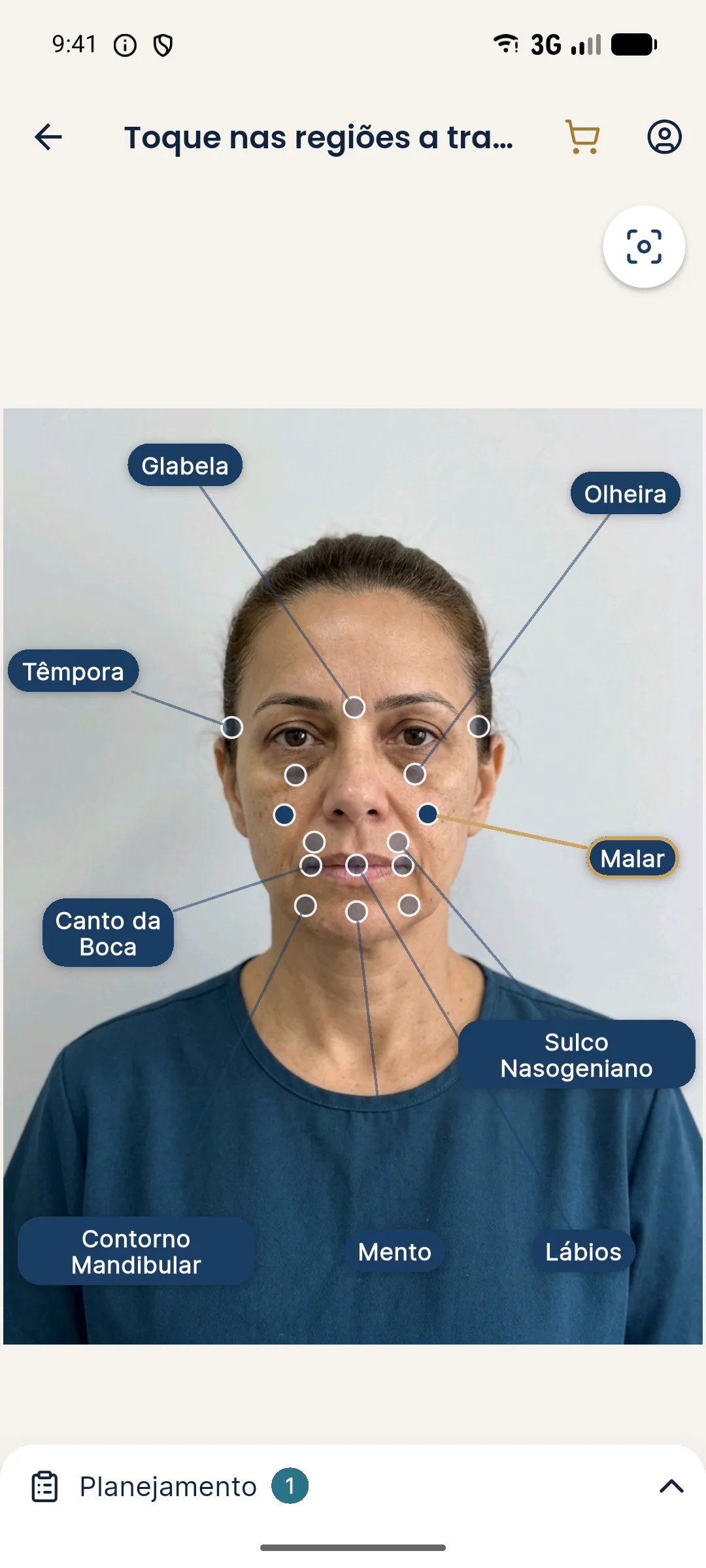
The central logic is to enhance the midface and the temples, creating balance with the base, and to leave the jaw alone when it already dominates. This means:
- Cheekbone. Give support and slight projection so the top of the face gains presence. See cheekbone filler.
- Temples. When volume loss narrows the top even more, the area can be considered. It is of high vascular risk and requires hyaluronidase to be available. See temple filler.
- Chin. Only if there is a projection concern; avoid widening the base.
- Jaw. Avoid general volume; consider only targeted corrections of asymmetry.
How does the masseter come into the conversation?
When the width comes from muscle, the topic appears on two fronts: the possibility of treating the masseter and that of treating the cause, such as bruxism. This involves a clinical decision, a functional assessment and, often, other professionals. The role of visual planning is only to make it clear to the patient that this hypothesis exists. See also masseter toxin and bichectomy for the patient's view.
Toxin, when used, acts on the muscle and not on bone structure. The effect is to reduce muscle volume over time, with individual variation. The decision and technique are at the discretion of the qualified professional.
How does the simulation help, and where does it mislead?
The cheekbone simulation illustratively shows the effect of a moderate volume in the midface. It is useful to show the patient that balance starts at the top, not at the base. However, the simulation does not reduce the jaw nor simulate the effect of toxin in the masseter.
Explain this to the patient before opening the image, so they do not expect to see the jaw "shrink". See limits of 2D simulation and comparing intensities.
How do you organize the plan?
Start with the midface, reassess, and only then decide about the base. This path avoids adding product where there is already plenty. The logic of priority and reassessment is in what to treat first in facial harmonization and interval between sessions. For the contour itself, see facial contour definition plan.
What reading mistakes are common?
The first is confusing a wide jaw with a narrow midface. Both give the same triangular look, but the plan is the opposite: in the first, the focus would be the base; in the second, the top. Measuring the width of the cheekbones and the width of the jaw side by side clears it up. See face width by fifths.
The second mistake is ignoring masseter asymmetry: one bulkier side creates an asymmetric triangular look. Palpating while the patient clenches their teeth helps tell muscle from bone and soft tissue.
How do you talk about a feature the patient wants to "make smaller"?
Many patients with a wide jaw come in asking to "slim the jaw". Acknowledge the concern, explain that injectables do not reduce structure and present what is possible: balance in the midface and, if it is muscle, the conversation about the masseter. This clarity protects against the most common frustration with this profile.
What care applies to a patient who grinds their teeth?
Bruxism is behind many cases of a bulky masseter. It is worth asking about pain on waking, tooth wear and use of a night guard. If there is suspicion, referral to a dentist is part of the care. The habit also affects how long nearby filler lasts, as shown in bruxism and filler longevity. Treating the muscle without addressing the habit can lead to results that do not hold.
Practical summary
On a triangular face, identify the cause of the wide base, enhance the midface, avoid adding volume to the jaw, investigate bruxism and make clear that the simulation does not show muscle reduction. Plan in stages and record what was explained to the patient.
When the cause is bony, the best result is usually acceptance of the shape, with discreet adjustments to the rest of the face.
What to note in the patient record for a triangular face
Note the probable cause of the wide base (bone, muscle or fat), whether there was a complaint of bruxism, the midface areas the patient agreed to treat and those they declined. Keep the frontal and three-quarter photos taken with the same light. If the patient expected a slimmer jaw, record that you explained the simulation does not show reduction. Results vary from person to person, and the approach is the responsibility of the qualified professional, according to the rules of their professional council in Brazil, after an in-person assessment.
Frequently asked questions
What is a triangular face?
It is the shape in which the base of the face (the jaw) is wider than the forehead and cheekbones. The description is about proportion and does not indicate a problem.
How can a wide jaw be softened in facial harmonization?
In general, the focus is not on reducing the jaw but on giving the midface more presence to balance the width. When the masseter is hypertrophic, there are specific options that the professional evaluates.
Should I avoid jawline filler with this shape?
Adding volume where the base is already dominant is usually avoided, except for a specific indication, such as an asymmetry or loss of definition on one side.
Does toxin in the masseter fix a wide jaw?
It can be discussed when the width comes from masseter hypertrophy, for example in people who grind their teeth, at the professional's discretion. It does not change bone structure.
Harmy images are illustrative simulations generated by AI from the patient's photo to support the conversation between practitioner and patient. They are not a promise of results. Indication, technique, product and volume are solely the decision of the licensed practitioner. This content is for information only and does not replace a clinical assessment.