
Risks of a facial harmonization plan that is too long
Quick facts
- Topic
- Overly extensive facial harmonization plans
- Risks
- Goal drift, volume build-up and patient fatigue
- Warning sign
- More than one or two goals and no reassessment date
- Alternative
- A plan in short phases with a decision point between them
- Principle
- Each step must make sense on its own
There is a quiet temptation in planning: thinking of everything. The professional sees ten opportunities in the face, builds a plan around all of them and presents it as a complete map. The patient is impressed, and the conversation feels productive. In practice, though, that plan tends to be fragile. This page covers the risks of an overlong facial harmonization plan, how to recognize the signs and how to shorten it safely.
What is an overlong plan?
It is not measured in pages but in the number of decisions made in advance. A plan is too long when it decides today what can only be assessed later: the sixth area, the third follow-up, the total volume for the year. The more decisions a plan makes in advance, the more it depends on things that have not happened yet, such as the tissue's response, the patient's satisfaction and the natural changes of the face.
The alternative is a plan in phases, as described in minimum viable plan in facial harmonization and three-session facial harmonization plan. Each phase decides what comes now and reserves the next one for reassessment.
What are the main risks?
Goal drift
The bigger the plan, the easier it is to lose the original goal. The patient came with one concern, and the plan now covers ten areas. Over time the goal gets diluted, and success stops being measured by what the patient wanted and starts being measured by how much of the plan was completed. This shift is dangerous because it turns the plan into an end rather than a means. See plan goal measured in observable results.
Volume build-up
Long plans tend to add volume without reassessing the total. Each step on its own looks conservative, but together they can exceed what the face can carry. This is the mechanism behind the "too full" face, discussed in when total volume becomes excess and pillow face: how planning prevents it.
Patient fatigue
Patients get tired: of the schedule, the expense, the recovery and the feeling that they are never done. Fatigue leads to abandoning the plan, and dropping out midway often leaves the face in an in-between state, without the harmony the full plan would have given. It also creates distrust toward the clinic, as if the plan were designed to generate return visits.
Plan going out of date
The face changes with age, weight, habits and health. A plan written today for three years will have parts that no longer make sense a year from now. Holding the plan fixed against that reality leads to poor decisions. See three-year facial harmonization plan as a horizon view and when the plan needs to change.
What signs show the plan is too long?
If three or more items are present, a review is worthwhile. Often it is enough to reorganize into phases, not to cut procedures.
How do you shorten it without losing the essentials?
The process is pruning and reorganizing. Rewrite the patient's goal in one sentence, list the areas that contribute directly to it and leave the others as "to be assessed at follow-up." Define a first phase with a few areas and conservative volume, with a reassessment date. The next phase will only be detailed after that reassessment.
See how to choose the first areas in what to treat first in facial harmonization and prioritizing by visual impact in the plan.
How do you explain a phased plan to the patient?
Many patients feel a phased plan is less complete and prefer to hear "the package." Explain that the division protects the result: each phase is assessed, and the next one is adjusted to the actual response. Show that the "closed" long plan is what most increases the risk of going too far.
How does the quote follow the phases?
A single quote for the whole plan reinforces the feeling of a closed commitment. A quote per phase, with an expiration date, lets the patient move at their own pace. In Harmy, the PDF quote uses the price per ml of each area, saved in My clinic, with informational installments, expiration date and notice. You can generate one PDF per phase, with that step's areas and ml.
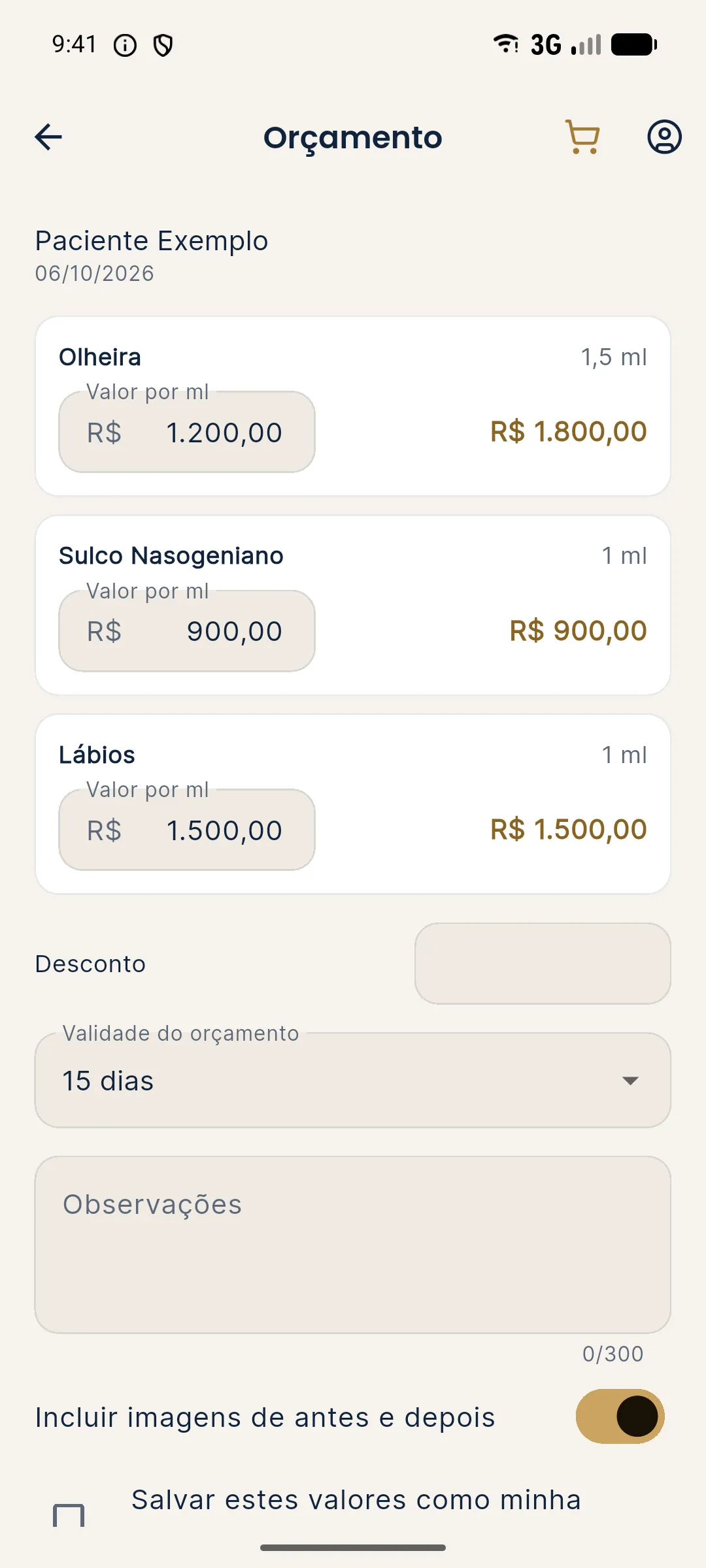
The projection is an illustration, not a promise of results. For linking plan and price, read linking plan and quote in facial harmonization and treatment plan validity.
What does a long plan do well?
Not every long plan is bad. When the goal is long-term, such as maintenance over the years, a plan with a wide horizon can help organize the general idea. What makes it healthy is its structure: few goals, short phases, decision points and freedom to change. See annual maintenance plan in facial harmonization and 12-month facial harmonization plan.
Frequently asked questions
What is the ideal length for a facial harmonization plan?
There is no single length. A good plan is one that makes sense in short phases, with reassessment between them. Plans with many steps and few decision points tend to lose focus.
Why can a long plan be a problem?
Because the face changes, the patient's goal changes and a fixed plan falls out of date. On top of that, adding up volumes and patient fatigue raise the risk of excess and of dropout.
Can I present a long plan as an overview?
Yes, as long as it is clear that only the first phase is decided and the rest will be reassessed. Avoid presenting everything as a closed commitment.
How do I shorten a plan that is already long?
By rewriting it in phases, with one goal per phase and a decision point at the end of each. Remove whatever depends on results that have not happened yet.
Harmy images are illustrative simulations generated by AI from the patient's photo to support the conversation between practitioner and patient. They are not a promise of results. Indication, technique, product and volume are solely the decision of the licensed practitioner. This content is for information only and does not replace a clinical assessment.