
Full Cheeks and Weak Chin: Balancing the Face

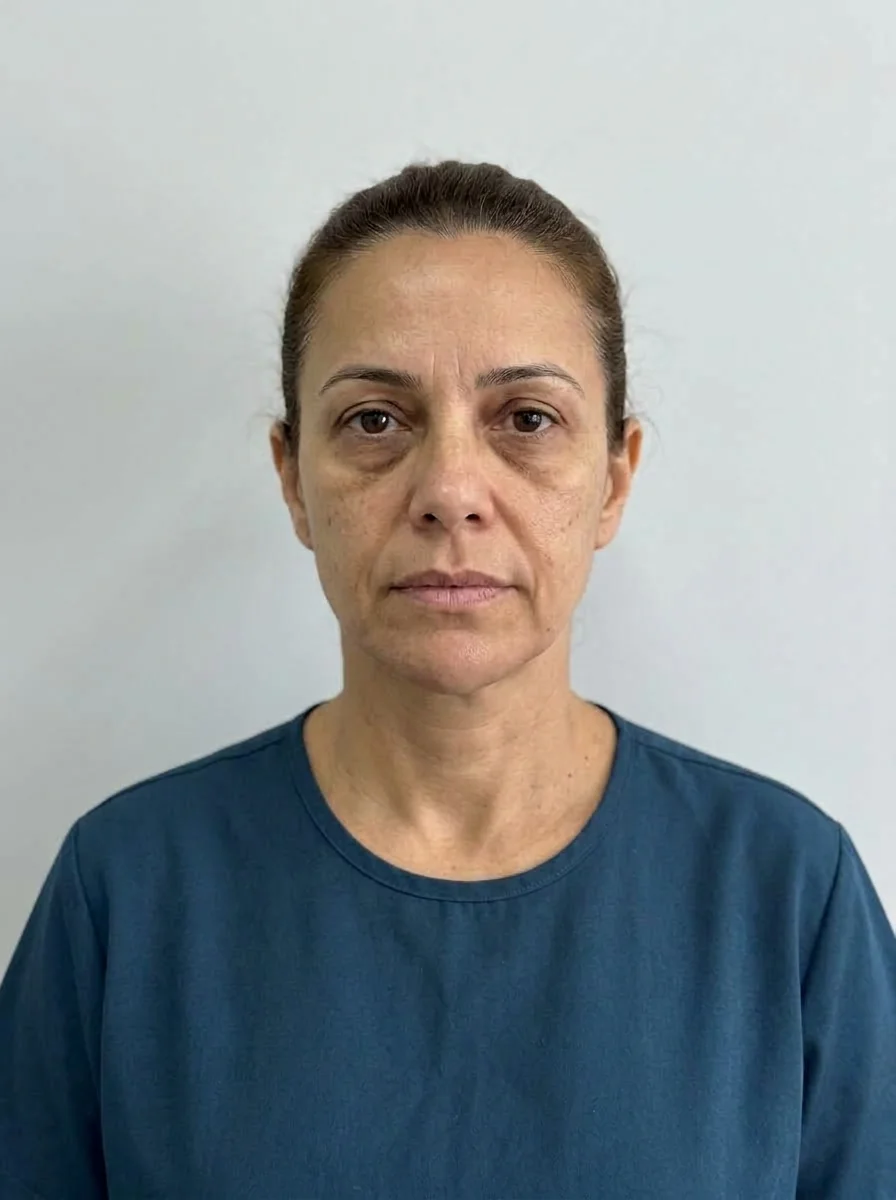 BeforeSimulation
- Nerve
- Highlighted area
Quick facts
- Concern
- Full cheeks and a poorly projected chin, with a round face and no definition
- Principle
- A weak chin can be the reason the cheek looks big
- Usual plan order
- Project the chin and reassess before any cheek reduction
- Caution
- Removing cheek fat in a face with a recessed chin can age the face
There is a frequent pattern in the office: a patient with a round face, full cheeks, a small or recessed chin and a contour without definition. The concern arrives as "big cheek" or "full face," and the temptation is to think about reducing. But the attentive professional notices that the chin can be the protagonist: a poorly projected chin leaves the lower third short and makes the cheek look bigger by contrast.
This page explains that relationship and the order of the plan. It connects with cheeks that are too big, small chin and round face.
Why does the chin change how the cheek reads?
The perception of facial volume is relative. A cheek of normal size looks big when the chin is short or recessed, because the lower third does not "close" the contour. The eye travels down the face and, when it finds no support at the chin, the fullness of the cheek dominates the reading.
| Scenario | What the eye sees | Effect |
|---|---|---|
| Full cheek, projected chin | Full but balanced face | Proportionate look |
| Normal cheek, recessed chin | The cheek looks bigger | Face without definition |
| Full cheek, recessed chin | Both added together | Round face, no contour |
| Thin cheek, recessed chin | "Hollowed" profile | Aged face |
This matters because reducing the cheek (by surgery or other methods) in a face with a recessed chin usually makes the look worse, leaving the midface empty and the lower third even shorter. The relationship between chin and profile is in retrogenia and in retrognathic profile: assessment.
How to assess
The main assessment is of the profile, because chin projection is anteroposterior. The frontal photo shows width, but the profile shows the chin.
The order of the plan
A reasonable order, at the discretion of the licensed professional:
- Project the chin with chin filler, in progressive amounts.
- Reassess after the product settles: does the cheek still bother the patient?
- Define the contour with jawline filler, if the jaw also needs structure.
- Only then discuss cheek reduction, if there is still an indication.
The discussion about the buccal fat pad and removal of buccal fat is in buccal fat removal or harmonization, buccal fat removal ages the face and buccal fat removal: when it is indicated. The buccal fat pad is a fat cushion that, once removed, does not come back, and the face keeps aging afterward. That is why preventive assessment is essential.
When the cheek really is the problem
There are faces in which the cheek has more buccal fat, more masseter or more zygomatic width, and the complaint is valid. In these cases, differential diagnosis is the center of the assessment. The distinction between fat, muscle and bone is in cheeks that are too big and, for the arch, in wide zygomatic arch.
For the patient with a recessed chin and double chin, the combination of chin work and an approach to the double chin is usually the basis. See double chin with small chin and double chin: assessment.
Risks
Chin filler has the general risks: swelling, bruising, asymmetry, nodules and irregularities, with less frequent vascular complications. The area has the mental nerve and branches of the submental artery, which call for anatomical knowledge. Hyaluronidase must be available. Excess product in the chin lengthens the face too much and weighs down the lower third, which reinforces the value of working in stages.
How to show it in Harmy
Harmy uses one frontal photo, so it does not show the anteroposterior projection of the chin. But it helps the conversation: the Chin point simulates the frontal effect of a more present chin and a more defined lower third, and the patient sees how the face looks less "round" because of proportion. Make two projections of the same face, one with Chin only and another with Chin and Jawline.
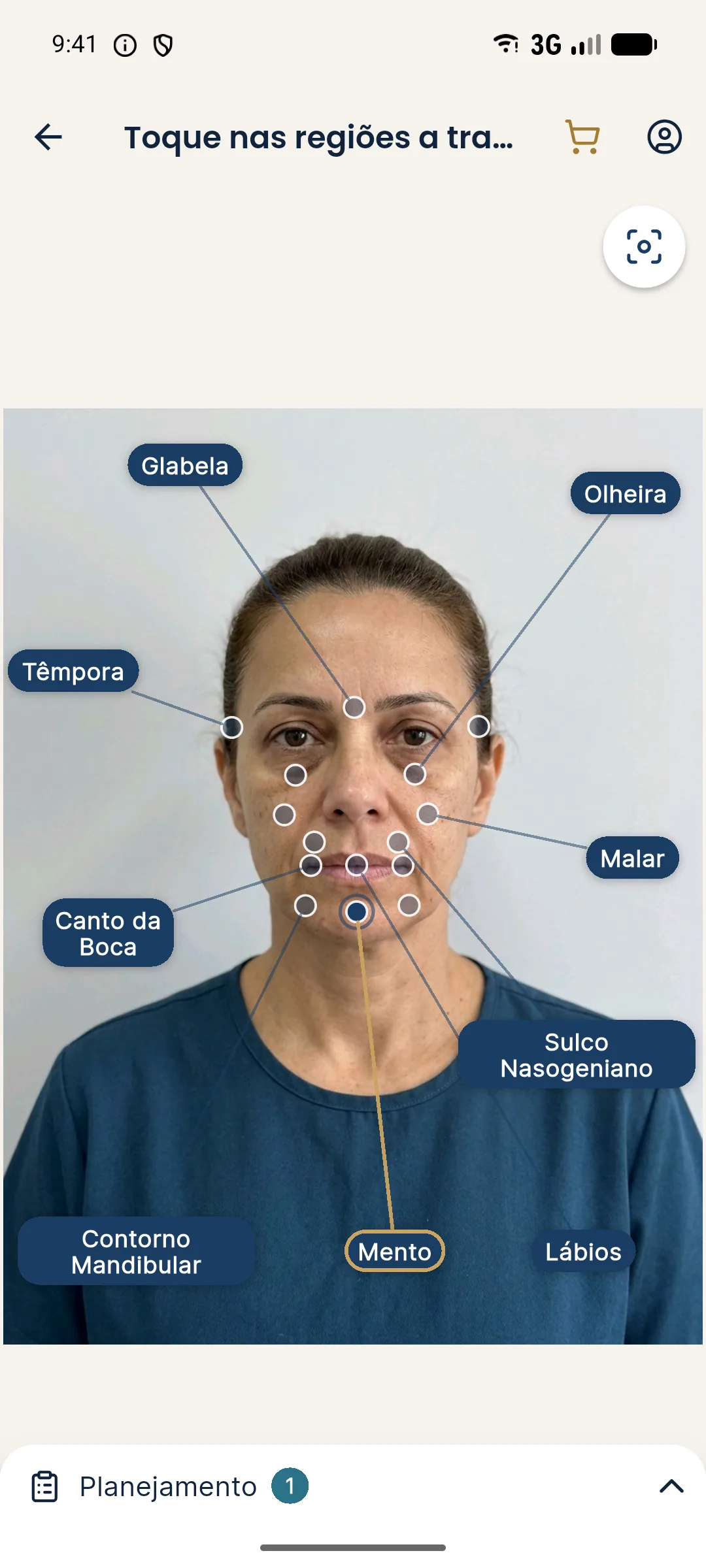
The Full harmonization shortcut marks chin 1.5 ml and jaw 2 ml, among other areas, at Moderate intensity, and you can adjust each point. The projection changes only what was marked, with no skin retouching.
Men and women: differences in the chin
Chin projection has different goals in each sex, and that changes the plan. In women, the chin tends to be more delicate and slightly tapered, and excess projection or width masculinizes the face. In men, the chin tends to be wider and more projected, and a recessed chin tends to convey fragility. The same "weak chin" concern therefore calls for different volumes and shapes.
In round faces, the temptation is to lengthen the chin a lot. Exaggerated lengthening creates an artificial proportion, and the preference is to project and define with moderation. In all cases, talking with the patient about how they picture the result helps calibrate the plan. The page differences between female and male faces goes deeper into the topic, and the specific male case is in man with an undefined jaw.
Wrap-up
Record the profile and frontal views, the main hypothesis and the order of the plan. For planning reasoning, see plan to project the chin and chin and jaw: combining in the plan. Volumes and techniques are at the discretion of the licensed professional, in accordance with the rules of their professional council in Brazil.
Frequently asked questions
Big cheek or small chin, which one do you treat first?
In many faces, the recessed chin makes the cheek look bigger by contrast. Projecting the chin and reassessing is usually the first step, before thinking about reducing the cheek. The decision belongs to the licensed professional.
Does filling the chin slim the face?
It can lengthen the lower third and rebalance the proportion, which gives the impression of a less round face. It does not reduce fat or change the width of the cheek.
Does buccal fat removal solve full cheeks?
It removes the buccal fat pad and can slim the midface in some faces, but it ages others, and it is an irreversible surgical decision. Do the assessment before recommending it.
Does a round face need the jaw treated too?
Often. The chin and the jawline define the lower third, and the plan usually considers both, in stages, at the professional's discretion.
Harmy images are illustrative simulations generated by AI from the patient's photo to support the conversation between practitioner and patient. They are not a promise of results. Indication, technique, product and volume are solely the decision of the licensed practitioner. This content is for information only and does not replace a clinical assessment.