
Men with thin lips: what fits in the assessment

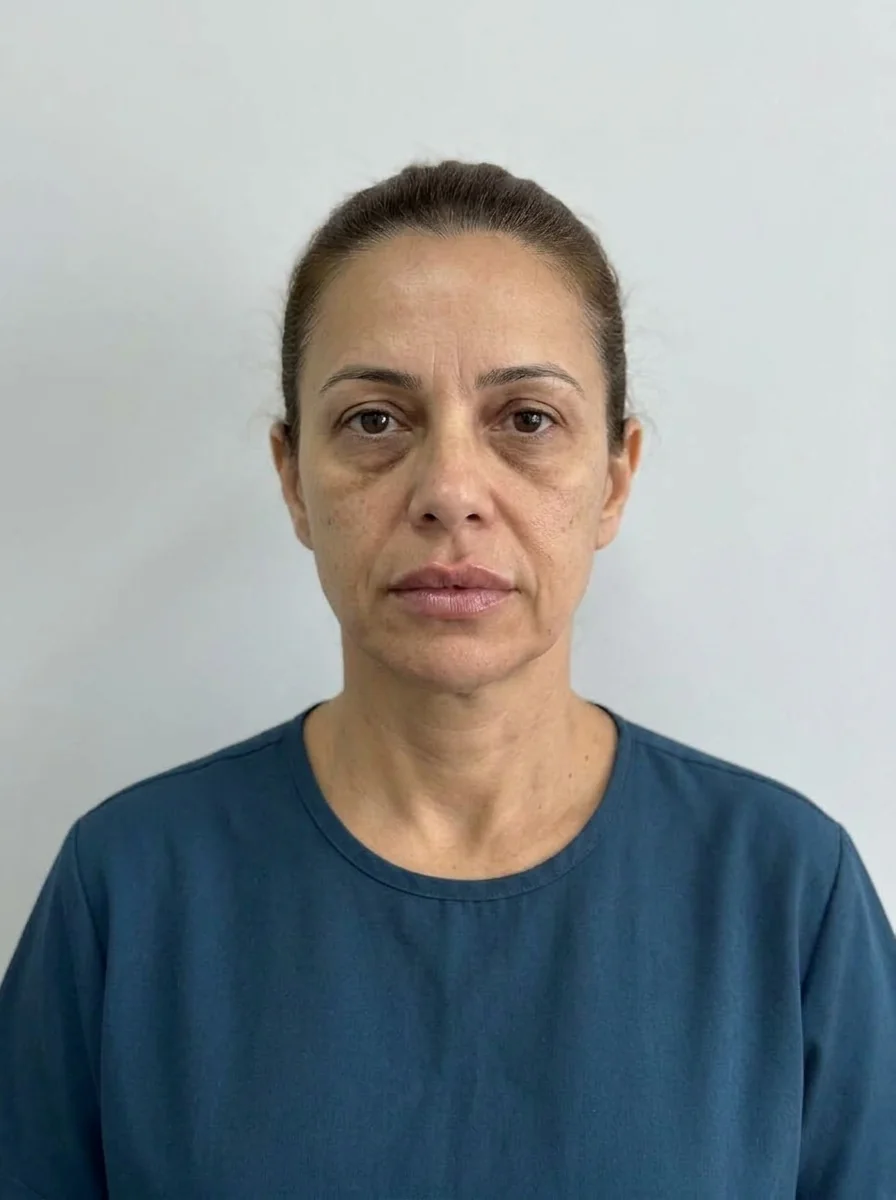 BeforeSimulation
- Highlighted area
Quick facts
- Concern
- Man who sees his lips as thin or feels his mouth disappears in the face
- Core difference
- The male lip is naturally flatter, wider and with less projection
- Plan risk
- Rounding, projecting or outlining too much and feminizing the mouth
- Starting approach
- Assess proportion and bite before thinking about volume
The man who says "my lips are thin" usually uses a short phrase for a concern that is hard to name. In many cases he does not want bigger lips: he wants his mouth to stop looking faded, hard or closed. In others, the concern comes from someone else's comment, a photo or a comparison with a reference face.
This page organizes the assessment so you can lead that conversation with a clear limit. The general reasoning for thin lips is in thin lips: assessment. Here the focus is what changes when the patient is a man. For the broader context of the male face, see male orofacial harmonization.
What is different in the male lip?
The male lip has its own characteristics that guide the plan. It is generally flatter in profile, with less eversion of the vermilion, and the mouth is proportionally wider. The cupid's bow tends to be less pronounced, and the white roll of the lip less marked. The surrounding skin has beard, hair and a different texture, which changes how light shapes the mouth.
These traits enter the planning as part of the patient's identity, not as a flaw. A plan that "corrects" each of these differences tends to produce a mouth that does not match the rest of the face.
| Feature | Tendency in the male lip | What this calls for in the plan |
|---|---|---|
| Vermilion projection | Lower, flatter | Avoid projecting the mouth forward |
| Mouth width | Proportionally greater | Do not add volume that widens the look |
| Cupid's bow | Less pronounced | Avoid redrawing or accentuating |
| Upper and lower proportion | Lower slightly fuller | Respect the natural proportion |
| Skin and hair | Beard and mustache influence the reading | Assess with the patient clean-shaven and with a beard |
Is the lip really thin?
Before talking about volume, it is worth separating what the patient calls "thin". Part of these concerns has another origin.
- Beard and mustache: dense hair above the lip reduces contrast and makes the vermilion look smaller.
- Bite and teeth: protruding, retroclined or missing teeth change lip support. See dentures and lip support.
- Age-related loss: the upper lip lengthens and the vermilion thins. See lips that disappeared with age.
- Receding chin: a profile with little chin projection makes the mouth look smaller. See receding chin.
- Faded smile: someone who smiles without showing the vermilion may think he has no lip. See faded smile.
Lip proportion is an assessment reference, not a goal. In many patients the proportion between the lips varies, and men often have a relatively fuller lower lip.
How can the male plan differ?
When the lip is assessed and there is an indication, the male plan usually starts from a few principles. They are not a protocol, they are lines of reasoning for the conversation.
- Restrained, staged volume. Small additions allow reassessing naturalness before continuing. It is easier to add at a follow-up than to undo. Lip filler is always at the discretion of the licensed professional, after assessment.
- Preserve the flat mouth. Avoid projecting the vermilion forward and avoid a "rounded" lip look.
- Do not mark the outline. Outlining the cupid's bow and the vermilion line as is done in female plans can produce a drawn-on mouth, which clashes on a male face.
- Care for symmetry without overdoing it. More attention to the transition to the philtrum and to the difference between sides, without trying to even everything out.
- Think of the whole. In many men, balancing chin and jaw changes how the face reads more than the mouth itself. See man with an undefined jawline.
How do you simulate before deciding?
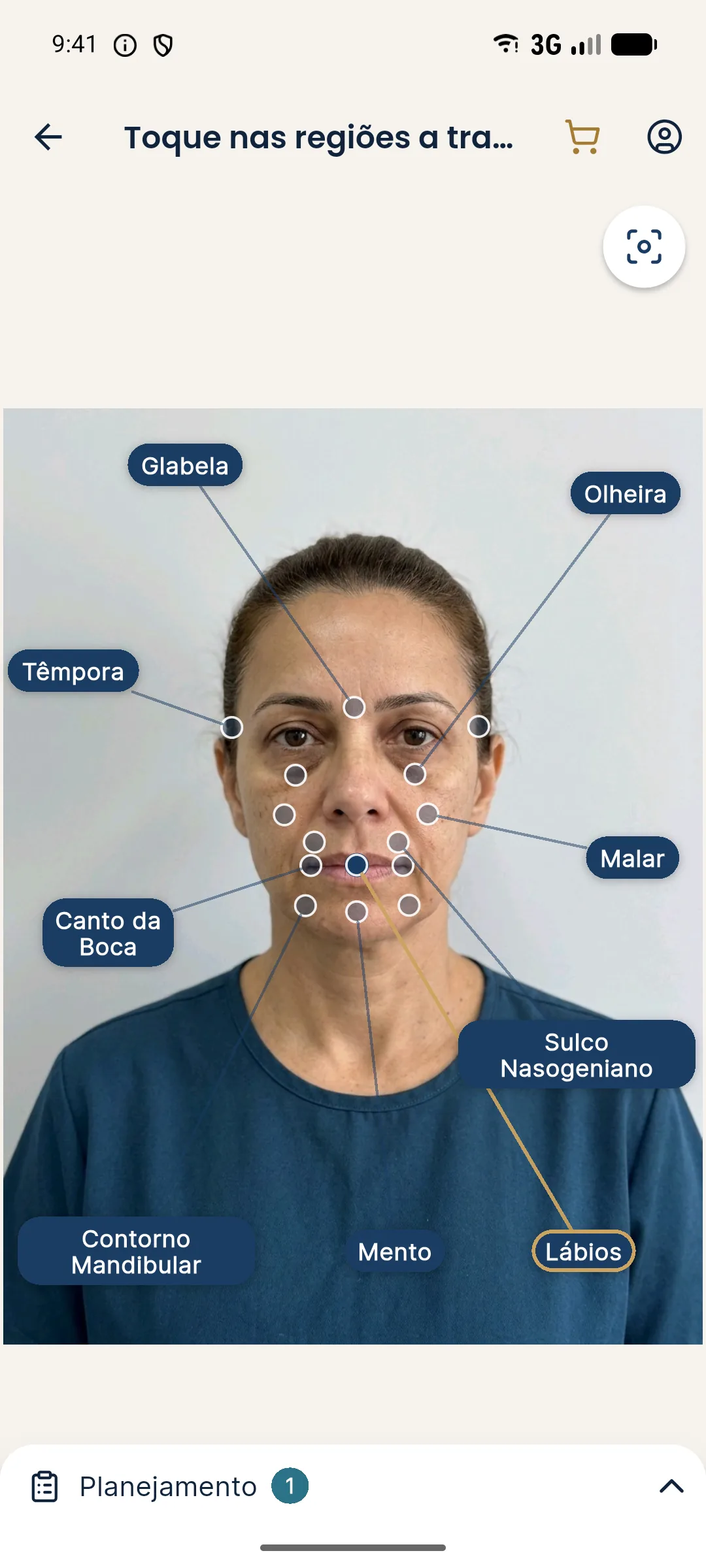
The simulation is a conversation tool to align what the patient imagines with what the plan can deliver. In Harmy, the Lips point lets you mark a small volume and see an illustrative projection of the after on the patient's own front photo.
Showing the difference between Subtle and Moderate helps the patient see the effect of small additions. It is also an honest way to show that a "full" mouth on a male face is not the same as a heavily marked lip. How to read intensity is in explaining Subtle, Moderate and Pronounced intensity.
Risks and precautions that do not change
The lip is a highly vascular area. Any hyaluronic acid filler requires knowledge of anatomy, including the superior labial artery and its variations, and hyaluronidase must be available in the office. Possible complications include swelling, bruising, asymmetry, nodules, product migration and, more rarely, vascular occlusion.
For the approach to signs of vascular compromise in the lip, see lip vascular occlusion. In men, the beard and thicker skin can make it harder to read signs such as pallor or color change, which reinforces the advice of a quick follow-up and direct patient contact with the clinic.
When the approach is not to fill
There are situations where the best plan does not involve the lip:
- A concern that is really about shadow and tiredness, solved in another area. See man with a tired face.
- Skin with vertical lines in a smoker or former smoker, where volume alone does not solve it. See lip with vertical lines.
- Expectation of a pronounced enlargement in a patient with a male profile. Here the conversation about limits comes before the injection. See lips out of proportion to the face.
- Suspicion of persistent dissatisfaction with one's own image, where caution is called for and, when appropriate, referral. See body dysmorphic disorder in facial harmonization.
How to record and follow up
Document the concern in the patient's own words, the standardized photos and the agreement about what will and will not be done. In staged plans, schedule the follow-up and always compare with the same position and light. Photo standardization is in standardized clinical photography. Use of the images follows the informed consent and the LGPD (Brazil's data protection law).
Whoever treats male lips delivers more value by leading the conversation with honesty: saying what the face has that is its own, showing the illustrative simulation as support and making clear that any result varies from person to person. This avoids the most common frustration in this group, that of someone who expected a different mouth and received a mouth modified beyond what he wanted.
Frequently asked questions
Can a man get lip filler?
He can be assessed, like any patient, at the discretion of the licensed professional. The point is to adapt the goal: in general the male plan seeks to preserve a flat, discreet mouth, without projection or a marked outline.
How much volume usually fits in a man's lip?
Generally small, staged volumes, well below those used in female plans, always at the professional's discretion after assessment. The decision belongs to the individual plan, not to a chart.
Does lip filler make a man's mouth look feminine?
It can, if the plan rounds the vermilion, projects the lip or marks the cupid's bow too much. That is why the male assessment prioritizes proportion and naturalness.
Does a man's thin lip always need filler?
No. Often the impression of a thin lip comes from a mustache, beard, bite, tooth loss or shadow, and the approach involves another area.
Harmy images are illustrative simulations generated by AI from the patient's photo to support the conversation between practitioner and patient. They are not a promise of results. Indication, technique, product and volume are solely the decision of the licensed practitioner. This content is for information only and does not replace a clinical assessment.