
Tear Trough and Nasolabial Fold: Treat Together or Not?

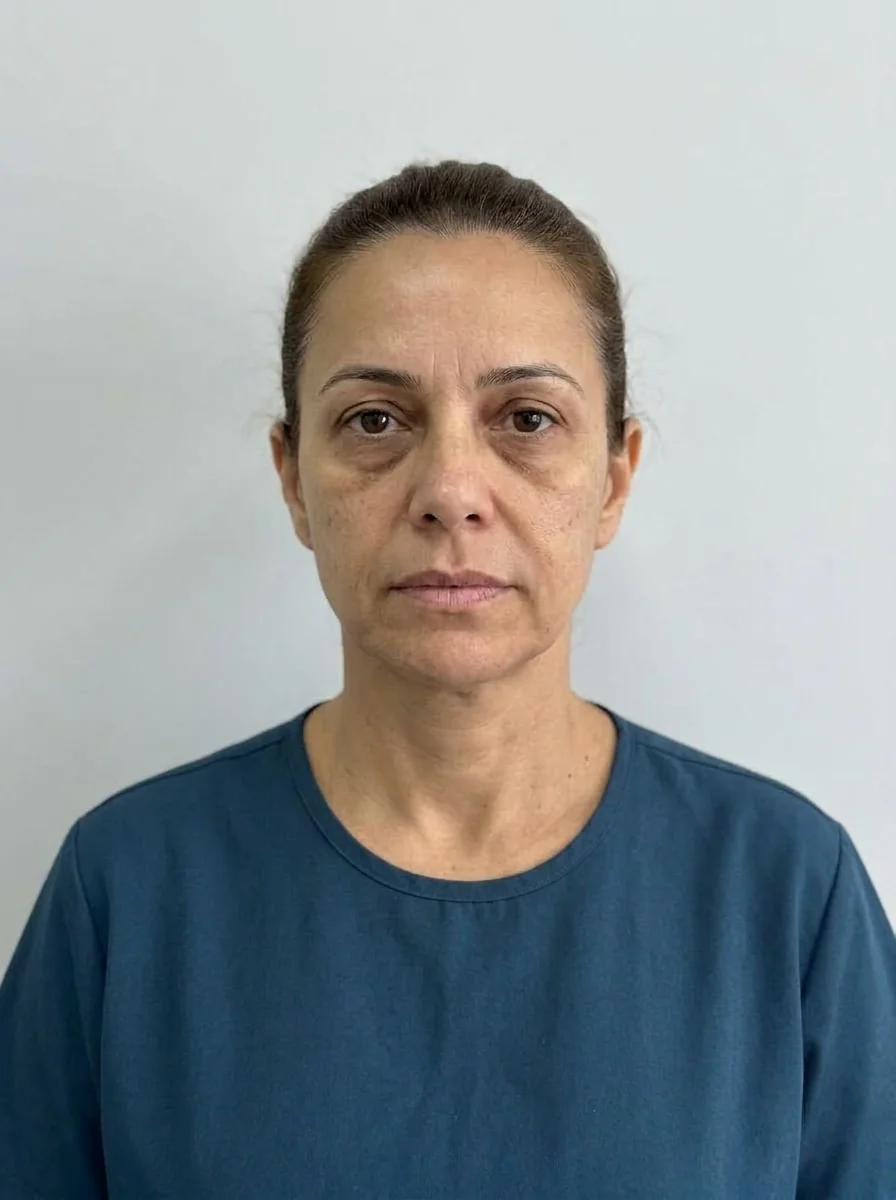 BeforeSimulation
- Highlighted area
Quick facts
- Topic
- Continuity of the transition line between the tear trough and the nasolabial fold
- Central question
- Whether the two concerns are separate areas or the same support problem
- Risk
- Two high vascular risk areas, hyaluronidase on hand
- Caution
- Treating both at the same time adds risk and volume
From the inner corner of the eye to the corner of the mouth, the face draws a diagonal that the eye follows without noticing. Two of the most common concerns in facial harmonization sit along that line: the tear trough and the nasolabial fold (smile lines). Patients describe them as separate problems, and often they are. In other cases, though, they are two expressions of the same loss of support in the midface, and planning one without looking at the other leads to a result that improves one spot and highlights the other.
This page is about the decision: how to read the relationship between the two, when to plan them together, when to separate them in time, what the vascular risks are and how the simulation helps. For each area on its own, see tear trough: types and assessment. For the reasoning behind combining areas in general, read domino effect between facial areas.
How are the tear trough and the nasolabial fold related?
Both areas are part of the transition between the lower eyelid, the cheek and the mouth. The palpebromalar groove and the mid-cheek groove, below the eye, and the nasolabial fold, beside the nose and mouth, can form one continuous line when midface support decreases. In this pattern, the cheek descends and the shadow shows up in two places at once.
| Observed pattern | Likely reading | Question for the plan |
|---|---|---|
| Pronounced tear trough and fold, flat cheekbone | Loss of midface support | Does the cheekbone come before both? |
| Marked tear trough, mild fold | Cause specific to the periorbital region | Treat only the tear trough? |
| Marked fold, mild tear trough | Cause specific to the fold, such as cheek ptosis | Treat only the fold? |
| Both mild | Mild concern or context-driven | Is there a real indication? |
The question that organizes everything: is the cause local or related to support? If it is support, treating the symptom in two places can add volume to areas with no margin. If it is local, each area calls for its own approach. See midface fat compartments in the plan and cheekbone and tear trough: why combine them in the plan.
What are the risks of treating both areas?
This is the most important section of the page. The tear trough (lacrimal groove) and the nasolabial fold are high vascular risk areas. The facial artery and its branches, such as the angular artery, run near the fold, and the periorbital region communicates with the retinal circulation. Complications such as vascular occlusion, necrosis and visual changes are described, and they demand solid anatomical knowledge and preparation for complications. Hyaluronidase must be on hand when hyaluronic acid is used.
It is also worth remembering vascular occlusion: the early signs, such as pain, pallor or a change in color, must be known to the professional and explained to the patient. One stage at a time makes observation and response easier.
How do you order the plan?
A sequence of questions, at the professional's discretion, helps:
- Does the cheekbone have support? If not, it may be the first conversation.
- Is the main concern the shadow under the eye or the one at the fold?
- Which of the two has more margin and less risk in this patient?
- Can they be separated in time so you can assess the response between stages?
- Does the patient accept seeing the result in one area before deciding on the other?
See also what to treat first in facial harmonization: priority criteria and percentage distribution of volume between areas.
How do you simulate both areas in Harmy?
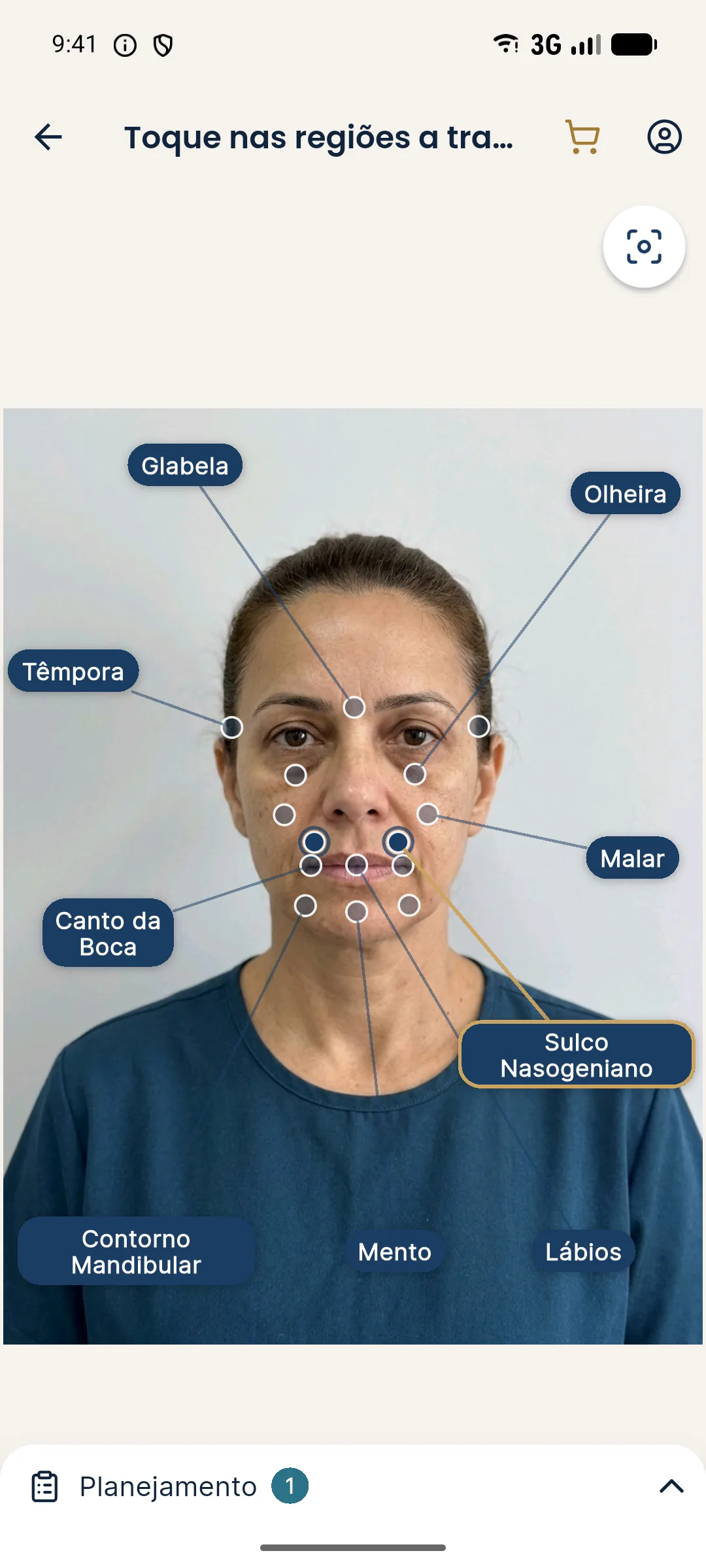
In Harmy, starting from the front-facing photo, the app detects the face on the device and shows labeled points. Tap Tear Trough and Nasolabial Fold, enter the ml for each (in 0.5 ml steps) and choose the intensity (Subtle, Moderate or Pronounced). For a bilateral area, the ml is the total, split between the two sides.
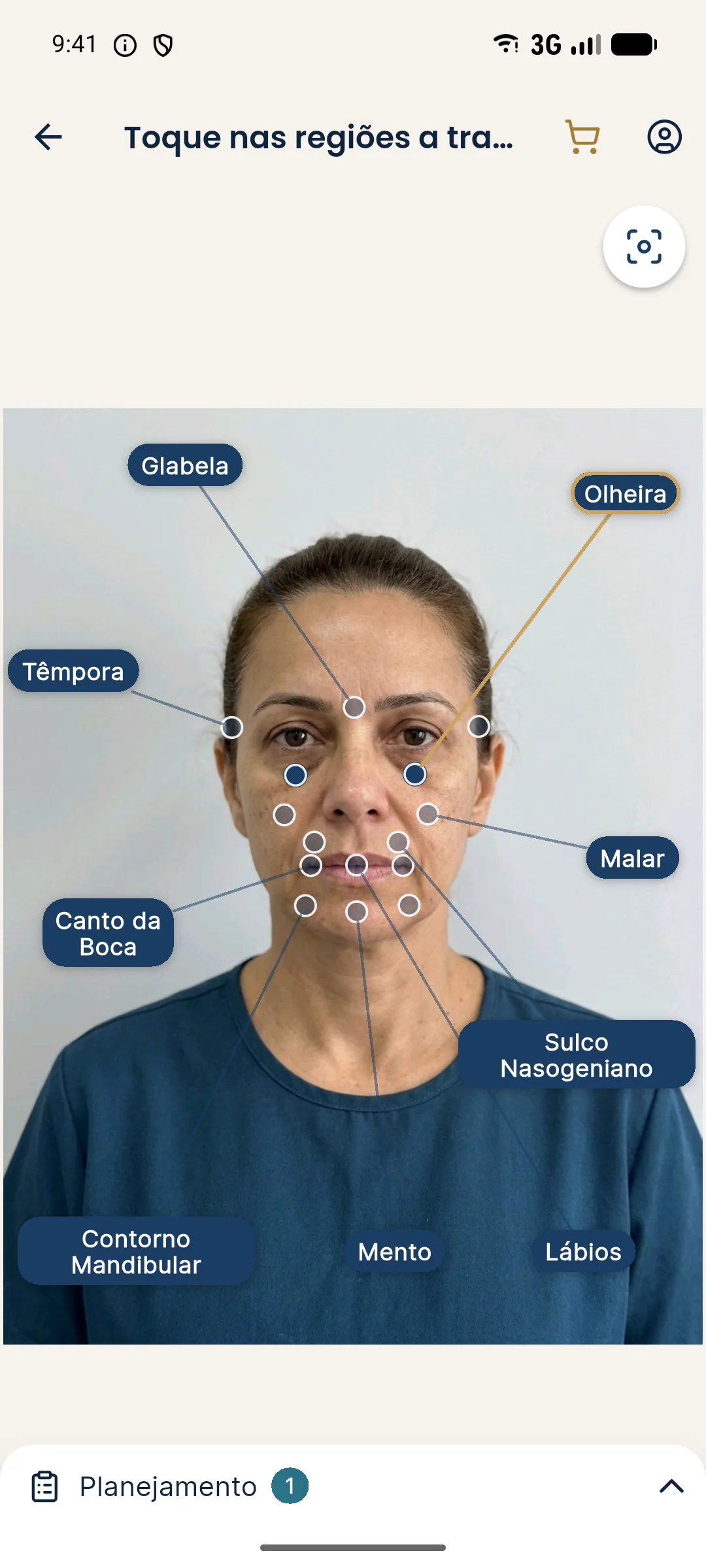
A good practice is to generate one projection with the cheekbone and another with the tear trough and the fold. The patient sees how support changes the look of the two shadows, and the decision about them is better informed. See comparing the Subtle, Moderate and Pronounced intensities.
When should you separate in time, and when should you not treat?
Separating in time is usually an advantage when both areas are high risk, when the cause may be cheekbone support or when the patient has never had facial harmonization. Not treating is the right decision when the tear trough is pigmentary or vascular and the fold is mild and natural for the person's age, and the patient may benefit from a conversation about acceptance. For that conversation, see explaining that a simulation is not a guarantee and ethics of result simulation.
Every decision on area, product, volume and technique belongs to the qualified professional, after assessment. The simulation is illustrative.
How do you explain a staged plan to the patient?
Patients with both concerns usually want everything at once. Explaining that a staged plan is safer and lets you adjust the second area based on the response to the first helps align expectations. Show the simulation of the separate stages and of the full set, make clear that the image is an illustration and record their agreement with the proposed order.
It is also worth agreeing from the start on which warning signs require immediate contact with the clinic, such as severe pain, a change in skin color or a change in vision. Clear instructions at discharge are part of the plan, just as much as the volume.
Frequently asked questions
Are the tear trough and the nasolabial fold related?
They can be. Both are part of the transition between the eye, the cheek and the mouth, and loss of midface support can accentuate both. That is not always the case, and the assessment decides.
Can I treat the tear trough and the fold in the same session?
It is a clinical decision. Both are high vascular risk areas, and many plans separate the stages to assess the response. It is up to the professional, in line with the rules of their professional board.
Does the cheekbone come into this?
Often. Cheekbone support influences both the tear trough and the nasolabial fold, and assessing the cheekbone first can change the plan for both.
Does Harmy simulate the tear trough and the fold together?
Yes. You mark Tear Trough and Nasolabial Fold, enter the ml and intensity for each and generate the projection. The image is illustrative and does not promise results.
Harmy images are illustrative simulations generated by AI from the patient's photo to support the conversation between practitioner and patient. They are not a promise of results. Indication, technique, product and volume are solely the decision of the licensed practitioner. This content is for information only and does not replace a clinical assessment.