
Temples and cheekbone: continuity of the lateral face in the plan

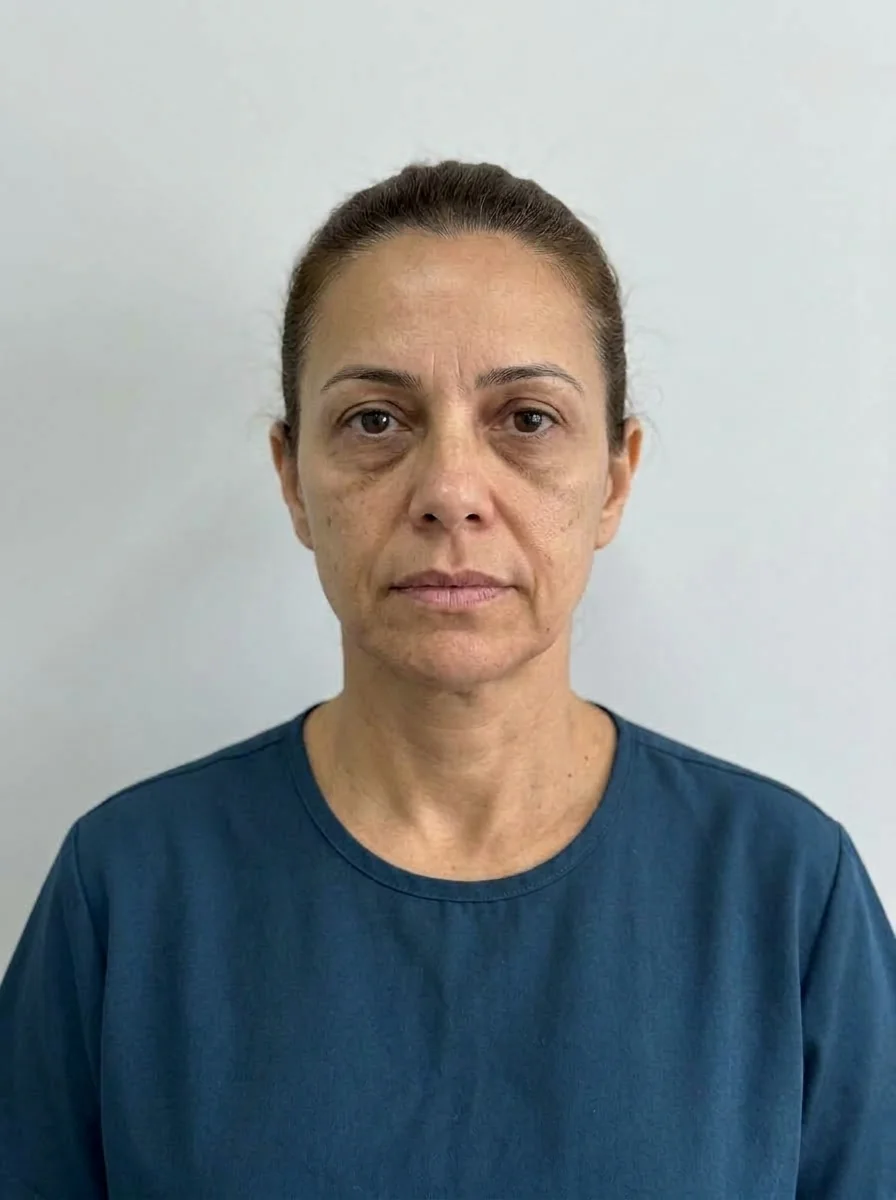 BeforeSimulation
- Highlighted area
Quick facts
- Topic
- Transition between the temporal fossa and the zygomatic arch
- Core idea
- The lateral face reads as one continuous curve, not as two areas
- Vascular risk
- The temples call for rigorous anatomical attention; so do the lateral cheekbone and the zygoma
- Simulation in Harmy
- Temple and Cheekbone points, with ml and intensity for each
- Who decides
- A licensed professional, after assessment
Viewed from the front, the temple and the cheekbone look like separate areas. Viewed in three-quarter, they form a single line: the curve that rises from the cheek, passes through the zygomatic arch and ends in the temporal fossa. That continuity creates the so-called C-shaped contour of the lateral face. Treating one area without looking at the other can leave a step, and the patient notices without being able to explain it. This page shows how to think about the two together in the facial harmonization plan, without a technique protocol.
Why do the two areas read as one?
The temporal fossa, the zygomatic arch and the zygomatic bone are neighboring structures, and the skin and soft tissue covering them follow that neighborhood. When the temple loses volume, the zygomatic arch becomes more prominent and the cheekbone looks flattened beside it. When the cheekbone loses projection, the relatively concave temple shows more. That is why concerns come mixed: "tired face," "heavy gaze," "sagging cheek."
For the professional, the practical point is to assess the lateral face as a line. Photographing in three-quarter, with soft lateral light, helps you see the transition better than a frontal photo. The framing technique is in oblique facial analysis, three-quarter view and in lighting for the planning photo.
What does each area contribute to this curve?
The temple contributes to the width and smoothness of the upper lateral third. A concave temple can give a tired or skull-like look, depending on the patient's age and fat. The cheekbone contributes to projection and to support of the midface. Well related, the two form a smooth lateral. Poorly related, they create bumps and hollows.
| Situation | Reading | Question for the plan |
|---|---|---|
| Concave temple and good cheekbone | The curve breaks at the top | Does the temple go in alone? Should the volume be low? |
| Flattened cheekbone and full temple | The curve breaks at the bottom | Is there a gain in projecting the cheekbone without adding to the temple? |
| Both concave | Overall loss of lateral volume | Split into stages and reassess the transition |
| Both good, very prominent arch | Prominent bone structure | Avoid volume that widens; consider not treating |
| Asymmetry between sides | One side flatter | Use a different volume per side, with a record |
The reading of ideal cheekbone projection is in ideal cheekbone projection. To understand the logic of the oval contour, see zygomatic and lateral cheekbone: the ogee curve in the plan.
What are the risks of treating both areas in the same session?
The main one is vascular. The temporal fossa houses important vessels, and the lateral cheekbone and zygoma are close to arterial and venous branches. Vascular occlusion is rare and serious, and anyone planning to treat the area needs to know the anatomy in detail and have hyaluronidase on hand if the product is hyaluronic acid. The anatomy review is in temporal anatomy for injectables and vascular danger zones of the face.
Other risks include swelling and bruising, more visible in the temples because of the thin skin there, asymmetry between sides and irregularities. Combined volume in a single session lengthens the procedure and the discomfort, and makes it harder to tell what caused each reaction.
What is the order of decision?
There is no universal rule, but two lines of reasoning come up often. The first starts with the cheekbone: it supports the midface and may already soften the transition, leaving the temple for a second stage. The second starts with the temple, when the main concern is a tired face or a heavy gaze. In both, the interval and the reassessment protect against excess.
The logic of splitting into stages is in when to split the volume across sessions and interval between sessions in the facial harmonization plan.
How does the simulation help, and where does it fall short?
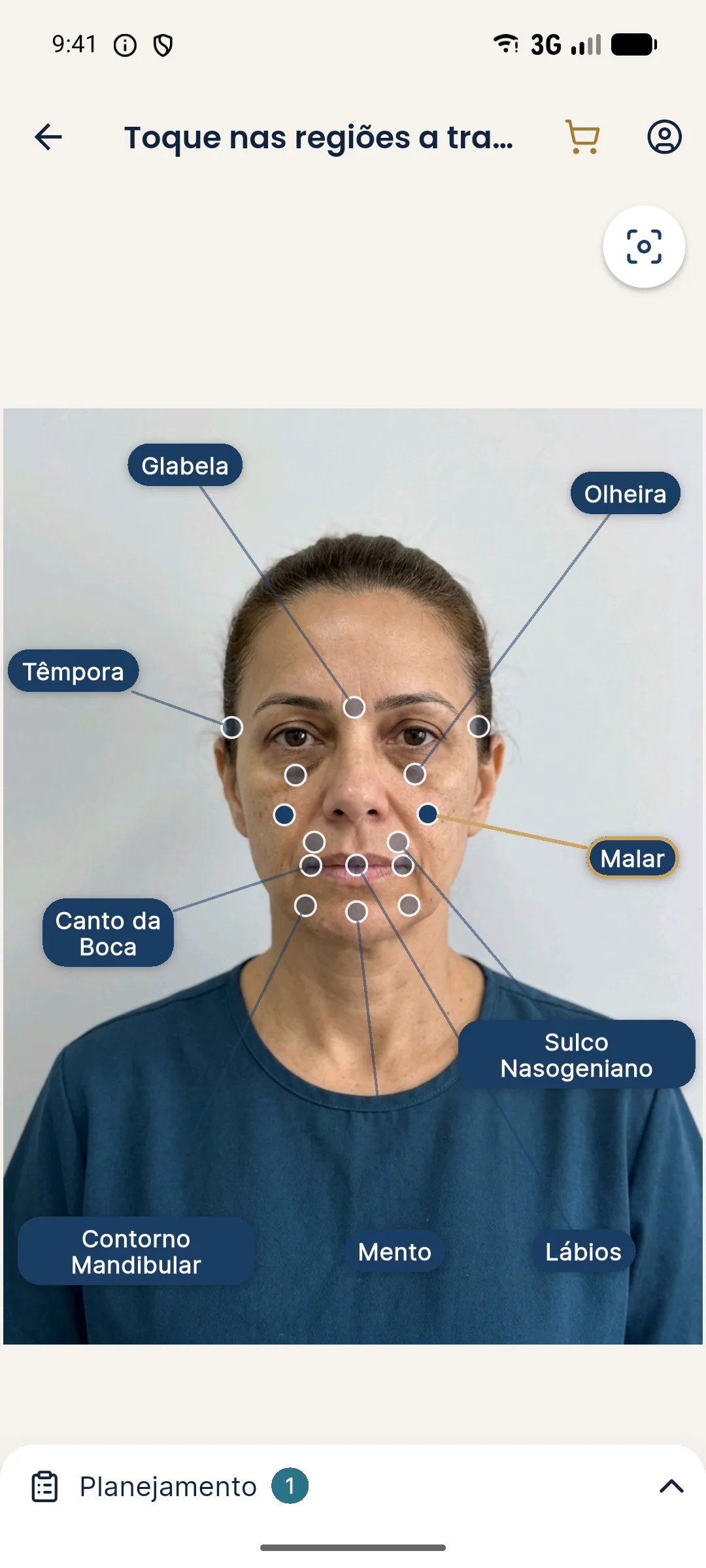
In Harmy, you mark the Temple and Cheekbone points on the frontal photo, set the ml and the intensity (Subtle, Moderate or Pronounced) for each and create the projection. For bilateral areas, the ml entered is the total, split between the two sides. The "Full harmonization" shortcut includes the cheekbone (2 ml, Moderate), but not the temple, which you mark separately.
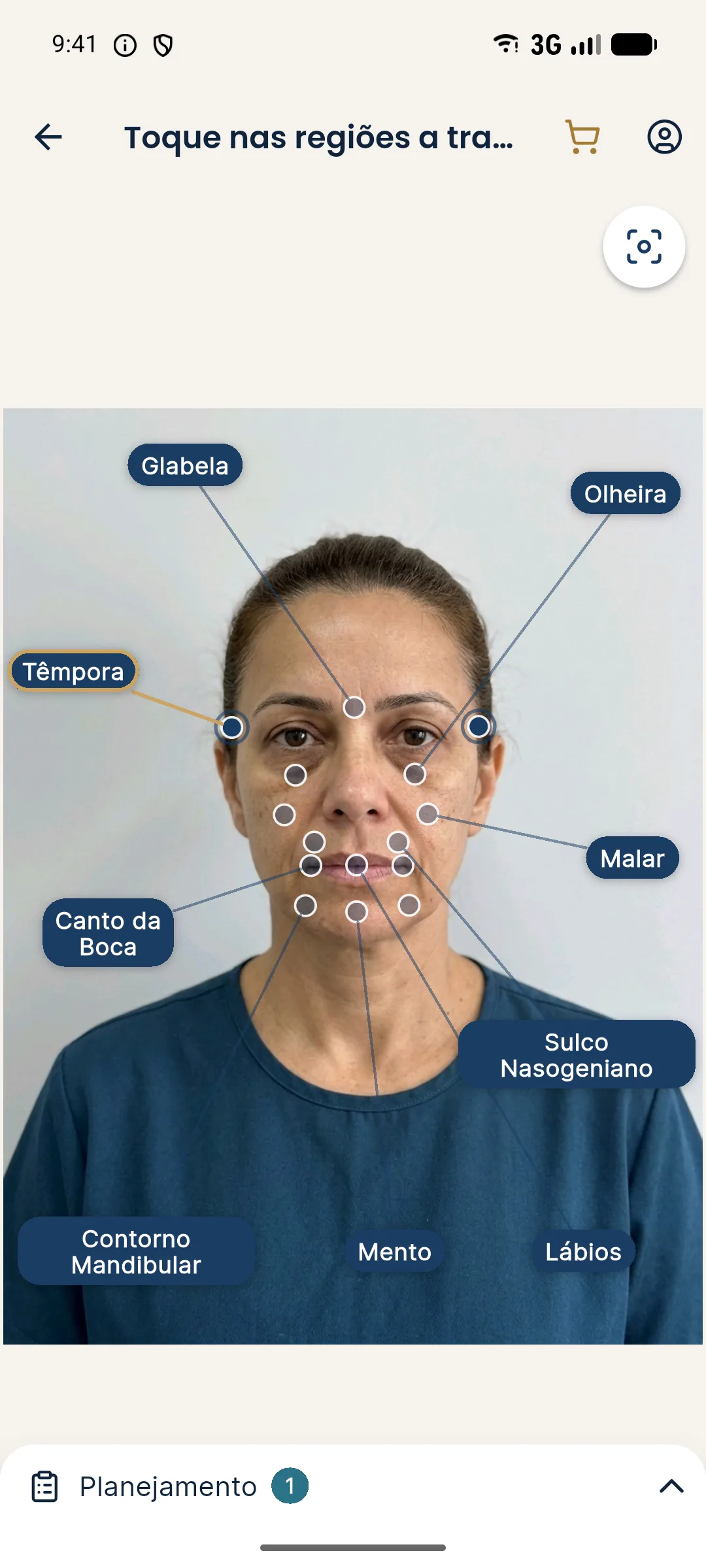
The AI respects the volume and changes only what was marked, so the projection is subtle and realistic. This is good for showing the patient that the temple does not need much to soften the gaze. But there is a clear limitation: the projection uses only the frontal photo. The C-shaped curve is a three-quarter phenomenon, and Harmy does not show that angle. Use the image as support for conversation, never as proof that the transition will be smooth.
More on the limits in limits of the 2D simulation and why the simulation should be subtle.
How do you avoid the "inflated" lateral face?
The typical mistake is to treat each area for its own concern and add up volumes without looking at the whole. The temple gains volume, the cheekbone gains volume, and the face ends up wider in the upper and middle thirds. The patient may even like it on the first day, but the "heavier" reading shows up later. The way out is to plan the total volume of the lateral face, rather than the volume of each area in isolation, and to leave a margin to reassess.
Two practical reminders. First, natural asymmetry is the rule, not the exception: do not try to force the two sides to match. See plan for an asymmetric face. Second, aging changes the relationship between areas over the years, and today's plan is not the plan for three years from now; see three-year facial harmonization plan.
How do you talk to the patient?
This line avoids the expectation of "treating everything today" and helps justify the second session. If the patient wants to compare with another person's photo, return to their own facial identity. See facial identity: how to preserve it.
Check before planning the lateral face
Quick review
Summary
Temples and cheekbone form a continuous lateral curve, and the plan should look at that whole curve. Assess in three-quarter view and in motion, split the volume into stages, discuss vascular risk with the patient and use the Harmy simulation as support for conversation, knowing that it uses only the frontal photo and does not show the lateral transition.
Frequently asked questions
Do I need to treat temples and cheekbone together?
It is not mandatory. Many faces call for only one of the areas. What matters is how the lateral curve reads: if one area clashes with the other, the transition looks abrupt.
What is the more prudent order between temple and cheekbone?
There is no single order. Some professionals start with the cheekbone because it supports the midface, others with the temple because of a tired gaze. The concern and the exam guide the choice.
Is the temple a risk area?
Yes. There are important vessels in the temporal fossa, and planning requires anatomical knowledge and hyaluronidase on hand when hyaluronic acid is used.
Does the simulation show the transition between the two areas?
It shows the effect of the ml entered at each point, in a frontal photo. It does not show three-quarter views or bone depth, so it serves as support for conversation, not as a promise.
Harmy images are illustrative simulations generated by AI from the patient's photo to support the conversation between practitioner and patient. They are not a promise of results. Indication, technique, product and volume are solely the decision of the licensed practitioner. This content is for information only and does not replace a clinical assessment.