
Sad-looking face at rest: how to assess the expression

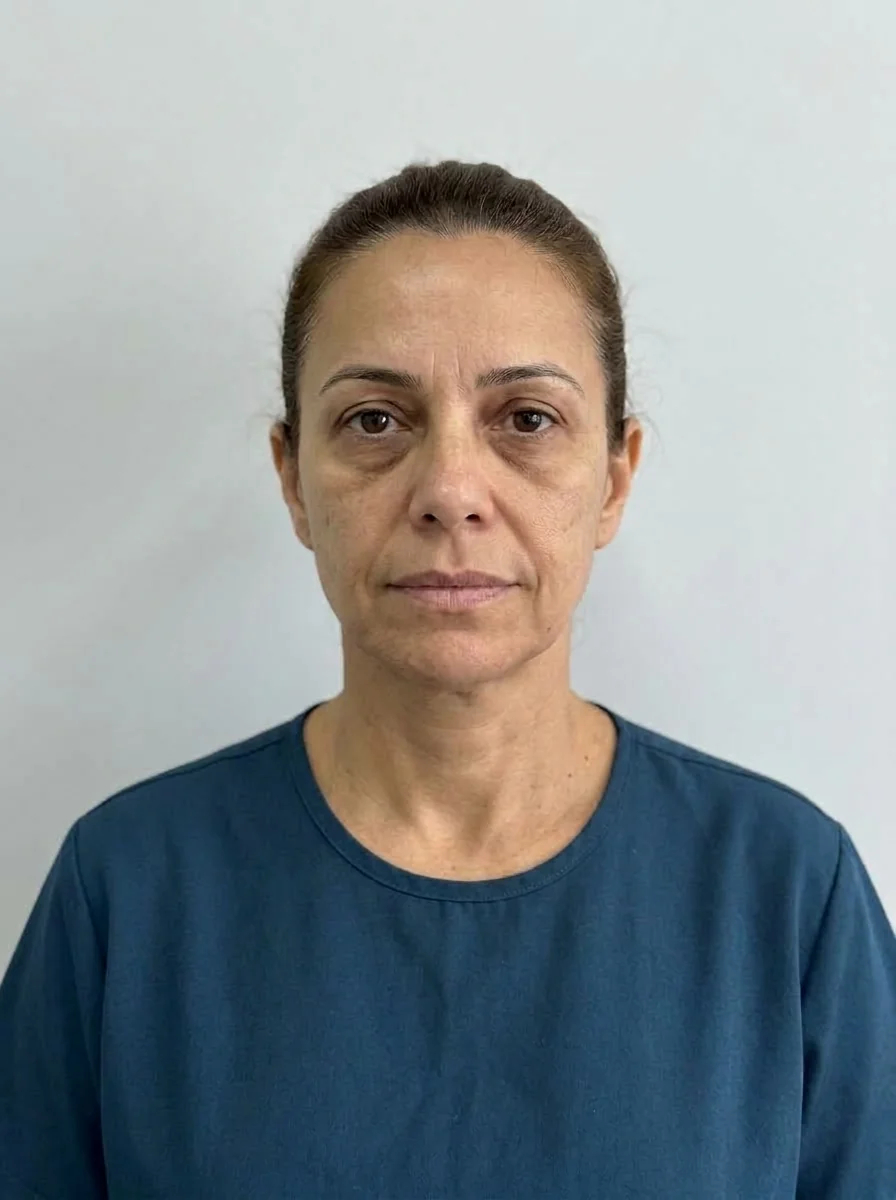 BeforeSimulation
- Muscle
- Highlighted area
Quick facts
- Concern
- People think the person looks sad, tired or down, without being so
- Expression cues
- Downturned mouth corners, under-eye shadow, low brow and deep folds
- Method
- Observe the still face, without posing, and rank what weighs most on the expression
- Caution
- Treating everything at once leads to an artificial face; prioritize one or two cues
A 38-year-old patient often hears: "Is everything okay?" She is fine. What people read on her face is sadness at rest, an expression nobody chose. The mouth corners droop, the brow weighs down, the under-eye shadow casts darkness and the folds deepen. Each cue, on its own, is subtle. Added together, they change the whole expression.
Expression is one of the most subjective concerns and one of the most rewarding when handled well. Below is a guide to assess the still face and choose the few levers that move the read the most.
What the resting expression is
Expression is the emotional impression the face gives when it is without intentional movement. People read this signal in fractions of a second, and the read is very sensitive to the direction of lines: lines tilted upward convey energy, lines tilted downward convey tiredness or sadness.
For that reason, assessing a sad-looking face at rest is, in essence, an assessment of directions. Where do the mouth corners point? And the outer corners of the eyes? And the tails of the brows? When many of these lines point down, the expression shifts the same way. See also sad gaze, sad mouth and tired face.
The five cues that weigh the most
| Cue | How it shows | Why it weighs |
|---|---|---|
| Mouth corners | Tilted downward, sometimes with marionette lines | The mouth is the center of emotional reading |
| Brow | Low or with a drooping tail | Closes off the gaze and adds a worried look |
| Under-eye shadow and trough | Shadow under the eye, tear trough | Gives a tired look |
| Glabella | Residual vertical crease between the brows | Conveys seriousness or anger |
| Folds | Deep nasolabial fold | Lengthens the face and pulls it down |
You do not need to treat all five. Usually, one or two explain most of the concern. The professional's job is to find out which.
How to assess the resting face
The assessment takes patience, because the face "poses" as soon as it realizes it is being examined. A few strategies help capture the real resting state.
The adjective the patient hears is often a valuable clue: "tired" points to under-eye shadow and eyelid; "angry" points to the glabella; "sad" points to mouth and brow; "serious" points to the whole. See the difference in angry-looking face at rest and tired face.
What HOF can adjust
Once the dominant cue is chosen, the approach is modest and targeted. All at the discretion of the qualified professional, with reassessment at each step.
Mouth corners. When the corner droops, mouth corner filler can soften the shadow and the tilt. When the depressor muscle pulls downward, toxin in the depressor anguli oris can be considered. See downturned mouth corners and mouth corners, marionette lines and chin: combining.
Brow. Position can be adjusted with toxin in selected cases and with care not to weigh down the gaze. See ideal brow position in planning.
Under-eye. Tear trough filler treats structural shadow in suitable cases, in a high-risk area. See plan for a rested look.
Glabella. Toxin in the glabella softens the vertical crease that gives a serious look. See botulinum toxin in the glabellar complex.
Folds. The nasolabial fold can be approached indirectly, by supporting the midface, instead of filling it directly. See treat the fold or the cause of the fold.
Timeline of an expression plan
Asking "what do people say now?" is a good indicator of the perceived effect, and often more important than the professional's own opinion.
Risks
The mouth corners and the periorbital area are delicate. Risks include swelling, bruising, asymmetry, irregularities, the Tyndall effect in thin skin and serious vascular complications, although rare, in the under-eye area and glabella. Toxin in the perioral area can cause smile asymmetry and difficulty speaking. Hyaluronidase must be available when using hyaluronic acid. See safety and complications: overview.
How Harmy fits the conversation
Harmy projects the volume effect on Mouth Corner, Tear Trough and Nasolabial Fold, among other points, from a frontal photo with a neutral expression. It is a valuable resource for this concern, because the neutral photo is exactly the resting state you want to assess.
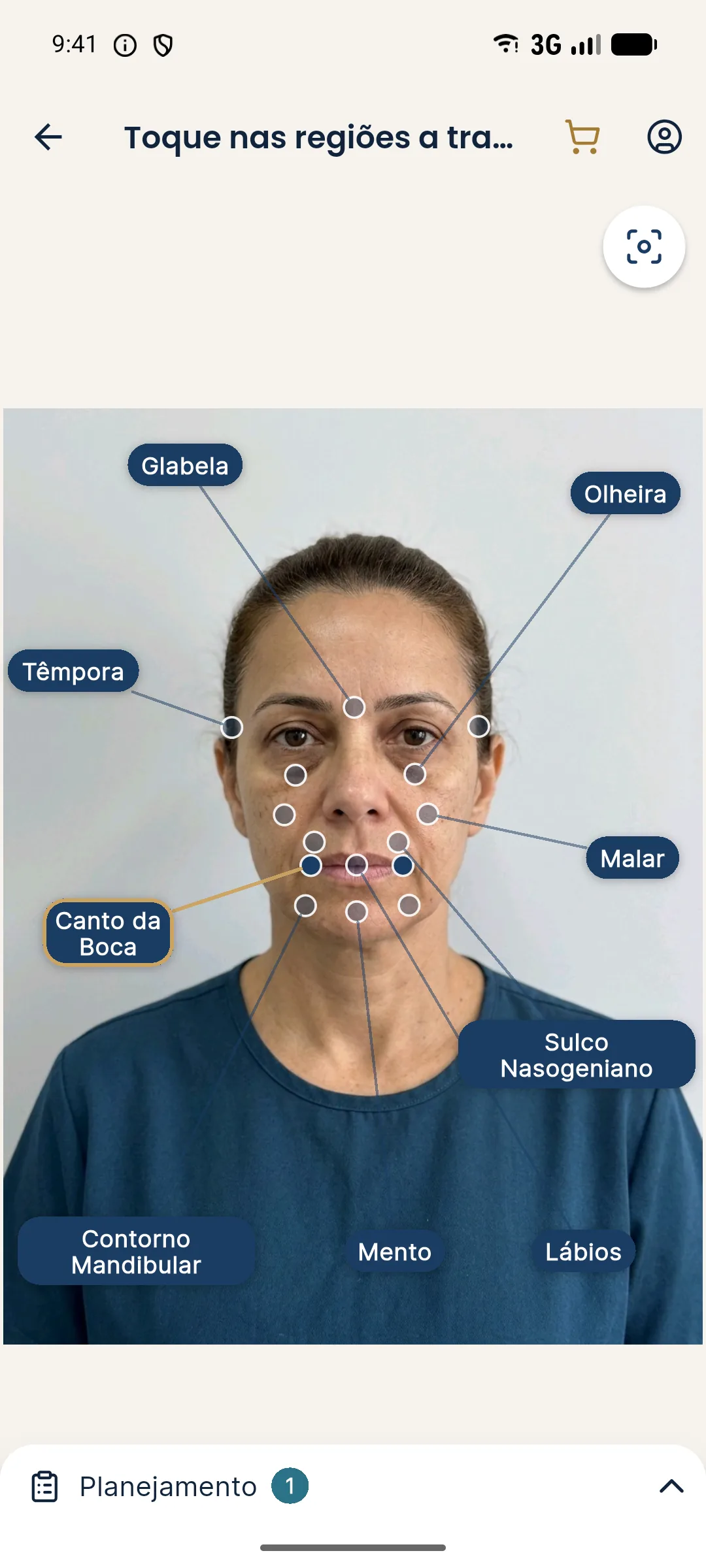
For the comparison to be fair, the patient's photo must be frontal, neutral and without a forced smile. See neutral expression in the planning photo.
Record
Record the concern and the adjective heard, the neutral photos, the dominant cue and the steps agreed. Doses, volumes and techniques are at the discretion of the qualified professional, after assessment and in line with the rules of their professional council in Brazil.
Frequently asked questions
Why does my face look sad even when I feel fine?
The resting expression depends on cues such as the mouth corners, brow position, shadow under the eyes and depth of the folds. Over time, those cues tilt downward and change how the face reads.
Can facial harmonization change the expression?
In many cases, targeted adjustments to the cues that weigh most can soften the sad look. The result depends on the face and is not guaranteed.
Which area usually weighs the most?
It varies. In general, downturned mouth corners, a marked under-eye shadow and a low brow are the most cited. Assessment at rest shows which one dominates in each patient.
Does toxin help with the mouth corners?
In selected cases, relaxing the muscle that pulls the corner down can be considered. There is a risk of asymmetry, and the decision belongs to the qualified professional.
Harmy images are illustrative simulations generated by AI from the patient's photo to support the conversation between practitioner and patient. They are not a promise of results. Indication, technique, product and volume are solely the decision of the licensed practitioner. This content is for information only and does not replace a clinical assessment.