
Pointed chin: how to balance the lower third

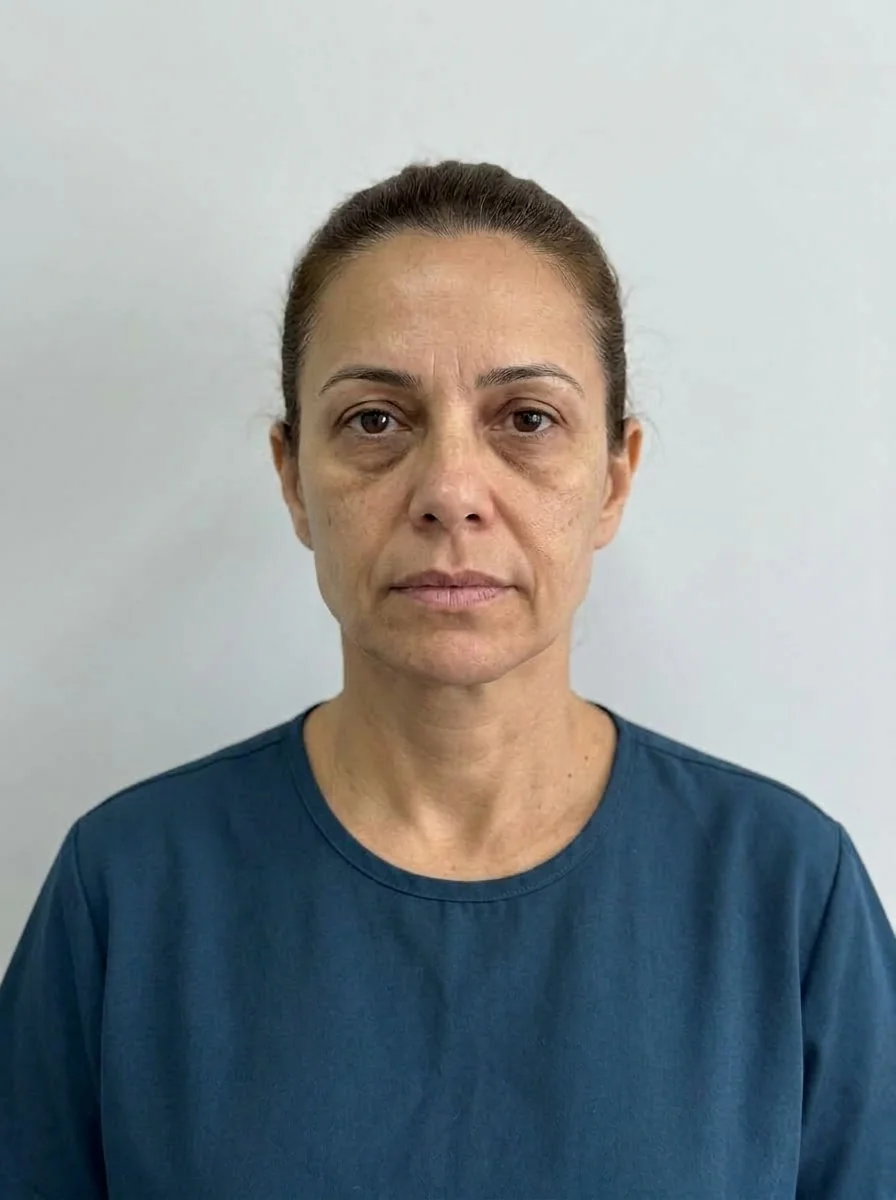 BeforeSimulation
- Nerve
- Highlighted area
Quick facts
- Concern
- A narrow chin that ends in a point and gives the face a V or heart shape
- Key reading
- The shape depends on the relationship between the width of the chin, the jaw and the midface
- Supporting measurement
- Frontal photo with width lines across the midface, the jaw angles and the chin
- Limit
- The shape of the chin is bony, and harmonization balances proportions but does not change the shape
A pointed chin has a good aesthetic reputation in many contexts, because it recalls a heart-shaped face. But patients who complain about it often feel that the lower part of the face "ends too early" or that the face looks triangular. The concern is usually about proportion, not absolute size.
This page shows how to measure the relationship between chin, jaw and midface and which adjustments fit within facial harmonization, without promising to change the shape of the face. If the patient complains about a square chin, read square chin in women, and for the design of the face as a whole, planning a heart-shaped face and planning a triangular face.
What makes a chin pointed?
The shape of the chin depends mainly on the pogonion and the width of the base of the bone. When the jaw is narrow and the chin ends in a point, the whole draws a V. Fat, muscle and skin modulate the shape, but the underlying design is bony.
To understand the relationship, compare three widths on the frontal photo: the midface (at the level of the zygomas), the jaw angles and the chin. If the jaw is much narrower than the zygoma, the lower third looks small. If the chin is narrow relative to the jaw, the tip stands out. The rule of fifths helps read width in an organized way.
How do you assess it methodically?
An organized assessment avoids working on the wrong area. Follow an observation sequence:
- Midface width at the level of the zygomas.
- Width of the jaw angles (from the jawline to the angle).
- Chin width and the design of the tip.
- Height of the lower third and its proportion to the midface.
- Profile, to check chin projection.
- Movement: does the chin contract and become a point when smiling?
With these measurements, you can see where the imbalance is. It may be a very wide midface, a narrow jaw, a tapered chin or a combination of all three. See the reading in face width by fifths and in poorly defined jaw angle.
What can harmonization do?
Because the shape of the chin is bony, the strategy is one of balance through addition or muscle relaxation, never a change of shape. The most discussed options, at the discretion of the qualified professional, are:
- Jaw: add definition and width to the angles so the chin blends into the contour. See jaw filler.
- Chin: adjust projection and, where appropriate, the width of the base, avoiding accentuating the tip. See chin filler.
- Midface: if excess zygoma width contributes to the V, the plan may prioritize support at the cheekbone and a smooth transition. See cheekbone filler.
- Mentalis toxin: if the muscle accentuates the tip. See mentalis toxin.
The chin and jaw combination is detailed in chin and jaw: combining them in the plan.
| Imbalance | Sign on the photo | Plan direction (in general terms) |
|---|---|---|
| Narrow jaw | Poorly defined angles, V-shaped face | Lateral definition of the jaw |
| Very tapered chin | Prominent tip | Lateral support and care with projection |
| Wide midface | Prominent zygoma over a narrow jaw | Soften the transition, avoid adding width |
| Active muscle | Accentuated tip when smiling | Assess mentalis toxin |
In the jaw and chin, the risks include swelling, bruising, asymmetry, nodules and rare vascular complications, as well as injury to the mental nerve. Hyaluronidase must be available when hyaluronic acid is used, and the patient must be informed. See safety and complications.
How does face shape enter the plan?
The pointed chin is part of the heart-shaped or triangular face, and these shapes have their own characteristics. Trying to "convert" them into oval or square usually looks artificial. The principle is to respect facial identity and adjust what causes discomfort. The discussion is in facial identity: how to preserve it.
Some patients want to soften the tip; others, on the contrary, like the shape and are bothered only by the lack of projection. Ask what they see when they look at themselves, and do not assume. The conversation avoids a plan the patient never asked for.
And Harmy?
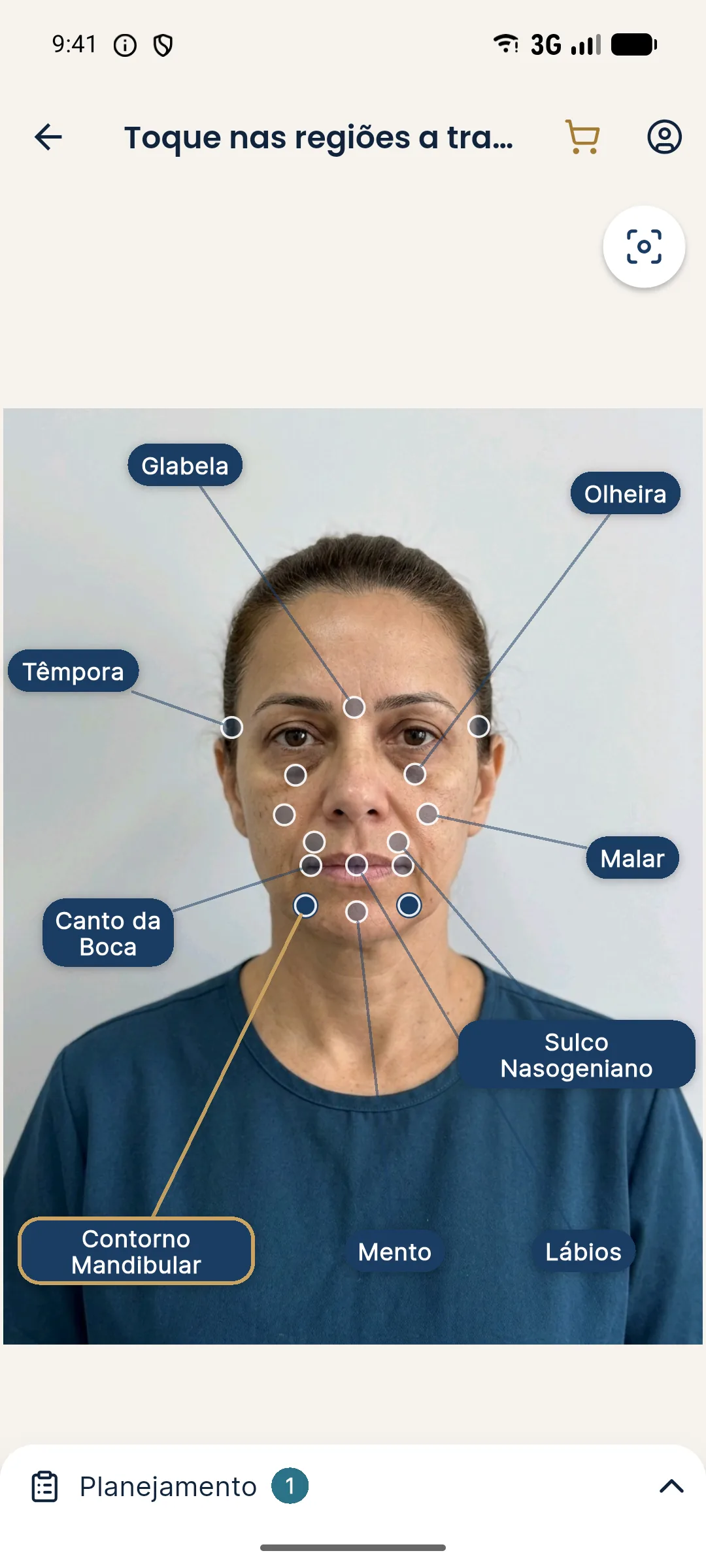
Harmy helps show the change in balance when the jaw gains definition. Mark the Jawline and, if it makes sense, the Chin, and compare before and after on the slider. The projection is subtle, uses only the frontal photo and does not alter the bony shape of the chin.
When to refer?
If the concern comes from a significant skeletal disproportion, with an impact on the bite or on breathing, assessment by an orthodontist or an oral and maxillofacial surgeon is the way to go. If there is disproportionate distress about the shape, consider a conversation about self-image. See patient referral in HOF and patient with suspected dysmorphia.
Record keeping
Record the width measurements, the standardized photos, the planned range and what was explained about identity and limits. At follow-up, repeat the photos at the same angle. Standardized clinical photography and the history per patient keep the comparison honest.
Frequently asked questions
Is a pointed chin a problem?
It is not a problem in itself, and many faces with a tapered chin are considered harmonious. It becomes a concern when the patient feels the lower third is unbalanced compared with the rest of the face.
What does harmonization do for a pointed chin?
It can balance the proportion, enhancing the jaw, the midface or the width of the chin, in a conservative way. It does not change the bone shape, and the choice is up to the qualified professional after an assessment.
Does chin filler make it more pointed?
It can, if the volume is placed only on the projection and the tip. For an already tapered chin, the design usually calls for more attention to width and lateral support.
Does toxin help a pointed chin?
Only if there is a muscular component that accentuates the tip or the texture. It does not alter the bone, and the effect is temporary.
Harmy images are illustrative simulations generated by AI from the patient's photo to support the conversation between practitioner and patient. They are not a promise of results. Indication, technique, product and volume are solely the decision of the licensed practitioner. This content is for information only and does not replace a clinical assessment.