
Square chin in women: assessment and softening

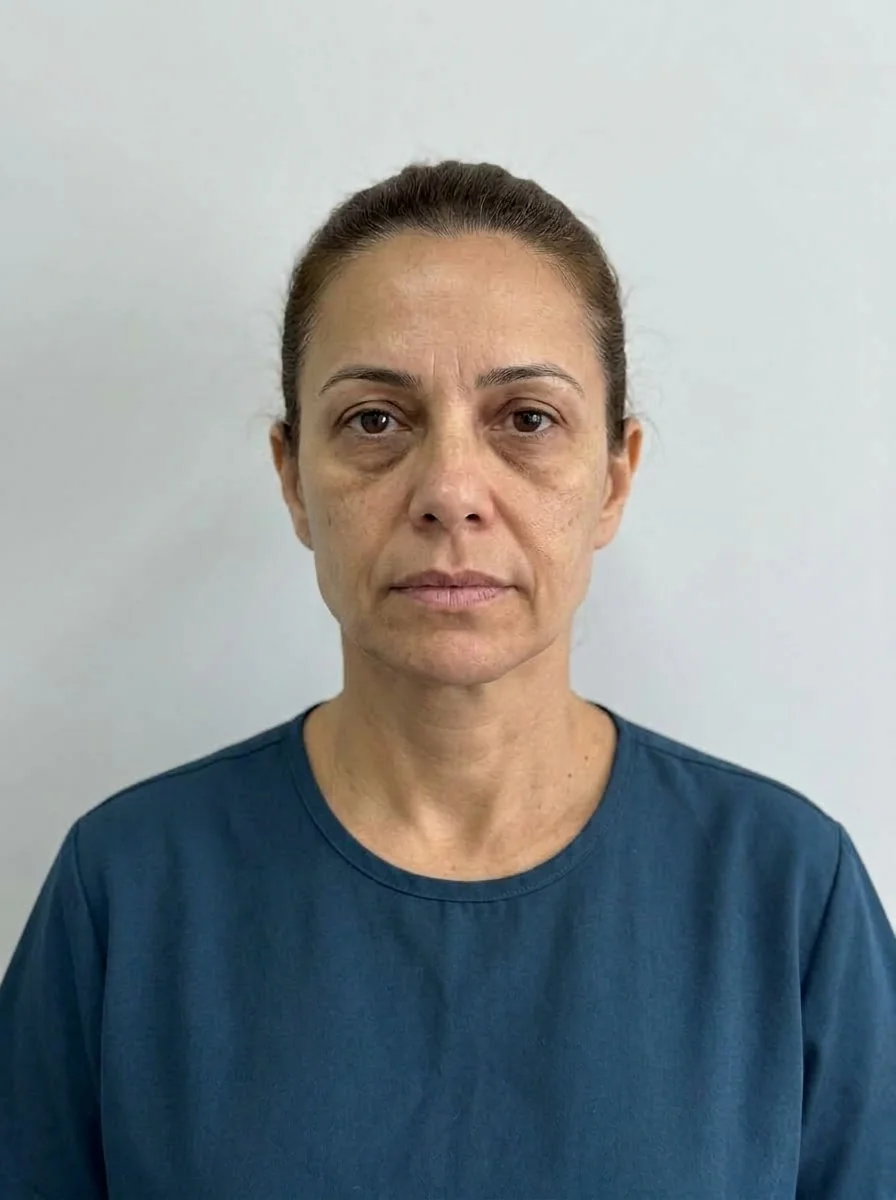 BeforeSimulation
- Nerve
- Highlighted area
Quick facts
- Concern
- A square chin and jaw, with marked angles that the patient finds harsh
- Key reading
- It may be bone, a bulky masseter or both, and the approach changes in each case
- Supporting measurement
- Frontal photo with chin and angle widths, and assessment of the masseter when biting
- Limit
- Toxin and volume soften but do not reduce bone, and excess masculinizes the contour
A square chin on a woman is not, in itself, a problem. Many patients have a defined contour and like it. The concern arises when the patient feels the shape is "harsh," "masculine" or "heavy," especially in frontal photos. The professional needs to find out, before proposing anything, exactly what bothers her.
The most common answer is a round of toxin in the masseter. But not every square chin comes from the muscle. This page shows how to separate bone, muscle and chin and how to soften without losing identity. For the case of an asymmetric masseter, see masseter larger on one side, and for a tense jaw, tense jaw and harmony.
What makes a chin look square?
The square design comes from a combination of three elements, which add up in varying degrees:
- Jaw angle that is marked and close to 90 degrees, creating a "corner" on the side of the face. See jaw angle.
- Wide, flat chin, with a straight rather than rounded tip.
- Bulky masseter, which fills the angle and accentuates the boxy look. See masseter.
The result is the shape known as a "square face." In women, this contour often contrasts with the cultural expectation of an oval or heart-shaped face, which explains part of the discomfort. In some cases, bruxism keeps the muscle large, and the patient does not even know she grinds her teeth.
How do you separate bone, muscle and chin?
A few observations help tell them apart, without replacing an imaging exam when needed:
| Finding | Clue | Likely origin |
|---|---|---|
| Marked corner that does not change at rest | Hard angle on palpation | Bone of the jaw angle |
| Volume that grows when biting | Palpable, firm masseter | Hypertrophic muscle |
| Straight, wide chin | Flat tip on the frontal photo | Bony shape of the chin |
| Square face with a grinding habit | Pain on waking, tooth wear | Bruxism and masseter |
| Narrow midface compared with the jaw | Contrast in widths | Proportion, not only the jaw |
Often the patient has more than one factor, and the solution involves more than one front. To go deeper into comparing widths, see face width by fifths and ideal jaw angle by sex.
What can harmonization do?
The strategy depends on the main driver. The options discussed, always at the discretion of the qualified professional and after an assessment, include:
- Toxin in the masseter, when the muscle is the main contributor. The effect usually takes weeks to appear and is temporary. See botulinum toxin in the masseter and botulinum toxin for bruxism.
- Softening the chin, with conservative volume that rounds the transition or, in some cases, projects the tip. See chin filler.
- Redefining the contour, with support from the midface to balance widths. See cheekbone filler.
- Fine adjustment of the jaw angle, in selected cases and with great care not to reinforce the corner. See jaw filler.
The risks include, with masseter toxin, an uneven smile, changes in chewing and temporary weakness, see difficulty chewing after masseter treatment. With filler, swelling, bruising, asymmetry and rare vascular complications. Hyaluronidase must be available when hyaluronic acid is used.
What if the problem is bony?
When the angle and chin are bony and prominent, the options in HOF are limited to camouflage. Bone reduction is surgical (angle resection or chin remodeling), performed by a qualified surgeon, with its own risks. HOF can be an alternative for those who do not want surgery, with realistic expectations, or a complement after it.
Saying this clearly protects the patient from a promise the technique does not keep. If the patient wants to reduce the width of the bone, the answer is referral. See patient referral in HOF and concerns that HOF does not solve.
How should the plan be thought out?
The order usually starts with the muscle, when it is the main driver, because the toxin changes the landscape and lets you decide the rest more clearly. After a few weeks, reassess the contour and only then consider volume. This reasoning avoids putting product into a face that is still going to change shape. The logic is in jaw and masseter: combining them in the plan and in plan to slim the face.
What does Harmy show?
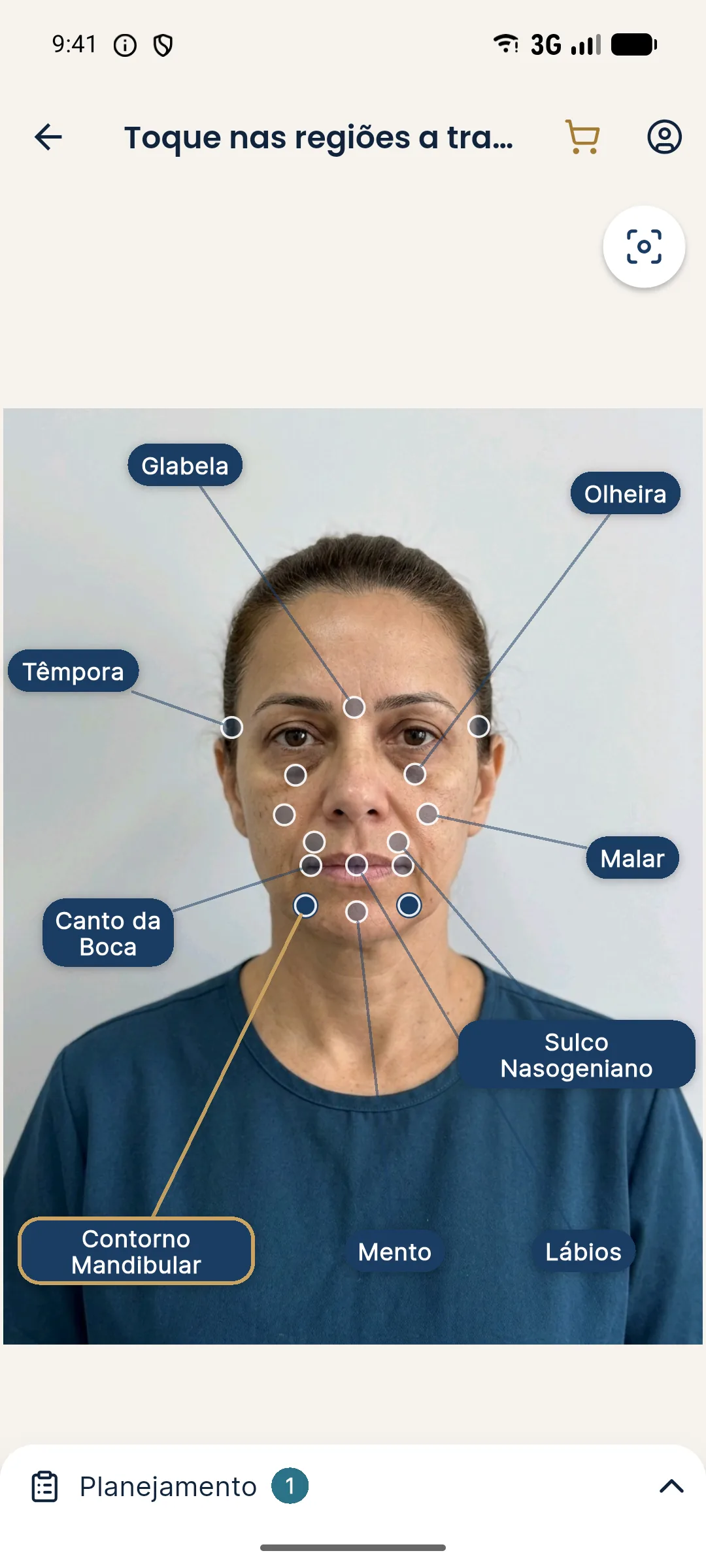
Harmy can simulate volume at the Jawline and the Chin, but in this case the most honest simulation is one of balance, not definition. It does not simulate the reduction of a muscle, which is the effect of toxin in the masseter. The projection uses only the frontal photo and changes only what was marked.
Record keeping
Record the measured widths, the palpation findings, the hypothesis of origin, the planned range, the standardized photos and the patient's awareness of risks and limits. Repeat the photos at follow-up, at the same angle and lighting. The history per patient and standardized clinical photography help keep the method consistent.
Frequently asked questions
What causes a square chin in women?
It may be the bony shape of the chin and jaw angles, the volume of the masseter muscle, or both together. In some cases, bruxism keeps the muscle enlarged.
Does botulinum toxin slim a square face?
When the masseter is bulky, toxin can reduce the volume of the muscle over weeks and soften the contour. It does not alter the bone, and the indication is up to the qualified professional after an assessment.
Does filler help a square chin in women?
It can help redefine the contour in patients whose problem is a lack of balance between the chin and the midface, but it does not reduce bone width. The design should be conservative so as not to masculinize.
Is there a treatment for a bony square chin?
Bone reduction is surgical, performed by a qualified surgeon. Orofacial harmonization (HOF, in Brazil) can complement the contour, but it does not replace that surgery.
Harmy images are illustrative simulations generated by AI from the patient's photo to support the conversation between practitioner and patient. They are not a promise of results. Indication, technique, product and volume are solely the decision of the licensed practitioner. This content is for information only and does not replace a clinical assessment.