
Minimum noticeable volume in the face: what shows by area

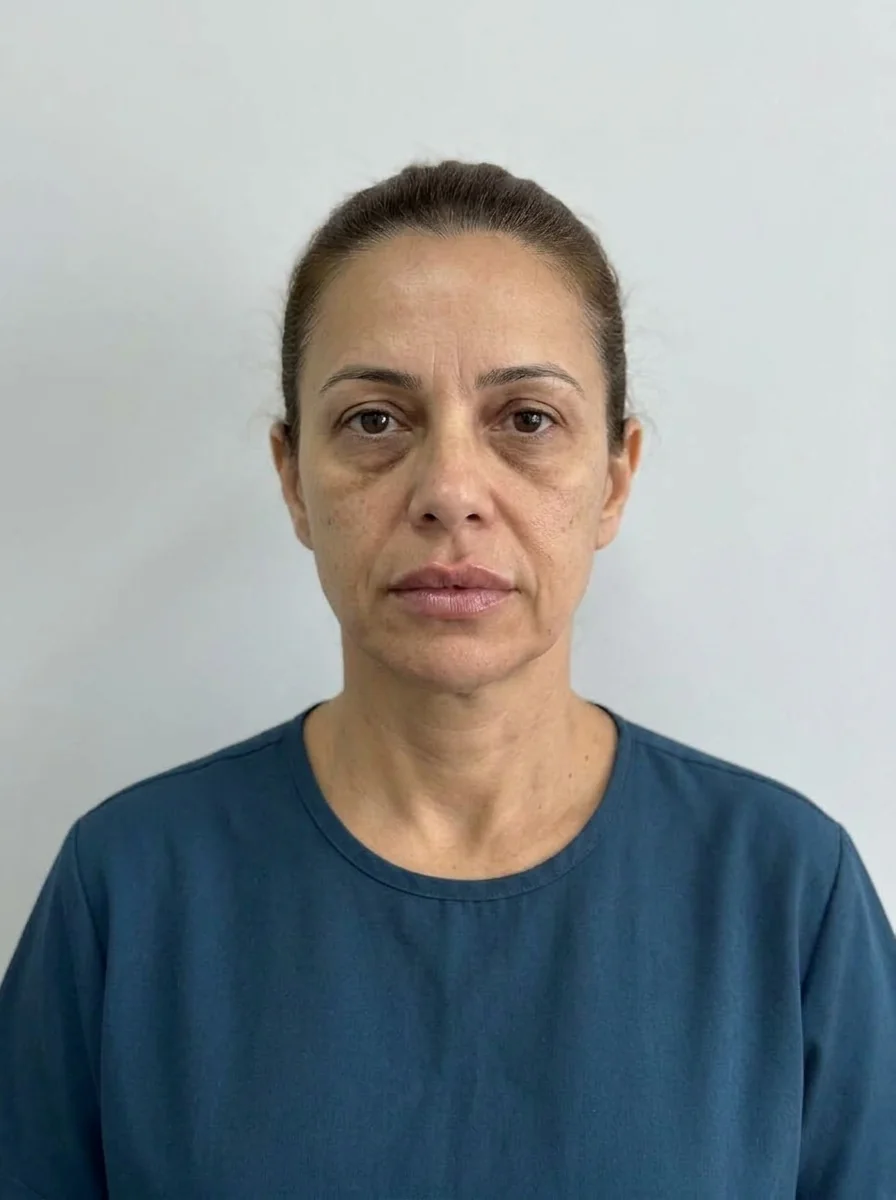 BeforeSimulation
Quick facts
- Concept
- The perception threshold is the smallest volume the patient notices as a change
- Varies with
- Area, face size, skin, lighting and expectation
- Use in the plan
- Avoid volume below what is noticeable and above what stays natural
- In Harmy
- ml from 0.5 to 5 in steps of 0.5, with Subtle, Moderate or Pronounced intensity
- Who decides
- Licensed professional, after assessment
There is a frequent mismatch between professional and patient after a small session: the professional sees the change, the patient does not. Or the reverse: the patient sees too much, and the professional thinks it is little. What is at stake is the perception threshold, the smallest volume that produces a change the person notices in the mirror. Understanding this threshold helps you plan ml more honestly, explain what to expect and avoid both invisible volume and excess. This page lays out the concept without a dose table and without promising results.
What is the perception threshold?
It is the border between "I noticed nothing" and "I noticed some difference." It depends on who is looking and from where. Patients look at themselves with years of mirror experience; the professional looks at the face with technical training; a third person looks with no reference at all. Each has a different threshold.
That is why the same change can be "subtle and lovely" to one and "did nothing" to another. Agreeing in advance on the goal (that the patient notices, that others notice, or that nobody notices but they feel better) completely changes the ml under discussion. More on the aesthetic goal in natural-effect plan and why the simulation should be subtle.
What makes the threshold vary from area to area?
Each area has its own relationship between volume and visual reading. Small, closely watched areas, like the lips, show any change in shape quickly. Large, flat areas, like the cheekbone or the jaw, can take a volume that spreads over a wide area and be less noticeable at low ml. Thin-skinned areas, like the under-eye, also reveal irregularities, and the volume that gets noticed may be the one that "shows" as relief, not the one that "looks" like an improvement.
| Area | Why the threshold changes | Planning caution |
|---|---|---|
| Lips | Small, closely watched area; small changes are noticed | Start low and reassess; see lips and chin |
| Cheekbone | Wide area; volume spreads out | May need more ml for the same perception, without widening the face |
| Chin | Changes profile and proportion | Look at the profile, not just the front |
| Under-eye | Thin skin; relief shows | Low volume and attention to irregularities |
| Nasolabial fold | The crease changes with little product | Do not add without reassessing; see treating the fold or its cause |
The table is a reasoning framework, not a dose range. The real numbers depend on the exam.
Why does swelling get in the way of the reading?
In the first days after the session, swelling adds to the volume. The area looks bigger than it will be and then "deflates" when the swelling goes down. A patient who looks on day three and thinks it is little may be seeing a result that has not yet settled, and one who looks on day two and thinks it is too much may be seeing swelling. That is why the threshold reading is only valid after this phase. See swelling and what to reassess at the plan follow-up.
For the same reason, photographing the result the next day is no use for assessing the threshold. The comparison must be made at the agreed follow-up, with a standardized photo. See when to photograph the result after the procedure.
How does the patient's face shift the threshold?
Some factors move perception:
- Face size and proportion. On a small face, 1 ml weighs more than on a large one.
- Skin thickness and quality. Thin skin reveals relief; thick skin hides it. See skin thickness in planning.
- Facial fat. Little fat makes small changes easier to read. See HOF plan for a patient with little facial fat.
- Lighting and mirror angle. Bathroom light changes what you see.
- Expectation. Someone expecting a big change may consider a subtle one "nothing."
These factors explain why there is no universal number. They also explain why two patients with the same ml can report opposite experiences.
What does Harmy's simulation show about this threshold?
In Harmy, you choose the ml for each area between 0.5 and 5, in steps of 0.5, and the intensity (Subtle, Moderate or Pronounced). The AI respects the volume: the more ml, the more noticeable. For a bilateral area, the ml is the total, split between the two sides. This allows a useful exercise in the consultation: generate two or three projections with different ml and show the patient where the change starts to appear in the image.
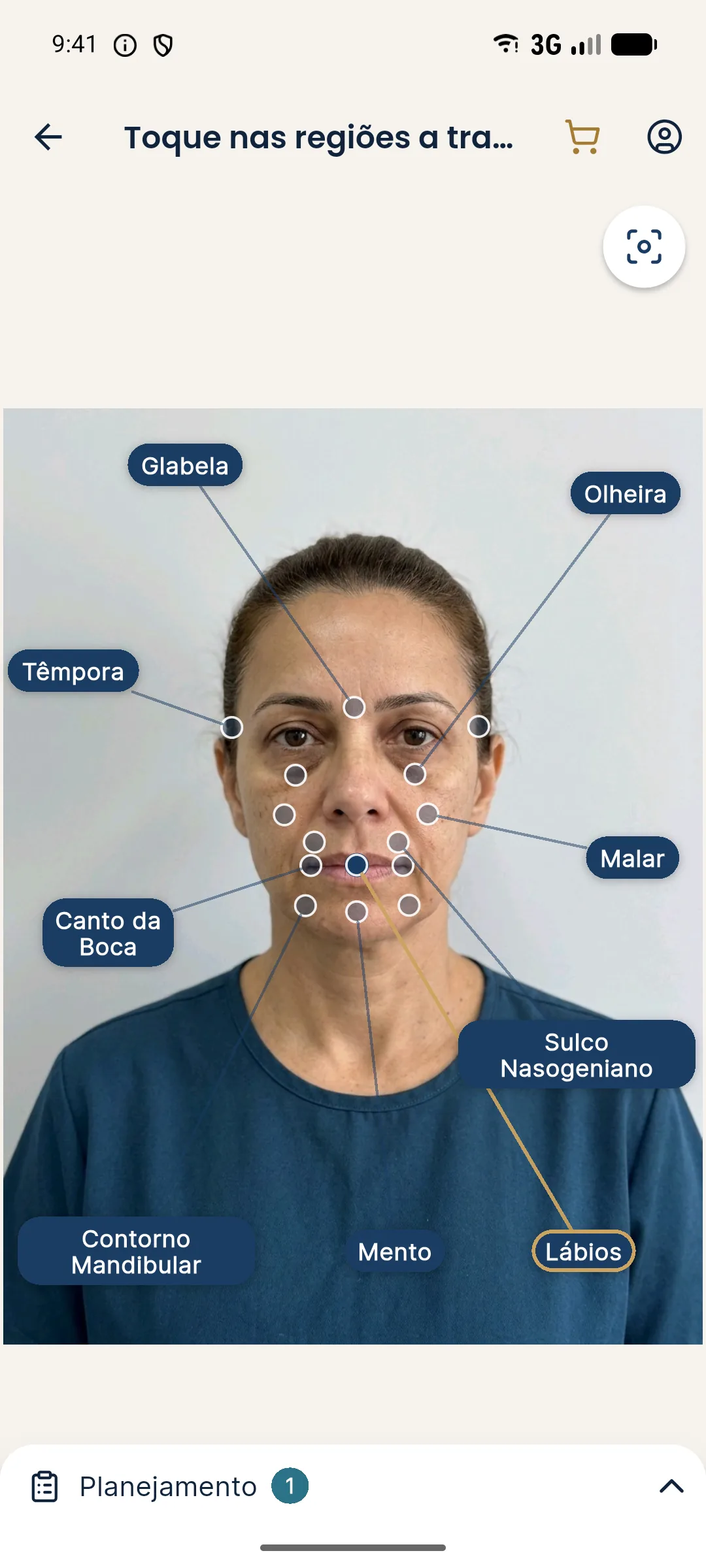
This comparison helps align expectations: if the patient wants a change that others notice, the simulation at higher ml shows what that means visually; if they want something discreet, lower ml is enough. But the tool has clear limits. The image is generated by AI from a frontal photo, with no swelling, no movement and no real tissue response. It does not define the patient's perception threshold; it only illustrates a direction.
See also comparing Subtle, Moderate and Pronounced intensities and limits of 2D simulation.
How to avoid the two extreme errors?
The first error is invisible volume: placing so little that the patient notices nothing and feels cheated. The second is excess: going past the threshold of naturalness and creating a face that gives away the procedure. Between the two there is a narrow band, and it is individual.
Three attitudes help. First, define the perception goal with the patient before deciding the ml. Second, start below what seems sufficient and reassess at follow-up. Third, record the ml and the patient's perception at each stage, to learn from your own history. See conservative volume in the first session and when total volume becomes excess.
What to tell the patient?
The phrase conveys caution without sounding evasive. If the patient says at follow-up that they "noticed nothing," go back to the photo and the agreed goal before deciding to add.
Checklist before fixing the ml
Quick review
Summary
Minimum noticeable volume is personal, regional and shaped by swelling, skin, fat and expectation. Agree on the perception goal with the patient, start conservatively, reassess with a standardized photo and use Harmy's simulation to compare different ml as an illustration, never as a measure of the real threshold.
Frequently asked questions
What is minimum noticeable volume?
It is the smallest amount of product that produces a difference the patient can notice in the mirror. It varies from area to area and from face to face.
Is there a table of minimum ml by area?
There is no universal table. There are conversation ranges that vary with anatomy, area and goal. The real threshold is defined at the exam, not by a fixed number.
Why does the patient sometimes not notice the change?
The volume may have fallen below the perception threshold on that face, swelling may have masked the result, or the eye may have already adapted.
Does Harmy show the minimum noticeable volume?
The simulation shows the effect of the ml entered, in steps of 0.5 ml. The more ml, the more noticeable, but it does not define the patient's real threshold.
Harmy images are illustrative simulations generated by AI from the patient's photo to support the conversation between practitioner and patient. They are not a promise of results. Indication, technique, product and volume are solely the decision of the licensed practitioner. This content is for information only and does not replace a clinical assessment.